
Heating Solutions Built for Nemaha County Winters.
Wood, gas, pellet, and electric fireplace resources for every town in Nemaha County—from Seneca and Sabetha to Wetmore, Centralia, and Corning. Find the right unit and connect with a trusted local hearth retailer.
Every Project Starts From One of These Five Situations
Farm-country heat in northeast Kansas.
Nemaha County sits in the rolling farmland of northeast Kansas, where osage orange hedgerows planted generations ago as windbreaks still supply some of the hottest-burning firewood in the region alongside oak and hickory from the creek bottoms. With a solid seven-month heating season and average winter lows around 15°F, the county is colder than Kansas City but milder than places like Madison, WI (a notably longer, colder heating season) or Buffalo, NY (also a longer heating season)—real heating demand runs from October through April, but the extremes that force multi-week catalytic burns further north are less common here. There are no local air quality non-attainment issues, so wood burning here is governed by standard building code and manufacturer specifications rather than seasonal curtailment rules.
What you'll find on this hub: hearth retailers, service technicians, and fuel suppliers serving every community in the county—from the county seat in Seneca to Sabetha near the Nebraska line, and the smaller towns of Wetmore, Centralia, Corning, Bern, Baileyville, Goff, and Oneida. Pick your fuel below to see local dealers, typical installation costs, and the resources that match your farmhouse, acreage, or in-town project.
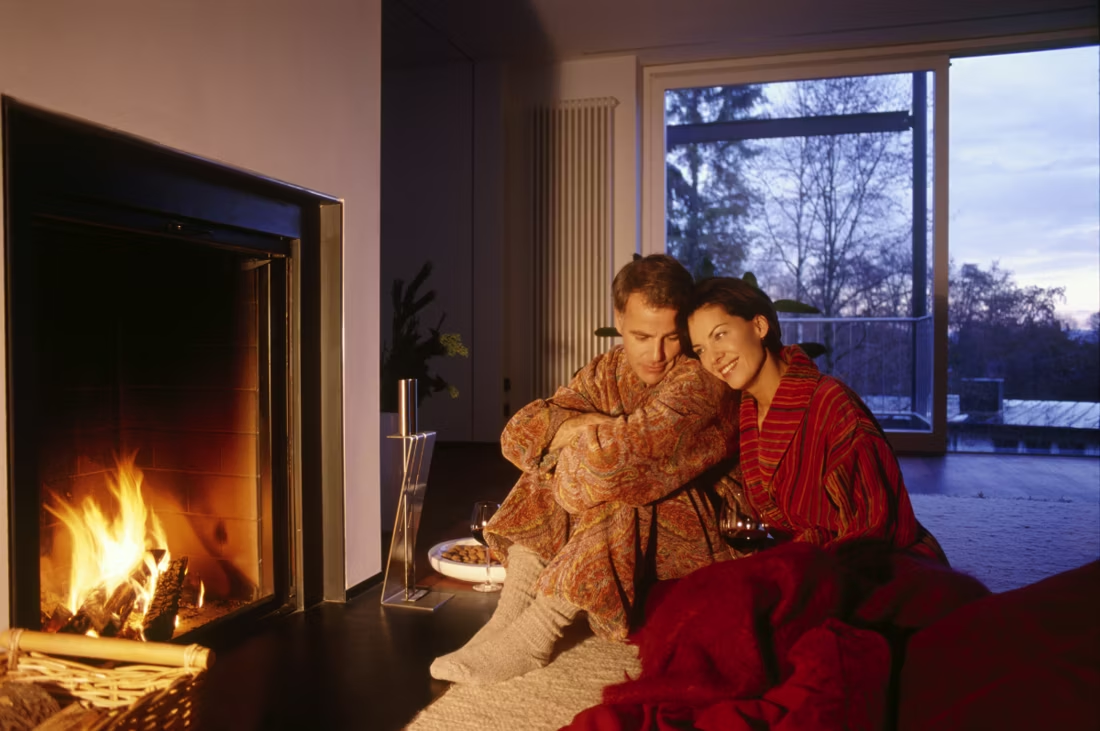
Four fuels. One honest answer for Nemaha County.
Three steps. No salesperson until you're ready.
Tell us about your project
Your zip code, your situation, and the fuel you're leaning toward—or let the answers point you to one.
See what's actually available
The brands dealers within 100 miles genuinely carry—real options, never a catalog mirage.
Get your dealer & Project Guide
A trusted local dealer, plus the free Project Guide & Parts List that names every component of the job.
Frequently Asked Questions
Which fuel works best in Nemaha County?
It depends on the home and how it's used. Wood remains a practical primary or backup heat source out here—osage orange (hedge) burns hotter and longer than most hardwoods, and oak and hickory from local creek bottoms are widely available, which matters during ice storms when power lines go down. Gas is the convenience choice, and works well whether a home has natural gas service in town or relies on propane delivery in the rural areas outside Seneca and Sabetha. Pellet stoves are a solid middle ground for homeowners who want wood-style heat without splitting and stacking a woodpile—regional brands like Lignetics keep supply steady. Electric fireplaces work fine as supplemental heat in a bedroom or finished basement but shouldn't be counted on as a primary source once temperatures drop into the teens. Many Nemaha County homes run wood or pellet as primary heat with gas or electric in secondary rooms.
Do I need a permit to install a fireplace in Nemaha County?
In most cases, yes, though the process depends on whether you're inside city limits. Within Seneca, Sabetha, and the county's other incorporated towns, building permits for wood stoves, inserts, gas fireplaces, and pellet stoves are typically issued by the city office; outside those limits, Nemaha County's planning and zoning office handles it. Gas installations generally require a separate gas-line permit and a licensed installer for the connection work. Electric fireplaces usually don't require a permit unless the installation involves new wiring or a hardwired built-in unit. Most local hearth retailers in Seneca and Sabetha handle the permitting paperwork as part of a full installation, so it's rarely something you have to manage yourself.
Is natural gas available throughout Nemaha County, or is propane more common?
It varies by town. Natural gas service reaches parts of Seneca and Sabetha, but a large share of Nemaha County's rural households and smaller towns rely on propane, delivered and stored in a tank on the property. This affects fireplace choice—a propane-fed gas fireplace or insert works essentially the same as a natural gas unit day-to-day, but homeowners need to size a tank appropriately and factor in delivery scheduling, especially during a hard winter when demand across the region spikes. Local dealers in Seneca and Sabetha can tell you which fuel serves your specific address and recommend units rated for propane where natural gas isn't an option.
What wood species do people actually burn in Nemaha County, and where does it come from?
Osage orange, locally called hedge, is a standout here—it was planted extensively as windbreaks across Kansas farmland in the early 1900s and burns hotter and longer than almost any other domestic firewood, though it throws sparks and needs a well-screened stove or fireplace. Oak and hickory from creek-bottom timber round out the typical mix, offering a steadier, longer burn for overnight fires. Most households source wood through a combination of self-cutting on their own or a neighbor's property (a common arrangement in this farming county) and local firewood sellers who deliver seasoned cords by the truckload. If you're buying, ask whether the wood has been seasoned at least six to twelve months—green hedge and oak both burn poorly and build up creosote fast.
Can one local dealer handle all four fuel types out here?
Given the county's small population, most hearth retailers serving Nemaha County carry two to three fuel types rather than all four, so it's worth checking each dealer's specific lineup before you drive out. A dealer based in Seneca or Sabetha carrying wood and gas is common; pellet and electric coverage varies more. If a dealer doesn't stock a particular fuel type, they can often still point you toward the nearest retailer that does, since the local hearth trade in this part of Kansas is a small, well-connected network. The county + fuel pages above list which dealers carry which fuel so you're not guessing before you call.
What's the typical cost range for fireplace installation across all fuel types in Nemaha County?
Costs here tend to run at or slightly below national averages given the lower cost of labor and simpler venting on most rural and small-town homes. Wood stove or insert installation: roughly $3,500-$7,500 for a typical single-story install, more if a full masonry chimney is needed. Gas fireplace, insert, or stove: roughly $4,000-$9,000, with propane conversions on the lower end if a tank and line are already in place. Pellet stove or insert: roughly $4,000-$6,500 installed. Electric fireplace: $200-$2,500 for the unit itself, plus $300-$1,000 in labor for anything beyond a plug-and-play install. Exact pricing depends on the dealer and how much venting or gas-line work your specific home needs—see the county + fuel pages above for more detail tied to local retailer pricing.
Can a fireplace actually lower my heating bill?
Yes—by creating a comfort zone. A furnace heats every square foot of the house just to warm the one room you're in; a gas fireplace on low burns roughly a sixth of the gas a typical furnace does. Set the furnace around 55–60 degrees as a baseline, then heat the rooms your family actually uses. Families who heat this way commonly save $20–$60 a month.
What is an in-home preview and do I need one?
It's a visit where a hearth professional measures your space, confirms the model you picked actually works in your home, and walks the specs—framing, gas line, venting, finish work—before anything is ordered. Some details you just can't know until you see the house. Never make a down payment without one; it's the single most-skipped step that burns buyers.
How much should I budget for a fireplace?
For an average home—covering the fireplace, the vent pipe, and basic installation—a budget between $3,900 and $5,500 gives you a lot of options across wood, gas, and pellet. By the time you add finish work, gas line, and electrical, the average complete installation lands between $5,000 and $12,000 all-in. In a remodel or new build, a good rule is to put about 2.5% of the total project cost toward the fireplace.
Can I install a fireplace myself?
If you're putting a fire in your house on purpose, it's best to work with an expert. Unless you're genuinely experienced in framing, gas line, vent pipe, and the national code on clearances to combustibles, have a professional do it—and ideally the same company that sells you the fireplace, so warranty, service, and liability all live under one roof.
Stove and Fireplace Dealers in Nemaha County
Listings include WhyFire partner dealers, dealers we have verified as authorized for the brands we recommend, and established local businesses that carry hearth products. Every listing shows which one it is. The ones marked Preferred run on WhyFire's software, so they can show you real pricing and book your appointment right here. No manufacturer pays for placement. How we verify dealers →
Edelman's Home Center
Arnold Refrigeration
Top Hat Chimney
Black Gold Inc.
Swims And Sweeps
Swims And Sweeps
Alternative Heat Resource
Find your fireplace in Nemaha County.
Pick your fuel below and I'll match you with a trusted local dealer in Nemaha County, plus send a free Project Guide & Parts List—the exact parts, vent kit, and recommended installer for your project.
Find Your Fireplace →