
Heat Your McPherson County Home, Fuel by Fuel.
Wood, gas, pellet, and electric fireplace resources for every town in McPherson County—from McPherson and Lindsborg to Moundridge, Inman, and Canton. Find the right unit for your farmhouse or in-town home and connect with a trusted local hearth retailer.
Every Project Starts From One of These Five Situations
Open prairie, wind, and wood heat in McPherson County, Kansas.
McPherson County sits on the flat, wind-exposed farmland of south-central Kansas, between the Smoky Hill and Little Arkansas River drainages. The climate here is Zone 4A with a solidly cold winter season and winter lows averaging 19°F—colder snaps do arrive, but nothing like the sustained deep freeze of Bismarck, North Dakota, where the winter heating load runs nearly double. What makes McPherson County winters feel harder than the numbers suggest is the wind: with almost no tree cover to break it across the open wheat fields, wind chill can knock 15-20 degrees off the actual air temperature on a January afternoon. Wood heat has deep roots here—oak and hickory from the river-bottom timber, plus osage orange from the hedgerows early homesteaders planted as windbreaks. Osage orange in particular burns extremely hot and dense, prized by longtime McPherson County wood burners even though it takes some skill to season and split.
This hub covers hearth retailers, service technicians, and fuel suppliers across every McPherson County community—the county seat of McPherson, the Swedish heritage town of Lindsborg, Moundridge, Inman, Canton, Galva, Windom, and Marquette. Pick your fuel below to see local dealers, typical installation costs, and the units that make sense for a farmhouse on the open prairie or a brick bungalow in town.
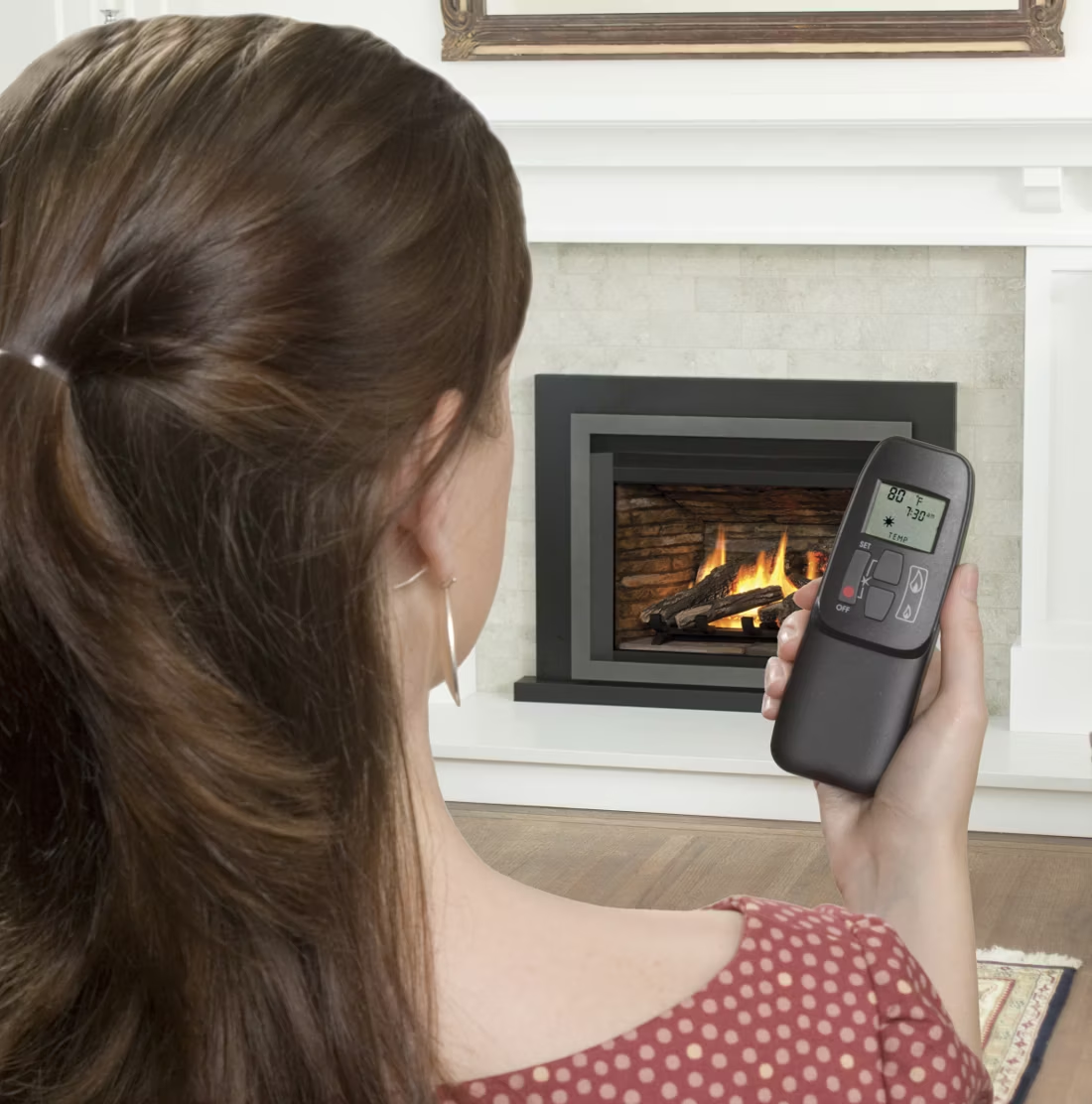
Four fuels. One honest answer for McPherson County.
Three steps. No salesperson until you're ready.
Tell us about your project
Your zip code, your situation, and the fuel you're leaning toward—or let the answers point you to one.
See what's actually available
The brands dealers within 100 miles genuinely carry—real options, never a catalog mirage.
Get your dealer & Project Guide
A trusted local dealer, plus the free Project Guide & Parts List that names every component of the job.
Frequently Asked Questions
Which fuel works best in McPherson County?
It depends on the home and the budget. Wood is the traditional choice for rural McPherson County properties—oak and hickory from the river bottoms, plus dense, hot-burning osage orange from old hedgerows, keep a stove running through the coldest January stretch, and wood works when farmhouse power lines go down in an ice storm. Gas is the low-maintenance choice in town, where Kansas Gas Service lines make natural gas fireplace inserts and direct-vent units a straightforward retrofit for older McPherson and Lindsborg homes. Pellet splits the difference—steady, thermostatic heat without splitting wood, and Lignetics and Indeck Energy Services keep area retailers stocked. Electric fireplaces are mostly supplemental here—good for a bedroom or a finished basement, but not built to carry a farmhouse through a hard prairie winter on their own. Plenty of McPherson County homes run two fuels: wood or pellet as the primary heat source, gas or electric for convenience in secondary rooms.
Do I need a permit to install a fireplace in McPherson County?
Usually yes, though the specifics depend on whether you're inside city limits or out in the county. New wood stoves, wood inserts, gas fireplaces, gas inserts, and pellet stoves typically require a building permit through your local city hall (McPherson, Lindsborg, and Moundridge each issue their own) or through the county for unincorporated areas. Gas installations also need a licensed gas-fitter to make the line connection. Any wood appliance sold or installed new should meet current EPA emissions standards—most retailers only stock EPA-certified units at this point regardless of local requirements. Electric fireplaces generally skip the permit process unless you're hardwiring a built-in unit into a new circuit. Local hearth retailers in McPherson and Lindsborg typically handle the permit paperwork as part of the installation, so it's rarely something a homeowner has to sort out alone.
Are there air quality restrictions on wood burning in McPherson County?
No—McPherson County has no non-attainment designation and no winter burn-ban program, unlike basin or valley counties farther west that deal with trapped inversion smoke. The open, windy prairie topography here disperses smoke quickly rather than trapping it. That said, plenty of local wood burners still choose EPA-certified stoves for the efficiency gains alone—a certified catalytic or non-catalytic stove burns dense osage orange and hickory more completely, which means less creosote buildup in the chimney and fewer cords of wood needed to get through the season. There's no regulatory reason to upgrade from an older stove in McPherson County, but there's a real efficiency and safety case for it.
Can one local hearth retailer handle all four fuel types?
Some can, but it varies by dealer size. The larger hearth retailers based in McPherson tend to carry wood, gas, and pellet, with electric fireplaces as a smaller display line—a practical setup if you're comparing fuels before deciding. Smaller shops and those in Lindsborg or Moundridge may specialize more narrowly, often leaning heavily into wood and pellet given the county's farming population and rural heating habits. If you're not sure which fuel fits your home, a multi-fuel dealer with working showroom displays is worth the extra drive—you can see and hear the difference between a catalytic wood stove and a pellet unit before committing.
How does service work in rural areas of McPherson County?
Most chimney sweeps and gas technicians serving McPherson County are based in or near the city of McPherson and drive out to the farm communities—Moundridge, Inman, Canton, Galva—for scheduled appointments. Expect to book service in September or October before the first hard freeze; midwinter emergency calls take longer to schedule and often carry a rural trip fee, typically $40-$75 depending on distance from town. Because farmhouses can sit miles from the nearest paved road, it's worth confirming winter road access when you book, and keeping a landline or reliable cell signal noted for the technician. Homes running wood or pellet as backup heat should still schedule annual gas appliance service too, so both systems are ready if one goes down during a February ice storm.
What's the typical cost range for fireplace installation across all fuel types in McPherson County?
Costs vary by fuel and by how much venting or chimney work is involved. Wood stove or insert installation: roughly $4,000-$8,000 for a typical retrofit, more if new chimney construction is needed for an older farmhouse without an existing flue. Gas fireplace, insert, or stove: roughly $4,000-$9,500, with cost driven mainly by how far the gas line has to run and whether direct-vent piping goes through an exterior wall or up through the roof. Pellet stove or insert: roughly $4,000-$6,500 for a standard install. Electric fireplace: $200-$2,500 for the unit itself, plus $300-$1,000 in labor for anything beyond a plug-and-play placement, such as a built-in wall unit. For McPherson County-specific pricing tied to local retailers, see the county + fuel pages above.
Can a fireplace actually lower my heating bill?
Yes—by creating a comfort zone. A furnace heats every square foot of the house just to warm the one room you're in; a gas fireplace on low burns roughly a sixth of the gas a typical furnace does. Set the furnace around 55–60 degrees as a baseline, then heat the rooms your family actually uses. Families who heat this way commonly save $20–$60 a month.
What is an in-home preview and do I need one?
It's a visit where a hearth professional measures your space, confirms the model you picked actually works in your home, and walks the specs—framing, gas line, venting, finish work—before anything is ordered. Some details you just can't know until you see the house. Never make a down payment without one; it's the single most-skipped step that burns buyers.
Can I install a fireplace myself?
If you're putting a fire in your house on purpose, it's best to work with an expert. Unless you're genuinely experienced in framing, gas line, vent pipe, and the national code on clearances to combustibles, have a professional do it—and ideally the same company that sells you the fireplace, so warranty, service, and liability all live under one roof.
How much should I budget for a fireplace?
For an average home—covering the fireplace, the vent pipe, and basic installation—a budget between $3,900 and $5,500 gives you a lot of options across wood, gas, and pellet. By the time you add finish work, gas line, and electrical, the average complete installation lands between $5,000 and $12,000 all-in. In a remodel or new build, a good rule is to put about 2.5% of the total project cost toward the fireplace.
Stove and Fireplace Dealers in McPherson County
Listings include WhyFire partner dealers, dealers we have verified as authorized for the brands we recommend, and established local businesses that carry hearth products. Every listing shows which one it is. The ones marked Preferred run on WhyFire's software, so they can show you real pricing and book your appointment right here. No manufacturer pays for placement. How we verify dealers →
Chimney And Stone Specialists
Ebeling Pools Inc
Find your fireplace in McPherson County.
Pick your fuel below and we'll match you with a trusted local dealer and a free Project Guide & Parts List—the exact parts, including the vent kit, and the dealer we recommend for your McPherson County project.
Find Your Fireplace →