
Heat Your Home Right, Wherever You Are in Marion County.
Wood, gas, pellet, and electric fireplace resources for every town and farmstead in Marion County—from the courthouse square in Marion to lake cabins near Marion County Lake. Find the right unit and connect with a trusted local hearth retailer.
Every Project Starts From One of These Five Situations
Steady, moderate winters across Marion County, Kansas.
Marion County sits at the eastern edge of the Flint Hills, a mix of cropland, cattle pasture, and creek-bottom timber along the Cottonwood River. Winters average around 21°F on the coldest nights and the county has a heating season noticeably milder than Fargo, North Dakota, but still cold enough that a heating plan matters from November through March. The woodlots here run to oak and hickory, and Kansas homesteaders have burned osage orange (hedge apple) for generations—a dense, slow-burning wood originally planted as windbreak hedgerows before barbed wire took over, and still one of the hottest-burning firewoods available in the region.
This hub covers the whole county: hearth retailers, service technicians, and fuel suppliers serving Marion, Hillsboro, Peabody, Florence, Goessel, Durham, Lehigh, Lincolnville, and the farms and acreages between them. Pick a fuel below to see local dealers, installed costs, and recommended units for your specific project—whether that's a wood stove for a Cottonwood River farmhouse or a gas insert for a Hillsboro Craftsman.
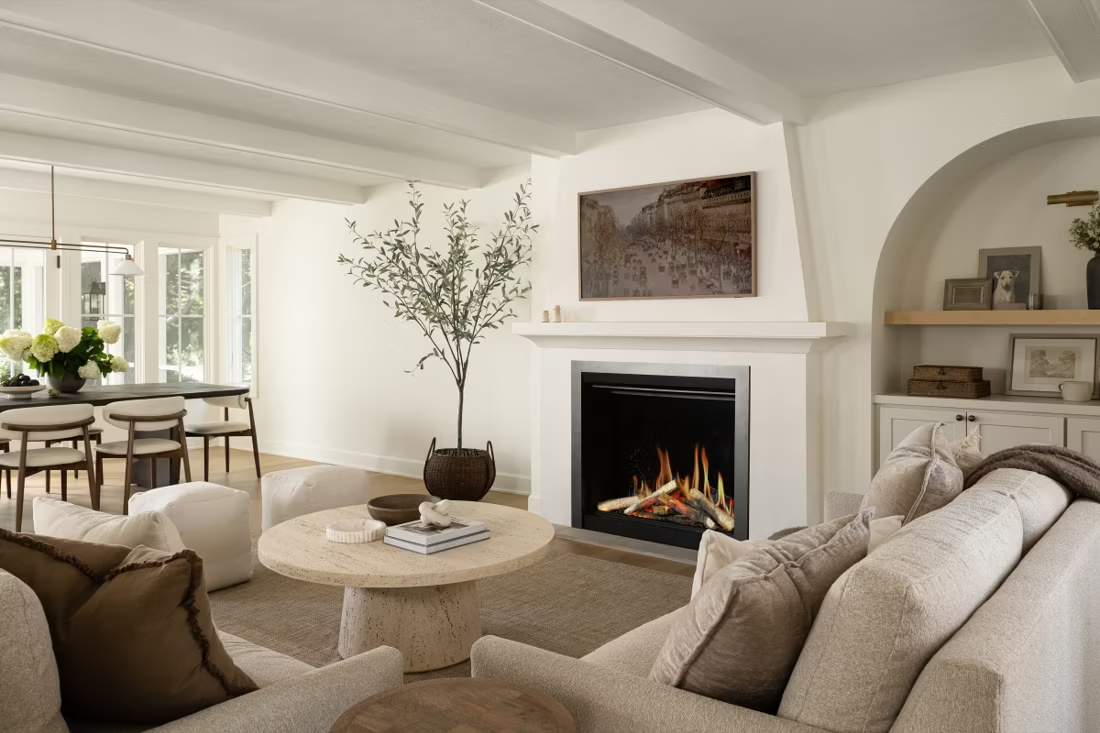
Four fuels. One honest answer for Marion County.
Three steps. No salesperson until you're ready.
Tell us about your project
Your zip code, your situation, and the fuel you're leaning toward—or let the answers point you to one.
See what's actually available
The brands dealers within 100 miles genuinely carry—real options, never a catalog mirage.
Get your dealer & Project Guide
A trusted local dealer, plus the free Project Guide & Parts List that names every component of the job.
Frequently Asked Questions
Which fuel works best in Marion County?
It depends on the home and how you use it. Wood is a natural fit in this part of Kansas—oak and hickory grow along the Cottonwood River bottoms, and osage orange, once planted county-wide as hedgerow windbreaks, burns hot and slow enough to hold overnight heat in a farmhouse. Gas is the low-maintenance choice, especially where propane service is already in place on rural acreages or where a Marion or Hillsboro home has access to natural gas—instant heat with none of the wood-stacking labor. Pellet stoves are a solid middle ground; Lignetics and Indeck Energy Services both distribute into the region, so fuel supply isn't a problem even in a county this size. Electric fireplaces work well as supplemental heat for a bedroom or sunroom but shouldn't be your only heat source once temperatures drop into the teens. Most Marion County households end up pairing a primary wood, gas, or pellet appliance with an electric unit somewhere secondary.
Do I need a permit to install a fireplace in Marion County?
In most cases, yes, though the process is simpler than in a larger metro county. Inside city limits—Marion, Hillsboro, Peabody, Florence, Goessel—building permits are typically issued through the local city hall; for rural acreages outside those city limits, permitting runs through the county. New wood stoves and inserts need to meet current EPA emissions standards, and any gas work requires a licensed installer for the gas line connection regardless of jurisdiction. Electric fireplaces generally skip the permit process unless you're hardwiring a built-in unit into a new circuit. A local hearth retailer who's installed in the county before will usually know exactly which office to call and can pull the permit as part of the job.
Are there air quality restrictions on wood burning in Marion County?
No—Marion County has no wood-burning curtailment program, non-attainment designation, or winter inversion advisories like you'd find in a mountain basin. The air quality issue this part of Kansas is known for is agricultural: Flint Hills ranchers conduct large-scale prescribed pasture burns each spring to manage cattle grazing land, which is a completely separate practice from home heating. For a wood stove or fireplace insert, the only real requirement is that new installations meet current EPA emissions certification—there's no seasonal restriction on when you can run it.
Can one local hearth retailer handle all four fuel types?
Given the county's small population, most Marion County customers end up working with a dealer based in a larger nearby town—Newton or McPherson—that carries wood, gas, pellet, and electric and is willing to travel for installation. A handful of smaller stove and fireplace shops closer to the county may focus on just two or three fuels, often wood and gas, with pellet stoves available by special order. If you're comparing fuel types side by side, a multi-fuel dealer with working showroom displays is worth the extra drive from Marion or Hillsboro.
How does service work in rural areas of Marion County?
Most technicians who service Marion County are based out of Newton, McPherson, or the Wichita area and drive out for scheduled appointments—expect a modest trip charge for farms and acreages well off Highway 56 or 15. Late summer and early fall (before the first hard freeze) is the easiest window to book annual chimney sweeping or gas inspection; waiting until a cold snap in December means longer lead times. If you're on a rural property with a wood or pellet stove as your primary heat, it's worth keeping a backup plan—a small propane heater or generator—in case a winter storm delays a service call or a road.
What's the typical cost range for fireplace installation across all fuel types in Marion County?
Costs run a bit lower here than in larger metro markets, though travel fees from regional dealers can offset some of that savings. Wood stove or insert installation: roughly $4,000–$8,000 depending on chimney and hearth work. Gas fireplace, insert, or stove: roughly $4,000–$9,500, with propane conversions on the lower end if a line is already run to the house. Pellet stove or insert: roughly $4,000–$7,000 for a typical install. Electric fireplace: $200–$2,500 for the unit itself, plus $300–$1,000 in labor for anything beyond a simple plug-in placement. See the county + fuel pages above for cost detail tied to specific local retailers.
Wood, gas, pellet, or electric—how do I choose?
Match the fuel to your life, not the other way around. Wood: lowest fuel cost and total power-outage independence, but you're hauling and stacking. Gas: press a button, set a thermostat, no maintenance to speak of. Pellet: wood economics with automatic feeding, in exchange for weekly cleaning and a need for electricity. Electric: plugs in anywhere with honest supplemental heat. Nobody regrets the fuel that fits how they actually live.
Does a fireplace add value to my home?
On average, a fireplace adds back to the home about the same amount you spent installing it. Add the monthly savings from heating the rooms you actually use instead of the whole house—often hundreds of dollars a year—and the value case is strong before you even count what a fire does for how your family uses the room.
Can I install a fireplace myself?
If you're putting a fire in your house on purpose, it's best to work with an expert. Unless you're genuinely experienced in framing, gas line, vent pipe, and the national code on clearances to combustibles, have a professional do it—and ideally the same company that sells you the fireplace, so warranty, service, and liability all live under one roof.
What is an in-home preview and do I need one?
It's a visit where a hearth professional measures your space, confirms the model you picked actually works in your home, and walks the specs—framing, gas line, venting, finish work—before anything is ordered. Some details you just can't know until you see the house. Never make a down payment without one; it's the single most-skipped step that burns buyers.
Stove and Fireplace Dealers in Marion County
Listings include WhyFire partner dealers, dealers we have verified as authorized for the brands we recommend, and established local businesses that carry hearth products. Every listing shows which one it is. The ones marked Preferred run on WhyFire's software, so they can show you real pricing and book your appointment right here. No manufacturer pays for placement. How we verify dealers →
Chimney And Stone Specialists
Services Unlimited
Get matched with your Marion County dealer.
Tell us about your project and we'll match you with a trusted local dealer and send a free Project Guide & Parts List—the exact parts, vent kit included, and the dealer we recommend for your fuel and your home in Marion County.
Find Your Fireplace →