
Find the right fireplace for your Kingman County home.
Wood, gas, pellet, and electric fireplace resources for every town in Kingman County—from the county seat in Kingman out to Cunningham, Norwich, Zenda, and Nashville. Find the right unit and connect with a trusted local hearth retailer.
Every Project Starts From One of These Five Situations
Steady Great Plains winters across Kingman County, Kansas.
Kingman County sits in south-central Kansas, on flat, wide-open wheat and cattle country in climate zone 4A. Average winter lows hover around 19°F, and the county sees a real heating season—about half the winter heating load of harsher upper-Midwest cities like Fargo, ND. Firewood here leans on what grows along the creek bottoms and fence rows: oak, hickory, and osage orange (hedge), the dense, high-BTU wood Kansas farmers have split for generations to line property lines and stoke wood stoves alike.
What you'll find on this hub: hearth retailers, service technicians, and fuel suppliers covering the entire county—Kingman, Cunningham, Norwich, Zenda, Nashville, and Penalosa. With a population under 5,000 spread across the county, most retailers and techs travel in from regional hubs like Wichita or Hutchinson, so scheduling ahead matters more than it does in a bigger metro. Pick your fuel below to see local dealers, typical installed costs, and the resources that match your project—whether you're heating a farmhouse outside Cunningham or a home inside Kingman city limits.
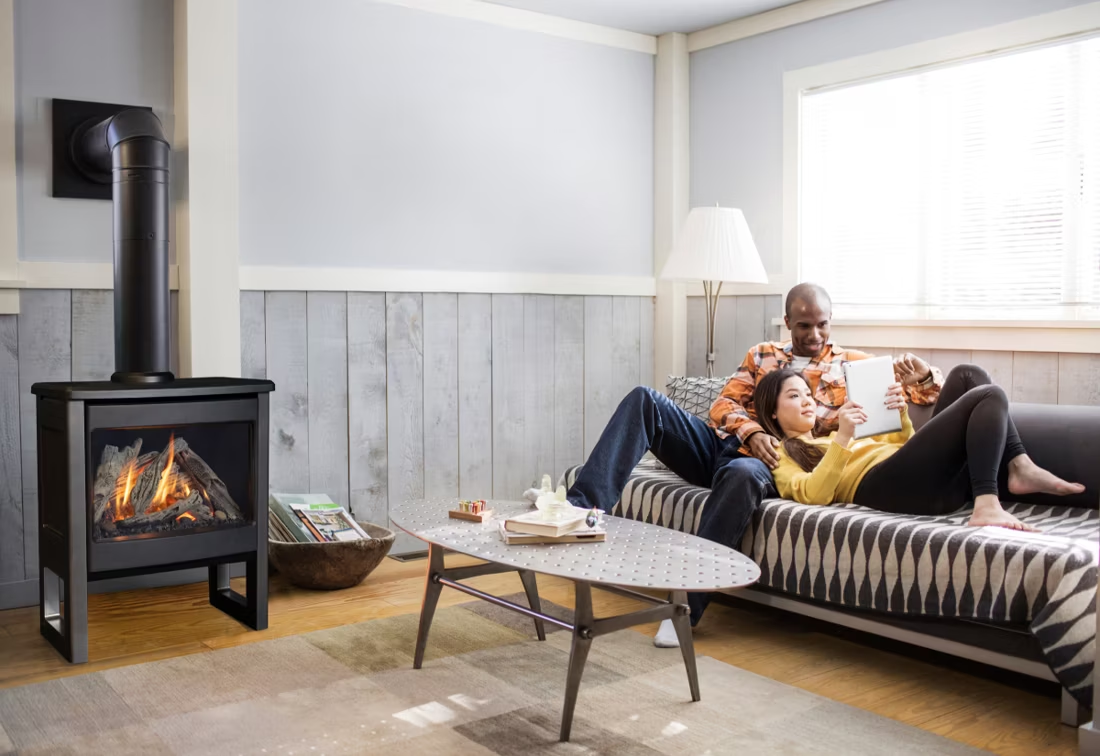
Four fuels. One honest answer for Kingman County.
Three steps. No salesperson until you're ready.
Tell us about your project
Your zip code, your situation, and the fuel you're leaning toward—or let the answers point you to one.
See what's actually available
The brands dealers within 100 miles genuinely carry—real options, never a catalog mirage.
Get your dealer & Project Guide
A trusted local dealer, plus the free Project Guide & Parts List that names every component of the job.
Frequently Asked Questions
Which fuel works best in Kingman County?
It depends on your home and how you use it. Wood remains a practical choice in rural Kingman County—oak, hickory, and dense osage orange (hedge) are all locally available, and a lot of farm properties already have wood on hand from fence-row clearing. Gas is the convenience option; where natural gas service reaches into town within Kingman city limits, it's a clean, no-labor choice, and propane fills the gap for farmhouses and acreages outside city gas lines. Pellet is the middle ground—Lignetics-brand pellets are available regionally, and a pellet stove gives you wood-like heat without splitting and stacking. Electric works well as supplemental heat for a bedroom or sunroom, but with average winter lows around 19°F and a solid, real winter heating season, it's rarely the sole heat source here. Many county households end up pairing wood or pellet for primary heat with gas or electric for secondary rooms.
Do I need a permit to install a fireplace in Kingman County?
In most cases, yes. New wood stoves, wood inserts, gas fireplaces, gas inserts, gas stoves, and pellet stoves typically require a building permit, and gas installations need a separate gas line permit pulled by a licensed gas fitter. Within Kingman city limits, permits run through the city; for the rest of the county—Cunningham, Norwich, Zenda, Nashville, and the surrounding unincorporated areas—permits go through the Kingman County building department. Electric fireplaces usually skip the permit process unless you're hardwiring a built-in unit into a new circuit. Most local hearth retailers pull the permit as part of the installation, so you generally don't have to file it yourself.
Are there air quality restrictions on wood burning in Kingman County?
No—unlike some western counties with winter inversions, Kingman County has no non-attainment status and no wood-burning curtailment program. The open, windy terrain of south-central Kansas keeps smoke from settling the way it can in a mountain basin. The bigger local burn concern isn't wood stove smoke; it's outdoor and grass fires—Kingman County sits in cattle and wheat country prone to fast-moving grass fires during dry, windy stretches, so outdoor burning bans (unrelated to indoor wood stoves) can go into effect during red-flag warnings. Indoor wood stove and fireplace use isn't restricted by air quality rules here.
Can one local hearth retailer handle all four fuel types?
It's less likely here than in a bigger metro. Kingman County's population is under 5,000, spread across small towns, so most hearth retailers with full wood, gas, pellet, and electric showrooms are based in Wichita or Hutchinson and drive out to the county for consultations and installs. A handful of regional dealers do carry all four fuel types and can walk you through trade-offs before you commit. If you're set on a specific fuel—say, a wood stove that burns local hedge and oak efficiently, or a pellet stove stocked with Lignetics pellets—the county + fuel pages above narrow the list to dealers who actually carry and install that fuel.
How does service work in rural areas of Kingman County?
Most technicians covering Kingman County are based out of Wichita or Hutchinson and travel in to reach Kingman, Cunningham, Norwich, Zenda, Nashville, and Penalosa. Expect a modest travel fee for the more remote stops, and know that pre-season appointments (late summer through early fall) are far easier to book than a mid-winter emergency call. Given the driving distances between towns, it's worth scheduling annual sweeps and gas inspections early and keeping basic backup supplies—split hedge or oak for a wood stove, spare batteries for a gas IPI system—on hand for winter storms that can slow response times.
What's the typical cost range for fireplace installation across all fuel types in Kingman County?
Costs in Kingman County tend to run a bit below national averages, in line with the area's cost of living. Wood stove or insert installation: roughly $3,500–$7,000 for a typical install. Gas fireplace, insert, or stove: about $4,000–$9,000, with cost depending heavily on whether a new gas or propane line is needed. Pellet stove or insert: roughly $3,500–$6,000. Electric fireplace: $200–$2,500 for the unit itself, plus $300–$1,000 in labor for anything beyond a simple plug-and-play install. For more detail tied to local retailer pricing, see the county + fuel pages above.
Can I install a fireplace myself?
If you're putting a fire in your house on purpose, it's best to work with an expert. Unless you're genuinely experienced in framing, gas line, vent pipe, and the national code on clearances to combustibles, have a professional do it—and ideally the same company that sells you the fireplace, so warranty, service, and liability all live under one roof.
Does a fireplace add value to my home?
On average, a fireplace adds back to the home about the same amount you spent installing it. Add the monthly savings from heating the rooms you actually use instead of the whole house—often hundreds of dollars a year—and the value case is strong before you even count what a fire does for how your family uses the room.
Wood, gas, pellet, or electric—how do I choose?
Match the fuel to your life, not the other way around. Wood: lowest fuel cost and total power-outage independence, but you're hauling and stacking. Gas: press a button, set a thermostat, no maintenance to speak of. Pellet: wood economics with automatic feeding, in exchange for weekly cleaning and a need for electricity. Electric: plugs in anywhere with honest supplemental heat. Nobody regrets the fuel that fits how they actually live.
How much should I budget for a fireplace?
For an average home—covering the fireplace, the vent pipe, and basic installation—a budget between $3,900 and $5,500 gives you a lot of options across wood, gas, and pellet. By the time you add finish work, gas line, and electrical, the average complete installation lands between $5,000 and $12,000 all-in. In a remodel or new build, a good rule is to put about 2.5% of the total project cost toward the fireplace.
Stove and Fireplace Dealers in Kingman County
Listings include WhyFire partner dealers, dealers we have verified as authorized for the brands we recommend, and established local businesses that carry hearth products. Every listing shows which one it is. The ones marked Preferred run on WhyFire's software, so they can show you real pricing and book your appointment right here. No manufacturer pays for placement. How we verify dealers →
Ebeling Pools Inc
Home Lumber & Supply
Fisher Lumber- Wichita
Find your fireplace project in Kingman County.
Tell us your fuel type and town, and we'll match you with a trusted local dealer and send a free Project Guide & Parts List—the exact parts, including the vent kit, and the recommended dealer for your Kingman County project.
Find Your Fireplace →