
Every fuel type, every town in Jewell County.
Wood, gas, pellet, and electric fireplace resources for the whole county—from the county seat in Mankato out to the farmsteads and hedgerow-lined section roads. Pick a fuel and get matched with a local dealer who actually installs it out here.
Every Project Starts From One of These Five Situations
Plains winters, hedgerow wood, and a county that still heats with what grows on the farm.
Jewell County sits in north-central Kansas near the Nebraska line, a climate zone 5A county of open farmland and roughly 1,750 residents spread across Mankato, Burr Oak, Esbon, Formoso, Jewell, and Randall. Winters here are cold and the heating season runs from roughly October into April—not quite as brutal as places like Madison, Wisconsin further north, but long enough that a well-chosen primary heat source matters. Oak and hickory come out of the creek bottoms along Buffalo and White Rock Creek, and osage orange—known locally as hedge—is everywhere, a legacy of the shelterbelt plantings farmers put in after the Dust Bowl to break the wind. Those overgrown hedgerows are a genuine, low-cost firewood source for a lot of households in the county.
This is farm country, not a metro area, so the hearth landscape looks a little different than it does in bigger Kansas counties: there's no air-quality nonattainment issue here and no burn curtailment days, which means wood heat is simply a practical, unrestricted choice rather than something regulated around winter smog. Natural gas service is mostly limited to the incorporated towns, so propane is the standard gas fuel for homes out on the county roads. Pellet stoves have a foothold too, with regional brands like Lignetics and Indeck Energy Services supplying the area, and electric fireplaces work well as supplemental heat in homes served by the local rural electric cooperative. This hub rolls up hearth retailers, service techs, and fuel suppliers across the whole county—pick your fuel below for local dealers, install costs, and unit recommendations specific to your town.
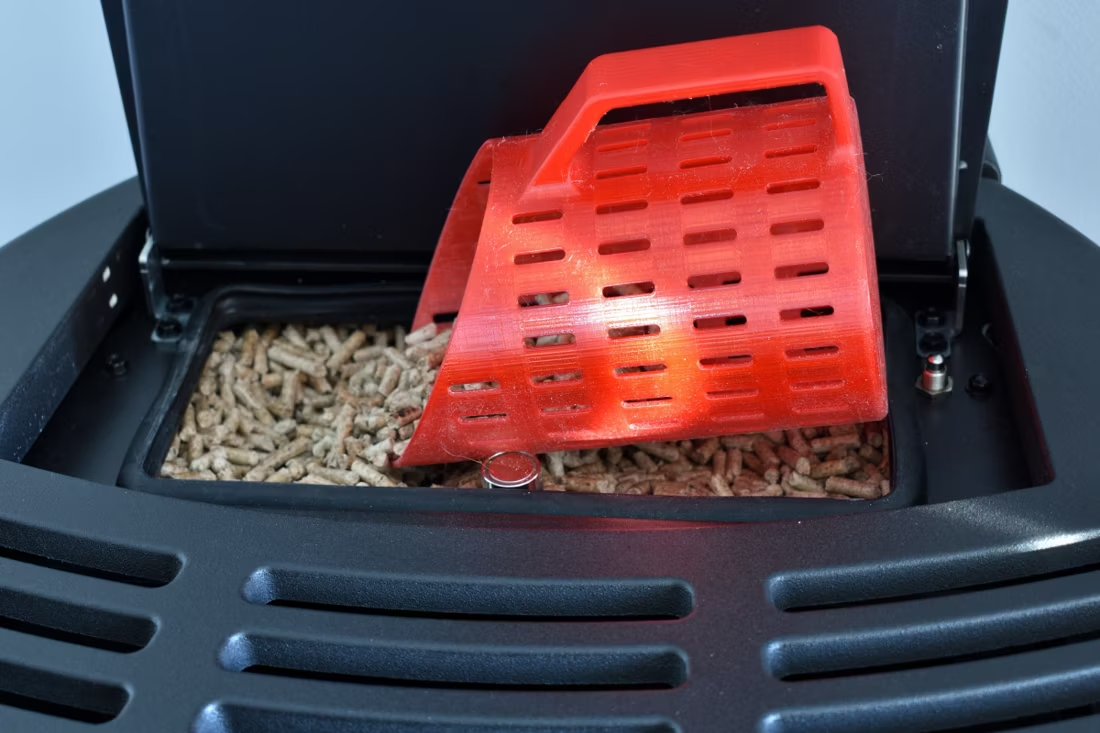
Four fuels. One honest answer for Jewell County.
Three steps. No salesperson until you're ready.
Tell us about your project
Your zip code, your situation, and the fuel you're leaning toward—or let the answers point you to one.
See what's actually available
The brands dealers within 100 miles genuinely carry—real options, never a catalog mirage.
Get your dealer & Project Guide
A trusted local dealer, plus the free Project Guide & Parts List that names every component of the job.
Frequently Asked Questions
Which fireplace fuel makes the most sense in Jewell County?
All four fuels work here, but the right pick depends on how your place is set up. Wood is the traditional backbone in Jewell County—oak and hickory from the creek bottoms, plus osage orange cut from old hedgerow windbreaks, give a lot of households essentially free or low-cost fuel, and a good EPA-certified stove will carry a house through a cold snap on hedge alone. Gas is mostly propane out here, since piped natural gas is generally limited to inside the incorporated towns; propane fireplaces and inserts are common on farm properties. Pellet stoves are a solid option too, with Lignetics and Indeck Energy Services both distributed in the region, and they're easier to automate than a wood stove if you're gone during the day. Electric fireplaces work well as supplemental heat backed by the local rural electric cooperative, but with a zone 5A winter, they're not sized to carry a house alone through the coldest stretches.
Do I need a permit to install a wood stove or fireplace in Jewell County?
In most of the unincorporated county, building and zoning questions run through the Jewell County courthouse rather than a dedicated building department, so it's worth a call there before your install to confirm what's required for your parcel. If your property is inside Mankato, Burr Oak, or one of the other incorporated towns, check with that town's clerk first, since some have their own permit or inspection requirements layered on top of county rules. Propane installations typically involve your propane supplier setting the tank and running the line, which usually comes with its own inspection. Most retailers we match homeowners with have handled permitting in Jewell County before and can tell you exactly who to call.
Since there are no air quality restrictions here, does that mean any wood stove is fine to install?
Jewell County isn't a nonattainment area and there's no curtailment season like you'd find in a smoke-trapping basin, so you won't run into burn bans tied to winter air quality. That said, code compliance still matters for safety, not just emissions—proper clearances to combustibles, correctly sized venting, and a chimney rated for how hot osage orange burns are all things a licensed installer accounts for regardless of local air-quality rules. New units still need to meet current EPA emissions standards to be sold, so you're getting a cleaner-burning stove either way, just without the county-level restrictions some other regions deal with.
Is osage orange (hedge) actually good firewood, or does it need special handling?
Hedge is some of the hottest-burning firewood available in North America—it puts out more BTUs per cord than oak or hickory, which is exactly why it works so well through a Jewell County winter. The tradeoff is that it throws more sparks than other hardwoods and burns hot enough that an undersized stove or an old, non-airtight unit can overheat. Most installers recommend mixing hedge with oak or hickory rather than burning it exclusively, and running it in an EPA-certified stove with a properly sized flue so the extra heat output is something the system is built to handle. Given how much hedge came out of old shelterbelt plantings across the county, it's worth asking your dealer specifically how their recommended stove handles a hot-burning fuel like this.
What does fireplace installation typically cost in a small county like Jewell?
The unit and labor costs land in the same general range you'd see anywhere—wood stove and insert installs typically run $4,500–$9,000, propane fireplaces and inserts $4,500–$11,000 depending on tank and line work, pellet inserts $4,500–$7,500, and electric units anywhere from a few hundred dollars for plug-and-play to $3,000-plus installed for a built-in. What's different in a county this size is logistics: since most installers are based in Beloit, Concordia, or Belleville rather than in Jewell County itself, expect a trip charge for the drive, and expect scheduling to fill up fast once cold weather hits. Booking your install or annual service in late summer, well before the first hard freeze, is the best way to avoid a long wait.
Can I find a retailer that carries more than one fuel type out here?
Yes, and in a county with fewer than 2,000 residents, most retailers have to. A single-fuel showroom doesn't make sense when the customer base is this spread out, so the dealers who serve Jewell County typically stock wood, gas or propane, and pellet units side by side, and can usually order in electric fireplaces as well. That's actually useful if you're weighing a hedge-burning wood stove against a propane insert for convenience—you can see both in the same visit and talk through which one fits your house, your acreage, and how often you're around to tend a fire. We match you with the dealer whose lineup and service area actually cover your address rather than sending you to whoever's biggest.
Can a fireplace actually lower my heating bill?
Yes—by creating a comfort zone. A furnace heats every square foot of the house just to warm the one room you're in; a gas fireplace on low burns roughly a sixth of the gas a typical furnace does. Set the furnace around 55–60 degrees as a baseline, then heat the rooms your family actually uses. Families who heat this way commonly save $20–$60 a month.
Wood, gas, pellet, or electric—how do I choose?
Match the fuel to your life, not the other way around. Wood: lowest fuel cost and total power-outage independence, but you're hauling and stacking. Gas: press a button, set a thermostat, no maintenance to speak of. Pellet: wood economics with automatic feeding, in exchange for weekly cleaning and a need for electricity. Electric: plugs in anywhere with honest supplemental heat. Nobody regrets the fuel that fits how they actually live.
Does a fireplace add value to my home?
On average, a fireplace adds back to the home about the same amount you spent installing it. Add the monthly savings from heating the rooms you actually use instead of the whole house—often hundreds of dollars a year—and the value case is strong before you even count what a fire does for how your family uses the room.
What is an in-home preview and do I need one?
It's a visit where a hearth professional measures your space, confirms the model you picked actually works in your home, and walks the specs—framing, gas line, venting, finish work—before anything is ordered. Some details you just can't know until you see the house. Never make a down payment without one; it's the single most-skipped step that burns buyers.
Stove and Fireplace Dealers in Jewell County
Listings include WhyFire partner dealers, dealers we have verified as authorized for the brands we recommend, and established local businesses that carry hearth products. Every listing shows which one it is. The ones marked Preferred run on WhyFire's software, so they can show you real pricing and book your appointment right here. No manufacturer pays for placement. How we verify dealers →
Alan Witte Sales
Pestinger Hearth Products
Builders Warehouse Inc
Fireplace Stone And Patio - Kearney
J & R Heating
Heartland Building Center
Get matched with a local Jewell County dealer.
Pick your fuel below and we'll put together a free Project Guide & Parts List—the right unit, the vent kit it needs, and the local dealer we recommend for your project, whether you're in Mankato or out on a county road.
Find Your Fireplace →