
Heat that holds up on the High Plains of Decatur County.
Wood, gas, pellet, and electric fireplace resources for Oberlin, Norcatur, Jennings, Dresden, and every farm and ranch scattered across northwest Kansas wheat country. Find the right unit for your home and connect with a local hearth retailer who works this part of the state.
Every Project Starts From One of These Five Situations
Wide-open winters in Decatur County, Kansas.
Decatur County sits on the High Plains of northwest Kansas, just south of the Nebraska line, with a year-round population of a little over 2,000 spread across roughly 900 square miles of wheat and cattle country. Winters here run milder than Minneapolis but still add up—Climate Zone 5A, an average winter low near 16°F, and close to 5,800 heating degree days most years. Wind across the open plains makes correctly sized venting and a tight-sealing firebox matter as much as raw BTU output. Oak, hickory, and osage orange grow along the creek bottoms and shelterbelts here—osage orange in particular burns hot and dense, a favorite among longtime wood-burning households in this stretch of Kansas.
What you'll find on this hub: hearth retailers, service technicians, and fuel suppliers serving Decatur County's communities—Oberlin, the county seat, along with Norcatur, Jennings, Dresden, and the farms and ranches between them. Because the county's population is small, many households rely on retailers and technicians based in nearby northwest Kansas towns who route through on a schedule for consultations and installs. Pick your fuel below to see local dealers, typical installation costs, and the units built to hold up against High Plains wind and cold.
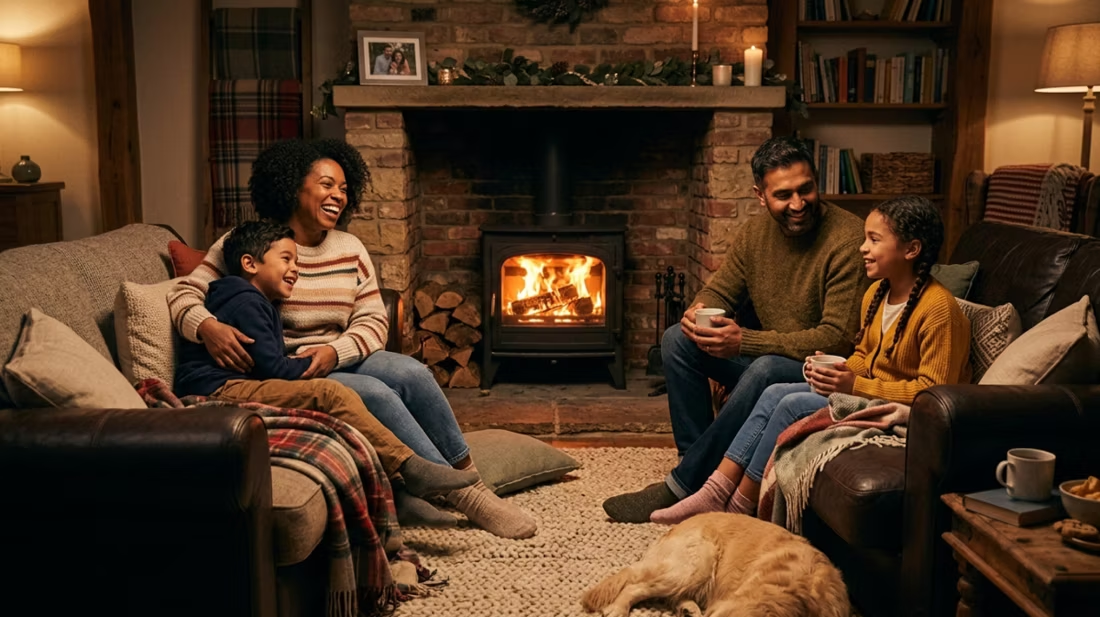
Four fuels. One honest answer for Decatur County.
Three steps. No salesperson until you're ready.
Tell us about your project
Your zip code, your situation, and the fuel you're leaning toward—or let the answers point you to one.
See what's actually available
The brands dealers within 100 miles genuinely carry—real options, never a catalog mirage.
Get your dealer & Project Guide
A trusted local dealer, plus the free Project Guide & Parts List that names every component of the job.
Frequently Asked Questions
Which fuel works best in Decatur County?
It depends on your home and your priorities, but there's a clear local pattern. Wood is a working tradition here—oak, hickory, and especially osage orange grow along the creek bottoms and shelterbelts, and osage orange in particular is one of the hottest, longest-burning firewoods around, which matters when overnight lows sit near 16°F. Propane is the practical convenience fuel for most rural Decatur County homes, since natural gas mains don't reach most of the county—instant heat with no wood-hauling. Pellet is the middle ground, with regional supply from Lignetics keeping bags reasonably accessible even this far out on the plains. Electric works well as supplemental heat in bedrooms or additions, but with roughly 5,800 heating degree days a year, it's rarely the primary source in a county this exposed to wind and cold. Most households here end up pairing wood or propane as the main heat source with electric for ambiance in a secondary room.
Do I need a permit to install a fireplace in Decatur County?
In most cases, yes. New wood stoves, wood inserts, gas fireplaces, gas inserts, and pellet stoves typically require a building permit through Decatur County's permitting process, and wood-burning appliances need to meet current EPA emissions standards to be installed new. Propane installations—common here given the lack of natural gas infrastructure—usually require a separate line permit and work from a licensed gas fitter or your propane supplier. Electric fireplaces generally don't need a permit unless they're a built-in unit requiring new wiring or a dedicated circuit. Most local hearth retailers handle the paperwork as part of the installation, so you typically won't need to file it yourself.
Are there wood-burning restrictions in Decatur County?
No—Decatur County has no air quality non-attainment designation and no routine burning restrictions tied to wood stoves or fireplaces; the open plains geography disperses smoke far more readily than a basin or valley setting would. That said, this part of Kansas is grassland country, and county officials occasionally issue temporary burn bans during dry, high-wind stretches—those apply mainly to outdoor debris and stubble burning rather than indoor stoves, but they're worth knowing about if you're storing or processing firewood outside. For the stove itself, an EPA-certified unit still burns cleaner and more efficiently than an old uncertified one, which matters over a heating season this long.
Can one dealer handle all four fuel types in a county this small?
Often, yes—and that's actually the norm rather than the exception here. In a county with just over 2,000 residents, hearth retailers can't afford to specialize the way a dealer in a metro area might; most who serve Decatur County carry a mix of wood, gas or propane, and pellet units, with electric fireplaces as an add-on line. That generalist model is a practical fit for northwest Kansas, since it lets one visit cover comparisons across fuel types instead of driving to multiple specialists across the region.
How does fireplace service work for rural homes in Decatur County?
Most technicians serving Decatur County are based in nearby regional hubs and run service routes out to Oberlin, Norcatur, Jennings, Dresden, and the farms and ranches spread across the county's roughly 900 square miles. Expect a modest travel fee for the more remote addresses, and expect scheduling to tighten up fast once fall weather turns—pre-season appointments in September and October are far easier to book than an emergency call in January. Winter ice and wind can also knock out rural power for stretches, so it's worth confirming whether your gas or pellet unit has battery backup for the igniter or auger before the first hard freeze hits.
What's the typical cost range for fireplace installation across fuel types in Decatur County?
Costs vary by fuel and by how much venting or line work your home needs. Wood stove or insert installation: roughly $4,000–$8,500 for a typical setup, more if new chimney or hearth-pad work is involved. Propane fireplace, insert, or stove: roughly $4,500–$10,000, with cost driven largely by line runs and tank setup since most of the county isn't on natural gas. Pellet stove or insert: roughly $4,000–$7,000 for a standard install. Electric fireplace: $200–$2,800 for the unit itself, plus $400–$1,000 in labor for anything beyond a plug-and-play placement. Exact numbers depend on the retailer and the specifics of your home—the fuel pages above break down local pricing in more detail.
Can I install a fireplace myself?
If you're putting a fire in your house on purpose, it's best to work with an expert. Unless you're genuinely experienced in framing, gas line, vent pipe, and the national code on clearances to combustibles, have a professional do it—and ideally the same company that sells you the fireplace, so warranty, service, and liability all live under one roof.
Wood, gas, pellet, or electric—how do I choose?
Match the fuel to your life, not the other way around. Wood: lowest fuel cost and total power-outage independence, but you're hauling and stacking. Gas: press a button, set a thermostat, no maintenance to speak of. Pellet: wood economics with automatic feeding, in exchange for weekly cleaning and a need for electricity. Electric: plugs in anywhere with honest supplemental heat. Nobody regrets the fuel that fits how they actually live.
What is an in-home preview and do I need one?
It's a visit where a hearth professional measures your space, confirms the model you picked actually works in your home, and walks the specs—framing, gas line, venting, finish work—before anything is ordered. Some details you just can't know until you see the house. Never make a down payment without one; it's the single most-skipped step that burns buyers.
Can a fireplace actually lower my heating bill?
Yes—by creating a comfort zone. A furnace heats every square foot of the house just to warm the one room you're in; a gas fireplace on low burns roughly a sixth of the gas a typical furnace does. Set the furnace around 55–60 degrees as a baseline, then heat the rooms your family actually uses. Families who heat this way commonly save $20–$60 a month.
Stove and Fireplace Dealers in Decatur County
Listings include WhyFire partner dealers, dealers we have verified as authorized for the brands we recommend, and established local businesses that carry hearth products. Every listing shows which one it is. The ones marked Preferred run on WhyFire's software, so they can show you real pricing and book your appointment right here. No manufacturer pays for placement. How we verify dealers →
Bird's Alternatives
Plains Heating & Air Conditioning
Five Star Flooring
Find your fireplace in Decatur County.
Pick your fuel below to see local dealers, installation costs, and get a free Project Guide & Parts List—matched to your home and your recommended local retailer.
Find Your Fireplace →