
Find the right fireplace for your Bourbon County home.
Wood, gas, pellet, and electric fireplace resources for Fort Scott and every rural community in Bourbon County. Compare fuels, see real installation costs, and get matched with a local hearth retailer who can pull the permit and size the vent correctly.
Every Project Starts From One of These Five Situations
Steady four-season heating in southeast Kansas.
Bourbon County sits in southeast Kansas along the Marmaton River, with a winter heating load roughly a third of what a place like Duluth, Minnesota sees, but still enough that most homes here run a heating appliance from November through March. Winter lows average in the low 20s, cold enough for a wood stove or gas insert to earn its keep on the coldest nights but nowhere near the extreme-cold territory that demands a 24/7 catalytic burn. The county's oak, hickory, and osage orange woodlots have supplied local firewood for generations—osage orange in particular burns hot and long, a favorite among Fort Scott-area wood burners who split their own.
What you'll find on this hub: hearth retailers, service technicians, and fuel suppliers covering Fort Scott and the smaller communities around it—Bronson, Redfield, Uniontown, Devon, and the farms and acreages between them. Pick your fuel below to see local dealers, typical installation costs, and the units that make sense for a Bourbon County home. Whether you're replacing an aging wood stove on a Fort Scott farmstead or adding a gas insert to a newer build, this page is the starting point.
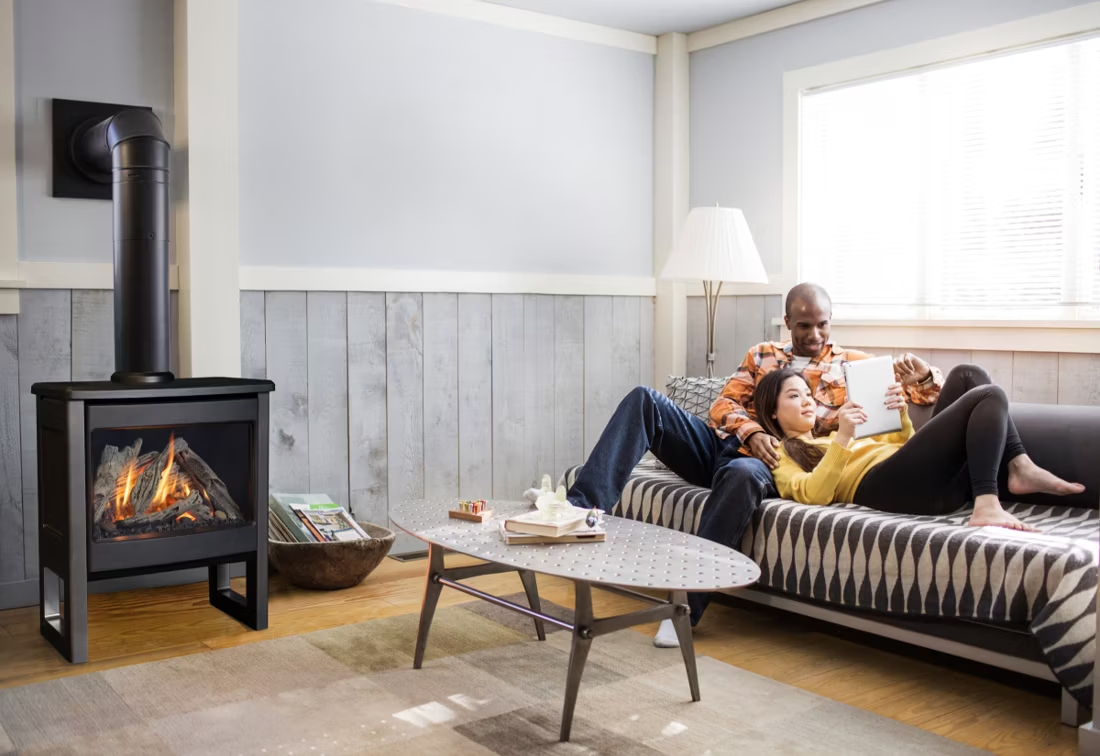
Four fuels. One honest answer for Bourbon County.
Three steps. No salesperson until you're ready.
Tell us about your project
Your zip code, your situation, and the fuel you're leaning toward—or let the answers point you to one.
See what's actually available
The brands dealers within 100 miles genuinely carry—real options, never a catalog mirage.
Get your dealer & Project Guide
A trusted local dealer, plus the free Project Guide & Parts List that names every component of the job.
Frequently Asked Questions
Which fuel works best in Bourbon County?
It depends on the home and how you want to use it. Wood is the traditional choice for rural Bourbon County properties—with oak, hickory, and osage orange woodlots nearby, many homeowners split their own fuel and use a stove or insert as a genuine backup during ice storms and power outages. Gas is the low-maintenance option for Fort Scott homes on natural gas service or rural homes running propane—no wood handling, instant on-demand heat. Pellet stoves are a solid middle ground, especially with Lignetics supply reasonably accessible in the region, though most Bourbon County homeowners still lean wood or gas given the local firewood tradition. Electric fireplaces work well as supplemental heat in bedrooms or additions, but with winter lows averaging in the low 20s rather than sub-zero, they're a real option for secondary spaces here—not just ambiance. Many Bourbon County homes pair wood as primary heat with gas or electric in rooms farther from the main stove.
Do I need a permit to install a fireplace in Bourbon County?
In most cases, yes, particularly inside Fort Scott city limits, where new wood stoves, wood inserts, gas fireplaces, gas inserts, and pellet stoves typically require a building permit, and gas work requires a separate permit pulled by a licensed gas-fitter. In unincorporated Bourbon County, permitting requirements are lighter than in many urban counties, but any gas line work still needs to go through a licensed installer for safety and code compliance. Electric fireplace installs generally don't need a permit unless you're hardwiring a built-in unit with new circuitry. A local hearth retailer handling your installation will typically manage the permitting process directly, so it's worth asking upfront whether that's included.
Are there air quality or burning restrictions in Bourbon County?
No—Bourbon County doesn't have the winter inversion issues or non-attainment status that trigger burn bans in places like the Klamath Basin or parts of the Pacific Northwest. There's no local wood-burning curtailment program here. That said, any new wood stove installation should still meet current EPA emissions standards, and a well-seasoned load of local oak or hickory (split and dried at least six months, ideally a full year) will burn cleaner and more efficiently than green wood regardless of regulation. If you're burning osage orange, note that it burns very hot—build fires with that in mind rather than loading a stove designed around softer species.
Can one local hearth retailer handle all four fuel types?
In a county with under 9,000 residents, most Bourbon County-area hearth retailers are generalists by necessity—carrying wood, gas, and pellet units, with electric fireplaces stocked as a smaller line rather than a specialty. That's actually an advantage for cross-shopping: a single Fort Scott-area retailer can usually show you working displays across three or four fuel types in one visit and walk through the trade-offs for your specific house, rather than sending you to separate stores. If a retailer doesn't carry a fuel you're interested in, ask who they'd recommend regionally—dealers in a county this size tend to know each other's specialties.
How does service work in rural parts of Bourbon County?
Most chimney sweeps and gas technicians serving Bourbon County are based in or near Fort Scott and travel out to the smaller communities—Bronson, Redfield, Uniontown, Devon—and the farms in between. Expect a modest trip charge for calls well outside Fort Scott, though distances in a county this size are generally manageable compared to larger rural counties out west. Scheduling annual chimney sweeping or gas inspection in late summer or early fall, before the November-through-March heating season ramps up, is easier than trying to book a mid-January emergency call. If you're on a rural property, it's also worth keeping basic backup supplies on hand—split wood as a hedge against a winter power outage, even if gas or electric is your primary heat.
What's the typical cost range for fireplace installation across all fuel types in Bourbon County?
Costs vary by fuel and by how much of the venting or gas line work is new versus existing. Wood stove or insert installation typically runs $4,000–$8,500, with the higher end covering new chimney construction rather than a simple insert into an existing masonry flue. Gas fireplace, insert, or stove installation runs roughly $4,000–$10,000, with cost driven mostly by how much new gas line and venting work is required—conversions into an existing gas hearth cost less. Pellet stove or insert installation generally falls in the $4,000–$7,000 range. Electric fireplace costs are the most modest: $200–$3,000 for the unit itself, plus $400–$1,200 in labor for anything beyond a simple plug-and-play install. For Bourbon County-specific pricing tied to local retailers, see the county + fuel pages above.
Does a fireplace add value to my home?
On average, a fireplace adds back to the home about the same amount you spent installing it. Add the monthly savings from heating the rooms you actually use instead of the whole house—often hundreds of dollars a year—and the value case is strong before you even count what a fire does for how your family uses the room.
Can a fireplace actually lower my heating bill?
Yes—by creating a comfort zone. A furnace heats every square foot of the house just to warm the one room you're in; a gas fireplace on low burns roughly a sixth of the gas a typical furnace does. Set the furnace around 55–60 degrees as a baseline, then heat the rooms your family actually uses. Families who heat this way commonly save $20–$60 a month.
Should the dealer who sells my fireplace also install it?
Ideally, yes. A fireplace project involves vent pipe, gas line, electrical, and often tile or stone. Hire three or four separate trades and you own the liability and the game of telephone between them. One company selling and installing means one accountable party, start to finish—ask about factory training, on-time completion records, and what happens if an inspection fails.
Can I install a fireplace myself?
If you're putting a fire in your house on purpose, it's best to work with an expert. Unless you're genuinely experienced in framing, gas line, vent pipe, and the national code on clearances to combustibles, have a professional do it—and ideally the same company that sells you the fireplace, so warranty, service, and liability all live under one roof.
Stove and Fireplace Dealers in Bourbon County
Listings include WhyFire partner dealers, dealers we have verified as authorized for the brands we recommend, and established local businesses that carry hearth products. Every listing shows which one it is. The ones marked Preferred run on WhyFire's software, so they can show you real pricing and book your appointment right here. No manufacturer pays for placement. How we verify dealers →
The Fireplace And More Store
Flames For Home & Hearth
Get matched with a Bourbon County hearth dealer.
Pick your fuel below and we'll put together a free Project Guide & Parts List—the parts, the vent kit, and the local Bourbon County dealer we recommend for your project.
Find Your Fireplace →