
Find the right fireplace for your Allen County home.
Oak, hickory, and osage orange firewood are still stacked on porches from Iola to Humboldt, LaHarpe to Moran. Whether you're heating with wood, propane, pellets, or electric, this hub connects you with trusted local dealers who service all of Allen County.
Every Project Starts From One of These Five Situations
Moderate winters, oak-and-hickory country in southeast Kansas.
Allen County sits in the rolling farmland of southeast Kansas, home to about 9,100 people spread across Iola—the county seat—and the smaller communities of Humboldt, Moran, LaHarpe, Savonburg, Elsmore, Bassett, and Gas. Winters here average lows around 20°F, with a heating season only about half as long and demanding as what you'd see in Fargo, ND, so while nights get genuinely cold, this isn't extreme-cold-climate territory. The hardwoods that dominate local timber—oak, hickory, and the extremely dense osage orange (hedge) that grows along fence rows throughout the county—have heated farmhouses here for generations, and hedge wood in particular is prized for overnight burns because it's so dense it holds coals far longer than most species.
This hub rolls up hearth retailers, chimney sweeps and gas techs, and fuel suppliers covering every corner of the county—from Iola's downtown square out to the grain elevators of Moran and the rail crossing at LaHarpe. Pick a fuel below to get into specifics: local dealers, typical installation costs, and the resources tied to your project. Whether you're replacing an aging wood stove on a Humboldt farmstead or adding a propane insert in town, this is the starting point.
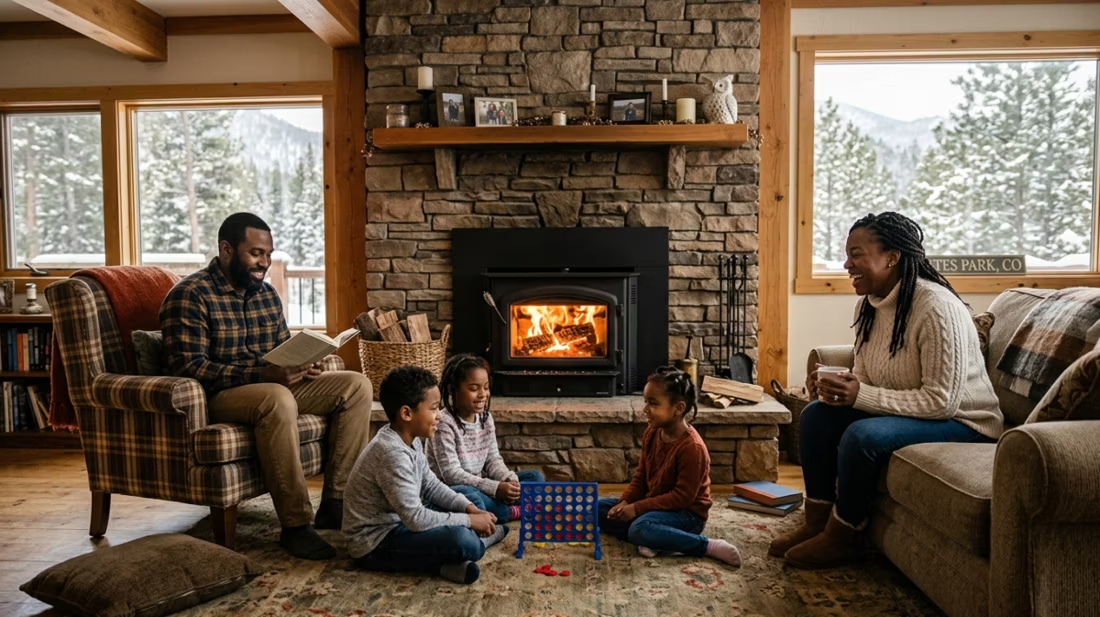
Four fuels. One honest answer for Allen County.
Three steps. No salesperson until you're ready.
Tell us about your project
Your zip code, your situation, and the fuel you're leaning toward—or let the answers point you to one.
See what's actually available
The brands dealers within 100 miles genuinely carry—real options, never a catalog mirage.
Get your dealer & Project Guide
A trusted local dealer, plus the free Project Guide & Parts List that names every component of the job.
Frequently Asked Questions
Which fireplace fuel works best in Allen County?
It depends on the home and how you use it. Wood is the traditional choice here—osage orange and hickory are dense, locally abundant, and burn long and hot, which matters when winter lows drop to around 20°F. Propane fills the role natural gas plays in bigger cities, since most homes outside Iola's core don't have piped gas service—propane fireplaces and inserts give you push-button heat without splitting wood. Pellet stoves are a solid middle ground for homeowners who want wood-style heat without the chainsaw work; Lignetics and Indeck Energy Services both distribute pellets into this part of Kansas. Electric fireplaces work well as supplemental heat in bedrooms or additions, and with our moderate (not extreme) winter heating needs, they're a realistic secondary option rather than just a novelty. Many Allen County homes end up mixing fuels—a wood or pellet stove as the main heat source, propane or electric in rooms that don't get a chimney.
Do I need a permit to install a fireplace in Allen County?
In most cases, yes, though the process is simpler here than in a large metro. New wood stoves and inserts, gas fireplaces and inserts, and pellet stoves typically require a building permit through the applicable city (Iola, Humboldt, Moran, LaHarpe, and the rest) if you're inside city limits, or the county if you're on a rural address. Propane installations need a licensed gas-fitter for the line work regardless of the permit itself. Any new wood-burning appliance sold today has to meet current EPA emissions standards, which most retailers handle automatically since they only stock certified units. Electric fireplaces plugged into an existing outlet generally don't need a permit; a built-in electric unit that requires new wiring does. Most local retailers pull the permit as part of the installation quote, so it's rarely something homeowners have to navigate solo.
Are there air quality restrictions on wood burning in Allen County?
No—Allen County isn't a non-attainment area and doesn't have the winter temperature inversions that trigger burn advisories in some parts of the country. There's no local burn-ban program here. That said, any new wood stove or insert sold and installed today still has to meet the federal EPA 2020 NSPS emissions standard, which is a national requirement independent of local air quality conditions. In practice this just means retailers stock certified units—it doesn't change how or when you can burn.
Will one dealer carry every fuel type, or do I need to shop around?
With a county population around 9,100, most hearth retailers here focus on two or three fuel types rather than stocking all four. A dealer based in Iola might carry wood stoves, wood inserts, and propane units with strong local demand, while pellet stoves or electric fireplaces might be a smaller part of their floor. If you're not sure which fuel is right for your home, it's worth asking upfront what a given retailer specializes in—some homeowners end up working with a wood-focused dealer for the stove and a separate propane supplier for tank service and fuel delivery. Our matching process accounts for this and connects you with a dealer who actually carries and installs the fuel type you're after, rather than one who'll try to sell you whatever's on the floor.
How does installation and service work for rural addresses outside Iola?
Most retailers and service techs covering Allen County are based in or near Iola and drive out to Humboldt, Moran, LaHarpe, Savonburg, and the farm roads around Elsmore, Bassett, and Gas for both new installs and annual service. Expect a modest trip charge for addresses well outside town—that's common practice for a rural county this size. Scheduling chimney sweeps or propane inspections before the first cold snap in October is easier than trying to get an emergency appointment once overnight lows are already in the 20s. If you're on a farmstead with a longer gravel drive, it's worth flagging that when you book so the tech can plan for it.
What's the typical cost range for fireplace installation across fuel types in Allen County?
Costs run a bit lower here than in higher cost-of-living markets, but the spread by fuel type follows a similar pattern. Wood stove or insert installation: roughly $3,800–$7,500 for a typical job, more if new masonry or a full chimney liner is involved. Propane fireplace, insert, or stove: roughly $4,000–$9,000 depending on whether you're tapping an existing tank or need new line work run. Pellet stove or insert: roughly $4,000–$6,500 for a standard installation. Electric fireplace: $200–$2,500 for the unit itself, plus $300–$900 in labor for anything beyond a plug-and-play wall unit. Exact numbers depend on your specific home and which local dealer you work with—the county + fuel pages above break this down further.
What is an in-home preview and do I need one?
It's a visit where a hearth professional measures your space, confirms the model you picked actually works in your home, and walks the specs—framing, gas line, venting, finish work—before anything is ordered. Some details you just can't know until you see the house. Never make a down payment without one; it's the single most-skipped step that burns buyers.
Does a fireplace add value to my home?
On average, a fireplace adds back to the home about the same amount you spent installing it. Add the monthly savings from heating the rooms you actually use instead of the whole house—often hundreds of dollars a year—and the value case is strong before you even count what a fire does for how your family uses the room.
Wood, gas, pellet, or electric—how do I choose?
Match the fuel to your life, not the other way around. Wood: lowest fuel cost and total power-outage independence, but you're hauling and stacking. Gas: press a button, set a thermostat, no maintenance to speak of. Pellet: wood economics with automatic feeding, in exchange for weekly cleaning and a need for electricity. Electric: plugs in anywhere with honest supplemental heat. Nobody regrets the fuel that fits how they actually live.
Can a fireplace actually lower my heating bill?
Yes—by creating a comfort zone. A furnace heats every square foot of the house just to warm the one room you're in; a gas fireplace on low burns roughly a sixth of the gas a typical furnace does. Set the furnace around 55–60 degrees as a baseline, then heat the rooms your family actually uses. Families who heat this way commonly save $20–$60 a month.
Stove and Fireplace Dealers in Allen County
Listings include WhyFire partner dealers, dealers we have verified as authorized for the brands we recommend, and established local businesses that carry hearth products. Every listing shows which one it is. The ones marked Preferred run on WhyFire's software, so they can show you real pricing and book your appointment right here. No manufacturer pays for placement. How we verify dealers →
Chimney Sweep
Modern Air Conditioning, Inc
Jay Henges Enterprises
Flames For Home & Hearth
The Fireplace And More Store
Midwest Fireplace
Services Unlimited
Swims And Sweeps
Sharps Pawn
21st Century Chimney Sweep
Black Gold Inc.
Start your Allen County fireplace project.
Tell us about your home and we'll match you with a trusted local dealer and put together a free Project Guide & Parts List—the exact parts, vent kit included, and the retailer we recommend for your Allen County installation.
Find Your Fireplace →