
Find the right heat for a Worth County winter.
Wood, gas, pellet, and electric fireplace resources for Northwood, Manly, Kensett, and every farm and town across Worth County. Find the right unit and get matched with a trusted local hearth retailer.
Every Project Starts From One of These Five Situations
8,378 heating degree days on the Iowa-Minnesota border.
Worth County sits right against the Minnesota state line in north-central Iowa, and the climate feels like it—a 6A zone with an average winter low near 4°F and 8,378 heating degree days a year, putting it in the same cold-climate tier as Fargo or International Falls rather than most of the rest of Iowa. With just under 4,900 residents spread across small towns like Northwood, Manly, Kensett, Hanlontown, and Grafton, and a lot of farmland in between, homes here rely on serious heating equipment for a season that runs long past what southern Iowa deals with. Oak, hickory, maple, and walnut are the wood species most commonly split and burned in the county, reflecting the mixed hardwood stands along the Shell Rock River and scattered farm woodlots.
What you'll find on this hub: hearth retailers, service technicians, and fuel suppliers covering the whole county—from Northwood's county seat down through Manly and Kensett and out to the rural farmsteads along Highway 105. Pick your fuel below for specifics on local dealers, installation costs, and recommended units for a county with no air quality restrictions on wood burning but a heating season that demands equipment built for real cold.
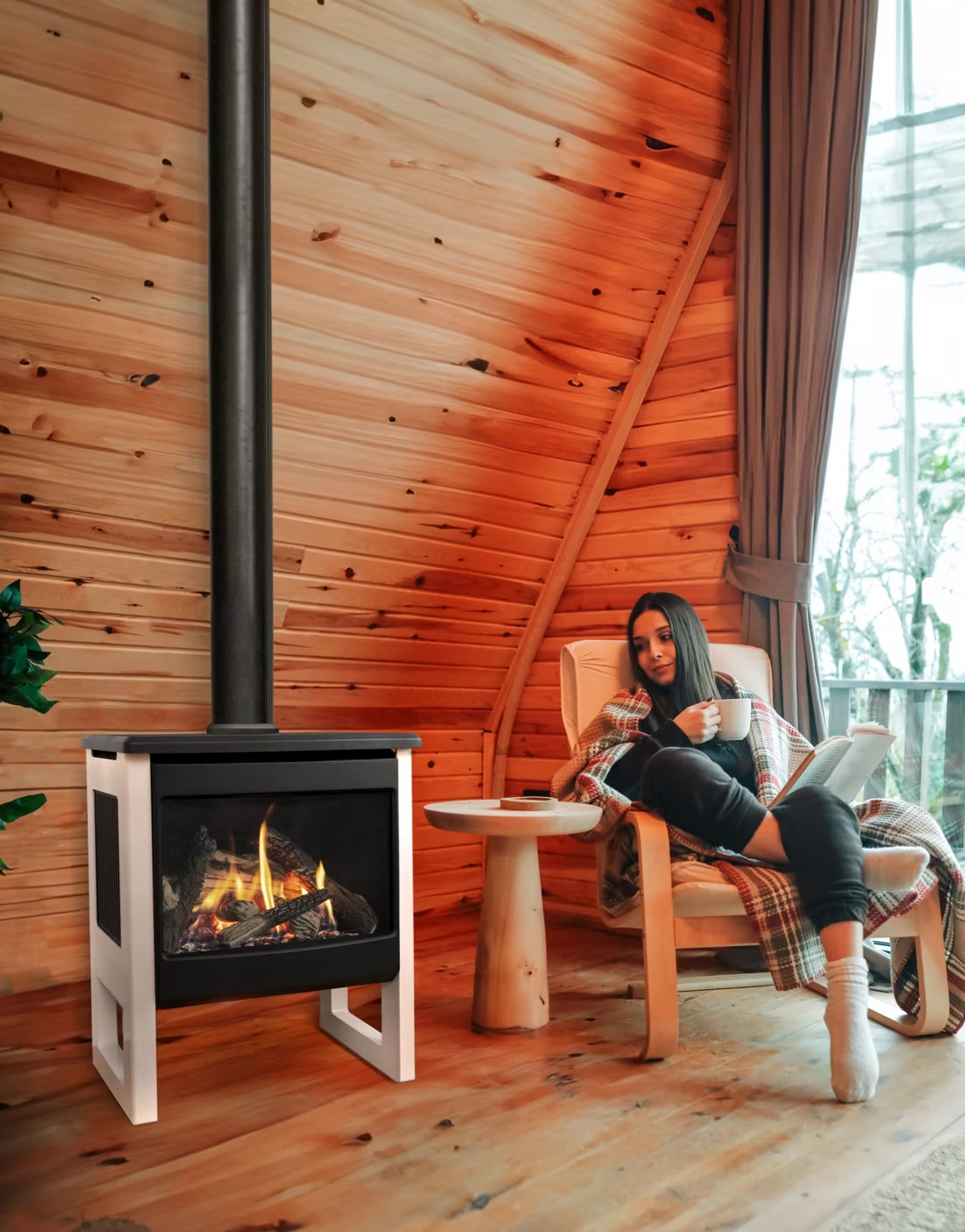
Four fuels. One honest answer for Worth County.
Three steps. No salesperson until you're ready.
Tell us about your project
Your zip code, your situation, and the fuel you're leaning toward—or let the answers point you to one.
See what's actually available
The brands dealers within 100 miles genuinely carry—real options, never a catalog mirage.
Get your dealer & Project Guide
A trusted local dealer, plus the free Project Guide & Parts List that names every component of the job.
Frequently Asked Questions
Which fuel works best in Worth County?
It depends on the home and how you use it, but the cold matters a lot here. With winter lows averaging around 4°F and over 8,300 heating degree days a year, wood is a strong option for primary heat—oak and hickory from local farm woodlots burn long and hot, and a well-sized wood stove or insert can carry a farmhouse through a stretch of subzero nights without relying on the grid. Gas is the convenience pick for in-town homes in Northwood or Manly with natural gas service, or propane for the more rural addresses—instant heat, no wood-splitting required. Pellet stoves are a solid middle ground, especially with Lignetics and Indeck Energy Services both supplying the region, though pellet appliances do need electricity to run the auger and blower, which matters if outages are a concern. Electric fireplaces work well as supplemental heat in bedrooms or additions but shouldn't be counted on as the sole heat source through a Worth County winter. Many households here run wood or pellet as primary heat with gas or electric backing it up.
Do I need a permit to install a fireplace in Worth County?
In most cases, yes. New wood stoves, wood inserts, gas fireplaces, gas inserts, gas stoves, and pellet appliances typically require a building permit through the applicable local jurisdiction—the City of Northwood, City of Manly, or the Worth County building office for unincorporated areas and farmsteads. Gas installations also need a separate gas line permit and licensed gas-fitter for the connection work. Electric fireplaces usually don't require a permit unless the installation involves hardwiring a built-in unit into new circuitry. Most hearth retailers serving the county handle the permitting as part of the installation, so it's rarely something a homeowner has to navigate alone.
Are there air quality restrictions on wood burning in Worth County?
No. Worth County has no designated air quality non-attainment status and no wood-burning curtailment program—unlike some western basin counties that see winter inversions trap smoke. That said, a properly sized and EPA-certified wood stove or insert will still burn cleaner, use less wood, and produce less visible smoke than an old pre-EPA box stove, which matters for neighbors in the tighter lot spacing of Northwood or Manly versus the open farmland further out.
Can one local hearth retailer handle all four fuel types?
In a county this size—under 4,900 people—it's common for a single retailer to carry multiple fuel types rather than specialize in just one, since the customer base doesn't support narrow niches. Many dealers serving Worth County carry wood, gas, and pellet lines together, with electric fireplaces as an add-on category. Some homeowners also work with retailers based in Mason City to the south, which has a larger selection given the bigger population base. If you're cross-shopping fuels, ask a local dealer directly which lines they stock and install—coverage varies retailer to retailer even within a small county.
How does service work in rural parts of Worth County?
Most technicians serving Worth County are based in or near Northwood and travel out to Manly, Kensett, Hanlontown, Grafton, and the farmsteads along the county's gravel roads. Expect to schedule a modest travel fee for the more remote calls. Given how long and cold the heating season runs here—the season often starts in October and doesn't let up until April—booking chimney sweeps and gas inspections in late summer or early fall, before the rush, is the easiest way to avoid a mid-January wait for service.
What's the typical cost range for fireplace installation across all fuel types in Worth County?
Costs vary by fuel and by how much venting or gas line work is involved. Wood stove or insert installation: roughly $4,000-$8,500 for a standard install, more if new chimney construction is needed for a farmhouse retrofit. Gas fireplace, insert, or stove: roughly $4,000-$10,000 depending on whether an existing gas line or propane tank is already in place. Pellet stove or insert: roughly $4,000-$7,000 for a typical install. Electric fireplace: $200-$3,000 for the unit itself, plus $300-$1,000 in labor for anything beyond a simple plug-in. See the county + fuel pages above for retailer-specific pricing.
Wood, gas, pellet, or electric—how do I choose?
Match the fuel to your life, not the other way around. Wood: lowest fuel cost and total power-outage independence, but you're hauling and stacking. Gas: press a button, set a thermostat, no maintenance to speak of. Pellet: wood economics with automatic feeding, in exchange for weekly cleaning and a need for electricity. Electric: plugs in anywhere with honest supplemental heat. Nobody regrets the fuel that fits how they actually live.
Does a fireplace add value to my home?
On average, a fireplace adds back to the home about the same amount you spent installing it. Add the monthly savings from heating the rooms you actually use instead of the whole house—often hundreds of dollars a year—and the value case is strong before you even count what a fire does for how your family uses the room.
Can I install a fireplace myself?
If you're putting a fire in your house on purpose, it's best to work with an expert. Unless you're genuinely experienced in framing, gas line, vent pipe, and the national code on clearances to combustibles, have a professional do it—and ideally the same company that sells you the fireplace, so warranty, service, and liability all live under one roof.
What is an in-home preview and do I need one?
It's a visit where a hearth professional measures your space, confirms the model you picked actually works in your home, and walks the specs—framing, gas line, venting, finish work—before anything is ordered. Some details you just can't know until you see the house. Never make a down payment without one; it's the single most-skipped step that burns buyers.
Stove and Fireplace Dealers in Worth County
Listings include WhyFire partner dealers, dealers we have verified as authorized for the brands we recommend, and established local businesses that carry hearth products. Every listing shows which one it is. The ones marked Preferred run on WhyFire's software, so they can show you real pricing and book your appointment right here. No manufacturer pays for placement. How we verify dealers →
Daley's Plumbing & Heating
Young Plumbing & Heating
Johnson Heating & A/c
Christianson P & H Fireplace
Jim & Dudes Plumbing & Heating
Jim And Dude’s
Greenman Heating & Refrigeration Inc
Arens Heating & Cooling
Get matched with a Worth County hearth dealer.
Pick your fuel below and we'll match you with a trusted local retailer and send you a free Project Guide & Parts List—the exact parts, vent kit, and recommended dealer for your project.
Find Your Fireplace →