
Heat that holds through an O'Brien County winter.
Wood, gas, pellet, and electric fireplace resources for every town in O'Brien County—from Sheldon to Paullina. Find the right unit and connect with a trusted local hearth retailer.
Every Project Starts From One of These Five Situations
Northwest Iowa farm country, built for a long heating season.
O'Brien County sits in the rolling farmland of northwest Iowa, where flat horizons mean winter wind has nothing to slow it down. At climate zone 6A with roughly 7,900 heating degree days a year, this county runs colder than Madison, Wisconsin over a full season—average lows near 5°F, and stretches of subzero wind chill aren't unusual from December through February. Oak, hickory, maple, and walnut are the standard firewood species here, sourced from farmstead windbreaks and county timber ground as much as commercial suppliers. With no local air quality restrictions on wood burning, homeowners have more flexibility than in coastal non-attainment counties—the limiting factor is usually stove sizing and chimney height against the wind, not regulation.
What you'll find on this hub: hearth retailers, service technicians, and fuel suppliers serving every community in the county—Sheldon and Primghar as the population centers, plus Sanborn, Paullina, Hartley, Sutherland, and the surrounding rural townships. Pick your fuel below to drill into specifics—local dealers, installation costs, recommended units, and the resources that match your project. Whether you're heating an acreage outside Sheldon or a farmhouse near the Little Sioux River, this is the starting point.
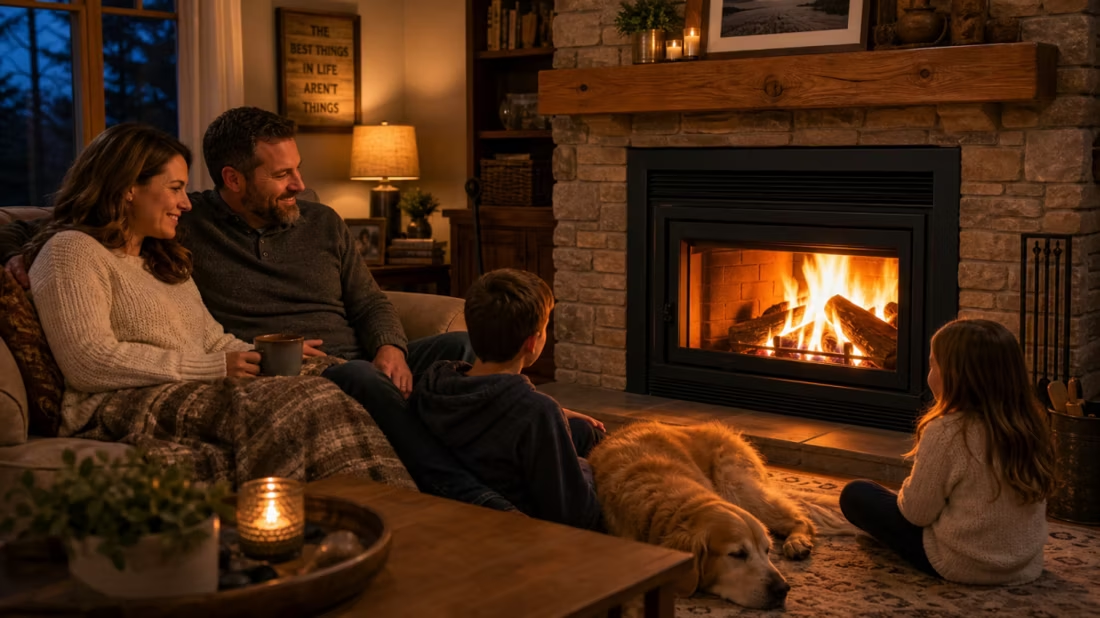
Four fuels. One honest answer for O'Brien County.
Three steps. No salesperson until you're ready.
Tell us about your project
Your zip code, your situation, and the fuel you're leaning toward—or let the answers point you to one.
See what's actually available
The brands dealers within 100 miles genuinely carry—real options, never a catalog mirage.
Get your dealer & Project Guide
A trusted local dealer, plus the free Project Guide & Parts List that names every component of the job.
Frequently Asked Questions
Which fuel works best for a home in O'Brien County?
It depends on the house and how you want to use the heat. Wood is a strong fit here—oak, hickory, maple, and walnut are all locally available, and a well-sized catalytic or non-cat stove can carry a farmhouse through the coldest stretches of a 7,900-HDD winter without leaning on the furnace. Gas is the low-maintenance choice for homes on propane or natural gas service in Sheldon and Primghar—set it, forget it, and it still works during a power outage if it's a standing-pilot unit. Pellet is a solid middle ground if you want wood-like ambiance without splitting and stacking cordwood, though it does depend on electricity to run the auger and blower, so a backup plan matters during ice storms. Electric fireplaces are mostly supplemental here—good for a bedroom, den, or finished basement, but not enough BTU output to be a primary heat source once temperatures drop into single digits.
Do I need a building permit to install a fireplace in O'Brien County?
In most cases, yes. New wood stoves, wood inserts, gas fireplaces, gas inserts, gas stoves, and pellet stoves typically require a building permit, and gas installations need a separate permit for the gas line work along with a licensed installer. Within Sheldon or Primghar city limits, permits are handled through the city office; outside incorporated towns, unincorporated O'Brien County properties generally go through the county zoning and building office. Electric fireplaces usually don't require a permit unless it's a built-in unit that involves new wiring or a dedicated circuit. Most local hearth retailers pull the permit as part of the installation quote, so it's worth asking upfront rather than handling it yourself.
Is wood burning restricted in O'Brien County?
No—O'Brien County has no air quality non-attainment designation and no local wood-burning curtailment program, unlike counties in the Pacific Northwest that deal with winter inversions. That said, new wood stove installations still need to meet EPA 2020 NSPS emissions standards to be sold and installed, which is a federal requirement regardless of local air quality. Good chimney height and proper clearance still matter here for a different reason: open farmland means sustained wind, and a stove that's under-drafted in calm weather can back-draft smoke into the house on a gusty January night if the flue isn't sized and capped correctly.
Can one local hearth retailer handle all four fuel types?
Coverage varies by dealer. In a county this size, it's common for a single retailer in Sheldon or Primghar to carry wood, gas, and pellet units, with electric fireplaces as a smaller add-on line rather than a core focus. Some smaller shops specialize—one might be strongest on wood stoves and hearth masonry, another might focus on gas log sets and gas inserts for town homes with existing gas service. If you're not sure which fuel fits your house, a multi-fuel dealer can walk you through working displays and talk through the trade-offs for an acreage versus an in-town lot.
How does service work for rural acreages outside Sheldon and Primghar?
Most chimney sweeps and hearth service techs serving O'Brien County are based in one of the two larger towns and travel out to acreages and the smaller communities—Sanborn, Paullina, Hartley, Sutherland—as part of their regular route. Expect a modest trip fee for calls further out, and expect fall (September–October) to book up fastest since that's when most homeowners schedule annual chimney sweeps and gas unit inspections before the first cold snap. If you're on a gravel road that gets drifted in during heavy snow, it's worth scheduling wood stove and chimney service early rather than waiting until you smell smoke back-drafting mid-winter.
What's the typical cost range for fireplace installation across all fuel types in O'Brien County?
Costs run fairly close to regional Midwest averages. Wood stove or insert installation: roughly $4,000–$8,500 for a typical retrofit, more if a new masonry chimney or full liner replacement is needed. Gas fireplace, insert, or stove: roughly $4,000–$10,000, with the low end for homes that already have gas service run to the room and the high end for new gas line work plus venting. Pellet stove or insert: roughly $4,000–$7,000 installed. Electric fireplace: $200–$2,800 for the unit itself, plus $300–$1,000 in labor for anything beyond a plug-and-play install, such as a built-in wall unit with a dedicated circuit. See the county + fuel pages above for cost detail tied to specific local retailers.
How much should I budget for a fireplace?
For an average home—covering the fireplace, the vent pipe, and basic installation—a budget between $3,900 and $5,500 gives you a lot of options across wood, gas, and pellet. By the time you add finish work, gas line, and electrical, the average complete installation lands between $5,000 and $12,000 all-in. In a remodel or new build, a good rule is to put about 2.5% of the total project cost toward the fireplace.
Can a fireplace actually lower my heating bill?
Yes—by creating a comfort zone. A furnace heats every square foot of the house just to warm the one room you're in; a gas fireplace on low burns roughly a sixth of the gas a typical furnace does. Set the furnace around 55–60 degrees as a baseline, then heat the rooms your family actually uses. Families who heat this way commonly save $20–$60 a month.
Does a fireplace add value to my home?
On average, a fireplace adds back to the home about the same amount you spent installing it. Add the monthly savings from heating the rooms you actually use instead of the whole house—often hundreds of dollars a year—and the value case is strong before you even count what a fire does for how your family uses the room.
Can I install a fireplace myself?
If you're putting a fire in your house on purpose, it's best to work with an expert. Unless you're genuinely experienced in framing, gas line, vent pipe, and the national code on clearances to combustibles, have a professional do it—and ideally the same company that sells you the fireplace, so warranty, service, and liability all live under one roof.
Stove and Fireplace Dealers in O'Brien County
Listings include WhyFire partner dealers, dealers we have verified as authorized for the brands we recommend, and established local businesses that carry hearth products. Every listing shows which one it is. The ones marked Preferred run on WhyFire's software, so they can show you real pricing and book your appointment right here. No manufacturer pays for placement. How we verify dealers →
Holland House Design
Kozy Heat Gallery
Murphys Flooring Gallery
Fireplace Professionals, Inc
Find your fireplace in O'Brien County.
Pick your fuel below to see installation costs, recommended units, and get matched with a local dealer plus a free Project Guide & Parts List for your home.
Find Your Fireplace →