
Find the right hearth for every corner of Monroe County.
Wood, gas, pellet, and electric fireplace resources for Albia, Melrose, Lovilia, and the farms and small towns in between. Get matched with a local hearth retailer who knows what actually works in a southern Iowa winter.
Every Project Starts From One of These Five Situations
Southern Iowa winters, hardwood heritage.
Monroe County covers about 430 square miles of rolling farmland in south-central Iowa, home to just under 4,400 people. Winters here average lows around 13°F with a heating load in the same range as Madison, Wisconsin, and enough to make single-digit overnight temperatures a routine part of January. The county sits in a hardwood belt: oak, hickory, maple, and walnut are the firewood species most local woodlots and farm timber stands produce, and they're the reason wood stoves and inserts remain a practical primary-heat choice for a lot of rural households here, not just a backup.
This hub covers hearth retailers, service technicians, and fuel suppliers reaching every community in the county—from the county seat in Albia out to Melrose, Lovilia, and the unincorporated crossroads in between. Because Monroe County's population is small, some of the businesses serving it are based in larger neighboring towns like Ottumwa or Centerville and drive in for installs and service calls. Pick a fuel below to see local dealers, realistic installed costs, and unit recommendations sized for a southern Iowa winter.
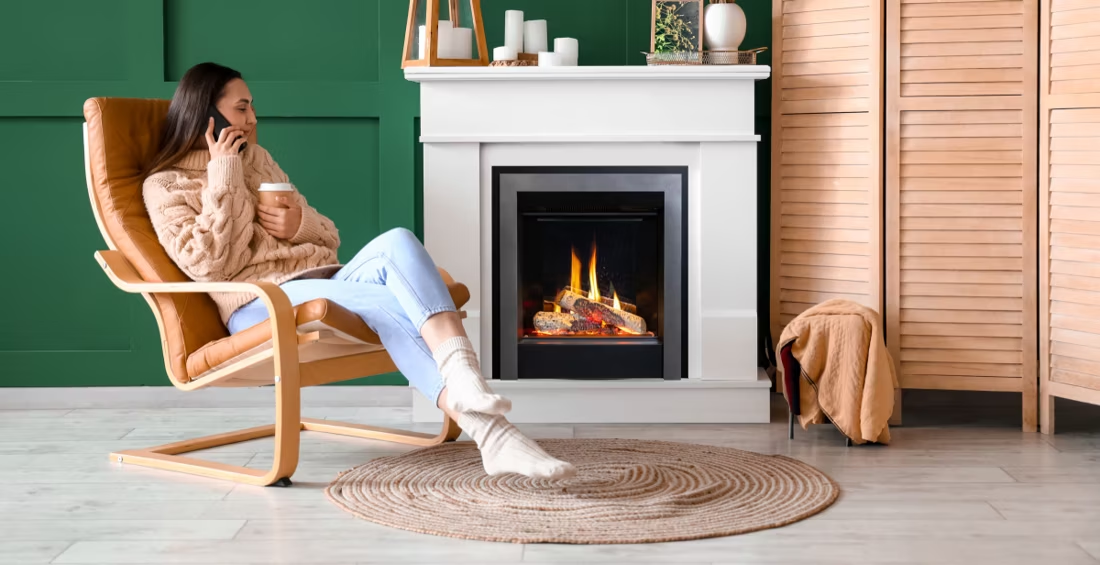
Four fuels. One honest answer for Monroe County.
Three steps. No salesperson until you're ready.
Tell us about your project
Your zip code, your situation, and the fuel you're leaning toward—or let the answers point you to one.
See what's actually available
The brands dealers within 100 miles genuinely carry—real options, never a catalog mirage.
Get your dealer & Project Guide
A trusted local dealer, plus the free Project Guide & Parts List that names every component of the job.
Frequently Asked Questions
Which fuel works best in Monroe County?
It depends on the house and the wood lot. Wood is the traditional workhorse here—oak and hickory run hot and long, and a lot of Monroe County homes have access to farm timber or a woodlot that keeps fuel costs near zero. A cast-iron or catalytic stove sized for the space will comfortably carry a home through a 13°F night. Gas is the low-maintenance option, especially for homes on propane rather than piped natural gas—no wood to split or haul, and it's the easiest fuel to zone into a bedroom or sunroom. Pellet splits the difference: less labor than cordwood, and Lignetics and Indeck Energy Services pellets are both distributed regionally, so supply isn't an issue. Electric works well as supplemental heat for a finished basement or a room that doesn't need full-time coverage, but on its own it won't carry a farmhouse through a Monroe County winter. Most homes here end up pairing wood or pellet as the primary heater with gas or electric somewhere secondary.
Do I need a permit to install a fireplace in Monroe County?
In most cases, yes. New wood stoves, wood inserts, gas fireplaces, gas inserts, gas stoves, and pellet stoves generally require a building permit, and gas installations need a licensed gas-fitter for the line work in addition to the permit. If you're inside Albia city limits, that permit runs through the city; in the unincorporated parts of the county, it goes through the Monroe County building department. Electric fireplaces usually skip the permit process unless you're hardwiring a built-in unit into new circuitry. Most retailers who install regularly in the county—including the ones based out of Wapello or Appanoose County—handle the permit paperwork as part of the job, so it's rarely something the homeowner has to chase down alone.
Are there air quality restrictions on wood burning in Monroe County?
No—Monroe County has no non-attainment designation, winter inversion issues, or wildfire-smoke advisories on record, unlike counties out West where burn bans are common. That means there are no voluntary or mandatory curtailment days here tied to local air quality. That said, an EPA-certified stove is still worth the upgrade over an older uncertified unit: modern catalytic and non-catalytic designs burn oak and hickory more completely, which means less creosote buildup, less smoke smell drifting into the yard, and noticeably better fuel efficiency on a cold overnight burn.
Can one local hearth retailer handle all four fuel types?
Because Monroe County's population is small, most of the businesses reaching local homes are regional dealers based in Ottumwa, Centerville, or the Des Moines metro rather than storefronts in Albia itself—and the ones that serve rural southern Iowa territory typically do carry all four fuel types, since they need the breadth to make the drive worthwhile. A handful of smaller local outfits focus mainly on wood and pellet, given how common farm timber and woodlots are here. If you want to compare fuels side by side, the multi-fuel regional dealers are the ones with working displays of each type.
How does service work in rural areas of Monroe County?
Most technicians covering Monroe County are based outside the county and route through on a schedule, hitting Albia and the surrounding farm roads on the same trip. Expect a modest trip fee for service calls out past Melrose or Lovilia—often $40–$80 depending on distance from the nearest base town. Fall (September–October) is the easier window to book a sweep or gas inspection; once temperatures drop into the single digits, service calls back up fast. If you're heating a farmhouse with wood as primary heat, it's worth scheduling the annual sweep early and keeping a backup heat source—propane space heater or a second stove—on hand in case a hard freeze delays a service visit.
What's the typical cost range for fireplace installation across all fuel types in Monroe County?
Costs run lower here than in metro markets, but the spread by fuel is similar in shape. Wood stove or insert installation typically runs $3,800–$7,500, more if new chimney or hearth work is needed. Gas fireplace, insert, or stove installation runs $4,000–$9,000, with propane line work and venting driving the high end for homes not already piped. Pellet stove or insert installation typically falls between $3,800–$6,500. Electric fireplace costs are the lowest: $200–$2,500 for the unit itself, plus $300–$900 in labor unless it's a simple plug-and-play placement. A local dealer walking your specific chimney, gas line, or electrical setup will narrow these ranges fast.
Does a fireplace add value to my home?
On average, a fireplace adds back to the home about the same amount you spent installing it. Add the monthly savings from heating the rooms you actually use instead of the whole house—often hundreds of dollars a year—and the value case is strong before you even count what a fire does for how your family uses the room.
Can I install a fireplace myself?
If you're putting a fire in your house on purpose, it's best to work with an expert. Unless you're genuinely experienced in framing, gas line, vent pipe, and the national code on clearances to combustibles, have a professional do it—and ideally the same company that sells you the fireplace, so warranty, service, and liability all live under one roof.
What is an in-home preview and do I need one?
It's a visit where a hearth professional measures your space, confirms the model you picked actually works in your home, and walks the specs—framing, gas line, venting, finish work—before anything is ordered. Some details you just can't know until you see the house. Never make a down payment without one; it's the single most-skipped step that burns buyers.
Wood, gas, pellet, or electric—how do I choose?
Match the fuel to your life, not the other way around. Wood: lowest fuel cost and total power-outage independence, but you're hauling and stacking. Gas: press a button, set a thermostat, no maintenance to speak of. Pellet: wood economics with automatic feeding, in exchange for weekly cleaning and a need for electricity. Electric: plugs in anywhere with honest supplemental heat. Nobody regrets the fuel that fits how they actually live.
Stove and Fireplace Dealers in Monroe County
Listings include WhyFire partner dealers, dealers we have verified as authorized for the brands we recommend, and established local businesses that carry hearth products. Every listing shows which one it is. The ones marked Preferred run on WhyFire's software, so they can show you real pricing and book your appointment right here. No manufacturer pays for placement. How we verify dealers →
Gingerich Stoves And Plumbing
Jc Huffman Cabinetry
Stoves & Chimneys Of Iowa, Inc.
Blazing Burners L.L.C.
Metro Heating & Cooling
Peters Heating & Ac
Get matched with a hearth pro in Monroe County.
Tell us about your home and we'll match you with a trusted local dealer and send a free Project Guide & Parts List—the exact parts, including the vent kit, and the dealer we recommend for your Monroe County project.
Find Your Fireplace →