
Find the Right Fireplace for Monona County Winters.
Wood, gas, pellet, and electric fireplace resources for every town in Monona County—from Onawa and Mapleton to Whiting, Castana, Soldier, and Ute. Connect with a trusted local hearth dealer who knows what actually works in Loess Hills winters.
Every Project Starts From One of These Five Situations
Loess Hills heating, from Onawa to the county line.
Monona County stretches along the Missouri River floodplain and up into the Loess Hills of western Iowa, with elevations ranging from around 1,000 feet near the river to over 1,200 feet in the bluffs. Winters here run long and cold—average lows near 8°F, with a heating season that runs nearly as long as Madison, Wisconsin's, putting Monona County's heating season closer to Madison, Wisconsin than the rest of central Iowa. The county's farm woodlots and river-bottom timber are heavy with oak, hickory, maple, and walnut, and that abundance of hardwood has kept wood heat a practical, cost-effective choice for generations of Monona County households.
This hub covers every fuel type serving the county—wood, gas, pellet, and electric—with local retailers, service technicians, and fuel suppliers listed below. Whether you're in Onawa, Mapleton, Whiting, Castana, Soldier, Ute, Moorhead, Blencoe, or Turin, pick your fuel below to see installation costs, recommended units, and the dealers who actually service homes in this part of western Iowa.
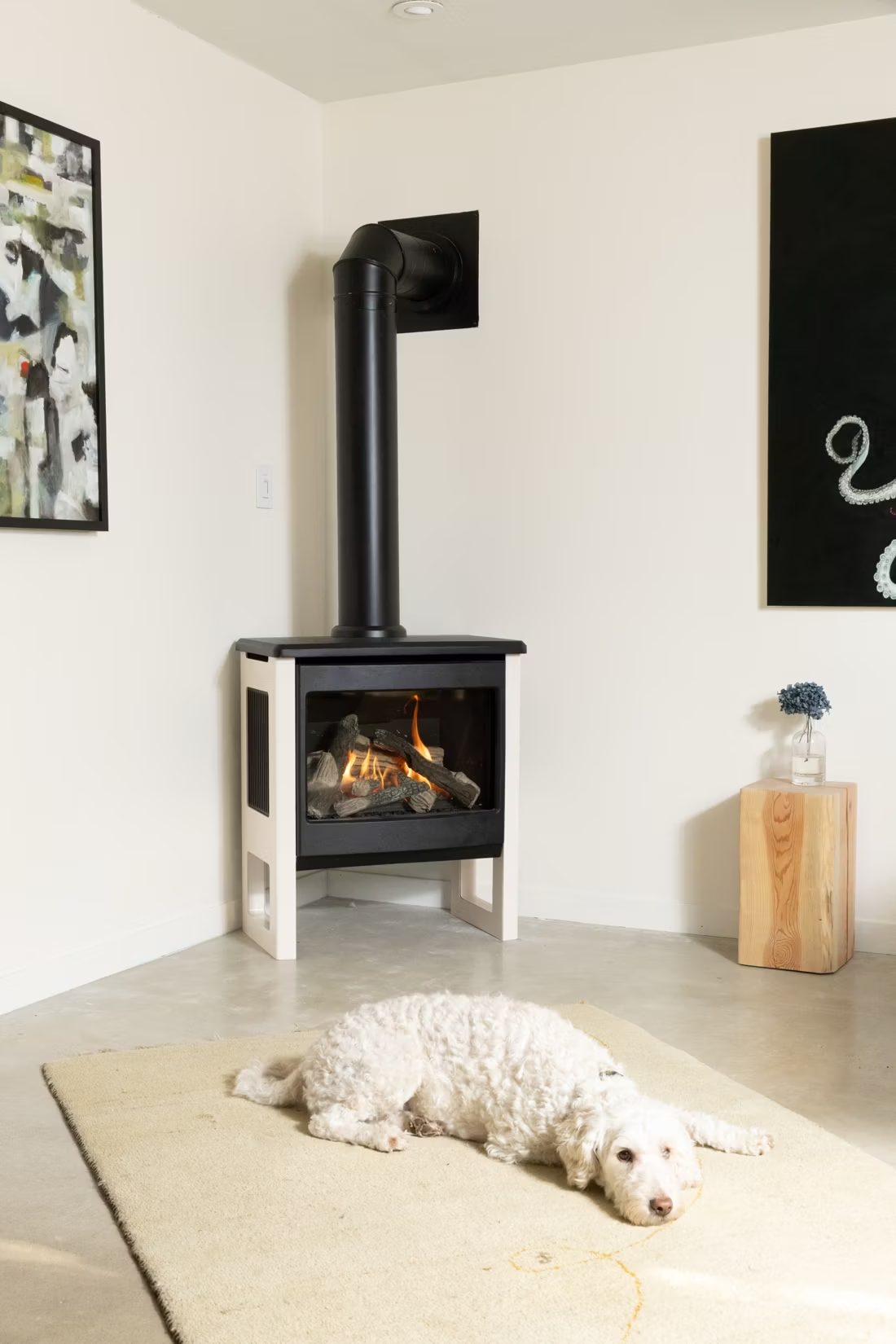
Four fuels. One honest answer for Monona County.
Three steps. No salesperson until you're ready.
Tell us about your project
Your zip code, your situation, and the fuel you're leaning toward—or let the answers point you to one.
See what's actually available
The brands dealers within 100 miles genuinely carry—real options, never a catalog mirage.
Get your dealer & Project Guide
A trusted local dealer, plus the free Project Guide & Parts List that names every component of the job.
Frequently Asked Questions
Which fuel works best for a home in Monona County?
It depends on your house and your woodlot. Wood remains a strong, cost-effective choice in Monona County—the oak, hickory, maple, and walnut common on local farms burn hot and long, and with average winter lows around 8°F, a properly sized wood stove or insert can carry a farmhouse through the coldest stretches without running up a propane bill. Gas—mostly propane outside Onawa's in-town lines—is the low-maintenance option: no wood handling, consistent heat, works well as a primary or backup source. Pellet stoves split the difference, using regionally available brands like Lignetics and Indeck Energy Services, and they're a good fit if you want wood-style ambiance without splitting and stacking cordwood. Electric fireplaces are supplemental here—fine for a bedroom or a finished basement, but not enough to carry a Monona County winter on their own. Many households end up running two fuels: wood or pellet as the workhorse, propane or electric to fill in.
Do I need a permit to install a fireplace or stove in Monona County?
Generally yes, though the process depends on where you live. Inside Onawa, Mapleton, Whiting, and the county's other incorporated towns, the town itself typically issues building permits for new wood stoves, inserts, gas appliances, and pellet stoves. Outside town limits, permitting runs through the Monona County Zoning & Building Department. New wood-burning appliances should be EPA-certified, and any propane line work needs to go through a licensed gas installer, separate from the appliance permit itself. Electric fireplace installs usually skip the permit process unless you're hardwiring a built-in unit into a new circuit. Most local dealers handle the paperwork as part of the installation, so it's rarely something you have to chase down yourself.
Are there any air quality restrictions on wood burning in Monona County?
No—Monona County has no wood-burning curtailment days, air quality advisories, or non-attainment designations, unlike some of Iowa's more urban counties. That's one advantage of the county's rural character: with a population under 6,100 spread across open farmland and the Loess Hills, wood smoke simply isn't a concentrated problem the way it can be in denser areas. That said, an EPA-certified stove still burns cleaner and more efficiently than an old smoke dragon, and it's worth choosing one even without a regulatory requirement pushing you toward it.
Is there a hearth retailer actually located in Monona County, or do I need to drive out?
Monona County's population—just over 6,000 people spread across towns like Onawa, Mapleton, and Whiting—doesn't support a large hearth showroom on its own. Most Monona County homeowners end up working with a dealer based in Sioux City, about 30 minutes northwest of Onawa, or occasionally Denison to the east in Crawford County. The good news is that these retailers regularly install and service homes throughout Monona County, and several carry all four fuel types—wood, gas, pellet, and electric—so you can compare options at one showroom before a technician ever comes out to your farmhouse or river-bottom property.
How does installation and service work if I live outside Onawa or Mapleton?
Most technicians serving Monona County are based in Sioux City or one of the larger towns and travel out to rural addresses—the river-bottom farms near Blencoe and Turin, the bluff-top properties around Castana and Soldier, and everything along the Highway 175 and 141 corridors. Expect a modest trip fee for service calls well outside town, and know that scheduling in September and October—before the first hard freeze—is easier than trying to book an emergency mid-January repair. If you're heating with wood or pellet as your primary source, keep a backup plan (a propane space heater, a second heating zone) in mind for the handful of days each winter when a tech simply can't get out fast enough.
What does fireplace installation typically cost across fuel types in Monona County?
Costs run lower than in a lot of metro areas, but the spread by fuel type is similar. Wood stove or insert installation: roughly $4,000–$8,000 for a typical install, more if new chimney or hearth work is needed. Gas fireplace, insert, or stove (mostly propane here): $4,000–$9,000 depending on line work and venting. Pellet stove or insert: $4,000–$6,500 for a standard install. Electric fireplace: $200–$2,500 for the unit itself, plus $300–$1,000 in labor unless it's a simple plug-in model. Exact pricing depends on your home's existing venting, chimney condition, and how far the installer has to drive—see the fuel-specific pages above for more detail.
How much should I budget for a fireplace?
For an average home—covering the fireplace, the vent pipe, and basic installation—a budget between $3,900 and $5,500 gives you a lot of options across wood, gas, and pellet. By the time you add finish work, gas line, and electrical, the average complete installation lands between $5,000 and $12,000 all-in. In a remodel or new build, a good rule is to put about 2.5% of the total project cost toward the fireplace.
Can a fireplace actually lower my heating bill?
Yes—by creating a comfort zone. A furnace heats every square foot of the house just to warm the one room you're in; a gas fireplace on low burns roughly a sixth of the gas a typical furnace does. Set the furnace around 55–60 degrees as a baseline, then heat the rooms your family actually uses. Families who heat this way commonly save $20–$60 a month.
What are the biggest mistakes people make buying a fireplace?
Five come up constantly: budgeting for the unit but not the full job (vent, gas line, electrical, finish work); drowning in options instead of starting from style and fuel; buying without an in-home preview; handing installation to a handyman instead of a pro; and giving up out of sheer indecision. Every one is avoidable with a clear plan—step one, step two, step three.
Does a fireplace add value to my home?
On average, a fireplace adds back to the home about the same amount you spent installing it. Add the monthly savings from heating the rooms you actually use instead of the whole house—often hundreds of dollars a year—and the value case is strong before you even count what a fire does for how your family uses the room.
Stove and Fireplace Dealers in Monona County
Listings include WhyFire partner dealers, dealers we have verified as authorized for the brands we recommend, and established local businesses that carry hearth products. Every listing shows which one it is. The ones marked Preferred run on WhyFire's software, so they can show you real pricing and book your appointment right here. No manufacturer pays for placement. How we verify dealers →
Hearth & Home Decor
Pinnacle Heating & Cooling
Find your fireplace in Monona County.
Pick your fuel below, and we'll match you with a trusted local dealer plus a free Project Guide & Parts List—the exact parts, vent kit, and recommended installer for your Monona County home.
Find Your Fireplace →