
Find the right fireplace for your Johnson County home.
Gas and electric fireplaces are the practical choice across Iowa City, Coralville, North Liberty, Tiffin, and the rest of Johnson County. Find a trusted local dealer, see real installation costs, and get a free Project Guide & Parts List for your home.
Every Project Starts From One of These Five Situations
A gas-and-electric hearth market in Johnson County, Iowa.
Johnson County sits in climate zone 5A with a winter heating season comparable to Madison, Wisconsin, though a notch milder, and average winter lows near 15°F. Around Iowa City, Coralville, and North Liberty, decades of steady suburban growth and University of Iowa expansion have produced a housing stock that leans heavily on natural gas and electric service rather than solid-fuel appliances. Oak, hickory, maple, and walnut are all common in the county's woodlots, and a handful of older farmhouses outside city limits still burn cordwood for supplemental heat—but wood-burning fireplaces and inserts are the exception here, not the rule, and pellet stoves are rarer still despite regional pellet supply from companies like Lignetics and Indeck Energy Services, whose product mostly moves through commercial and industrial channels rather than residential dealers.
What you'll find on this hub: gas and electric hearth retailers, service technicians, and fuel suppliers serving every community in the county—from Iowa City and Coralville out to Solon, Tiffin, Oxford, and the rural townships in between. We also cover wood and pellet honestly, including where they still make sense and where they mostly don't. Pick your fuel below for local dealers, installation costs, and the resources that match your project.
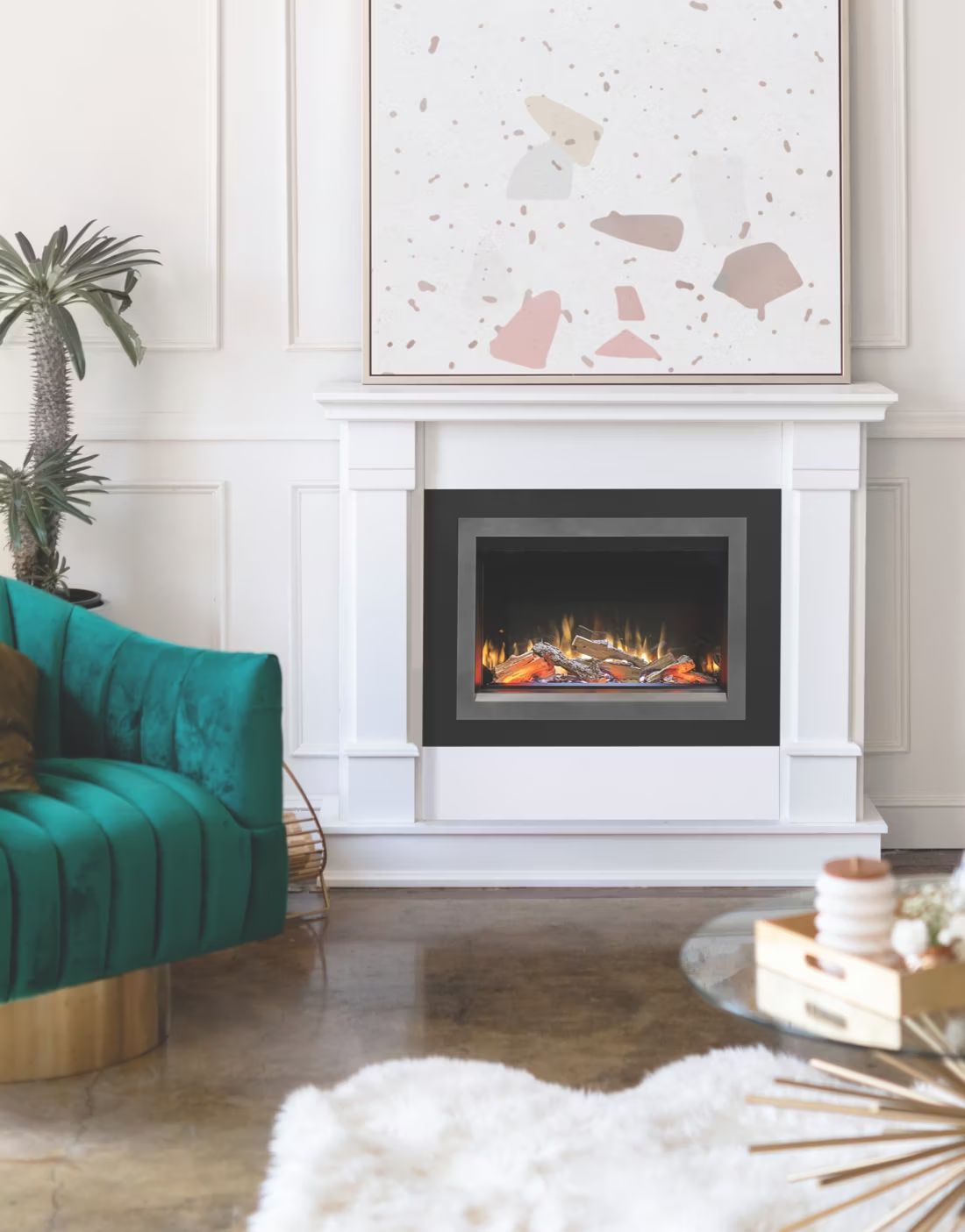
Four fuels. One honest answer for Johnson County.
Three steps. No salesperson until you're ready.
Tell us about your project
Your zip code, your situation, and the fuel you're leaning toward—or let the answers point you to one.
See what's actually available
The brands dealers within 100 miles genuinely carry—real options, never a catalog mirage.
Get your dealer & Project Guide
A trusted local dealer, plus the free Project Guide & Parts List that names every component of the job.
Frequently Asked Questions
Which fuel works best in Johnson County?
For most homes here, gas or electric. Gas fireplaces and inserts are the default in Iowa City, Coralville, and North Liberty—Alliant Energy's natural gas infrastructure covers most of the metro, giving homeowners instant heat with no chimney maintenance. Electric fireplaces are the low-cost, low-hassle option for condos, apartments near the University of Iowa, and secondary rooms where venting isn't practical. Wood stoves and inserts are uncommon in newer subdivisions but still show up on older rural properties outside Iowa City where oak, hickory, and walnut are locally abundant. Pellet stoves are the rarest of the four—regional pellet supply from companies like Lignetics moves mostly through commercial channels, and residential pellet dealers are hard to find in the county. If you're not sure which fits, a local dealer walking your home is worth more than any general rule.
Do I need a permit to install a fireplace in Johnson County?
Yes, in most cases. Gas fireplace, insert, and stove installations require a building permit plus a separate gas line permit performed by a licensed gas-fitter—this applies whether you're in Iowa City, Coralville, or unincorporated Johnson County, each of which issues permits through its own building department. Electric fireplace installations typically don't need a permit for plug-in units, but built-in electric fireplaces that require new wiring or a dedicated circuit do need an electrical permit. Wood stove or insert installations, though less common, still require a building permit and must meet current EPA emissions standards. Most local retailers handle the permitting paperwork as part of the installation quote, so it's rarely something homeowners have to manage themselves.
Why are wood-burning fireplaces so uncommon in Johnson County?
It's mostly about housing stock and infrastructure, not climate—Johnson County's winters, averaging 15°F lows with a heating season similar to Madison, Wisconsin, are plenty cold enough for wood heat. But decades of suburban growth around Iowa City, Coralville, and North Liberty produced newer construction with natural gas already run to the house, which made gas fireplaces the easier default for builders and buyers alike. Oak, hickory, maple, and walnut are all common in the county's rural woodlots, and a small number of older farmhouses outside city limits still use cordwood stoves for supplemental heat. But if you're inside Iowa City or Coralville city limits, expect gas or electric to be the more practical and more readily available option.
Can one local retailer handle both gas and electric fireplaces?
Most Johnson County hearth retailers carry both gas and electric lines, since those are the two fuels that see steady local demand—this lets you compare a gas insert against an electric alternative in the same showroom visit. Fewer dealers stock wood-burning units, and pellet stoves are rare enough that you may need to look outside the county or work with a supplier that special-orders equipment. If wood or pellet heat matters to you, ask upfront—a retailer's showroom floor is a good sign of what they can actually get installed and serviced locally.
How does service work in rural parts of Johnson County?
Most gas and electric fireplace technicians are based in the Iowa City–Coralville metro and travel out to Solon, Oxford, Tiffin, and the surrounding townships. Expect a modest travel fee for calls outside the immediate metro area, and know that pre-season appointments—scheduled in September or October before the heating season ramps up—are far easier to book than mid-winter emergency calls on a gas igniter or pilot issue. If you're on the edge of the service area, ask your retailer about their travel radius before you buy.
What's the typical cost range for gas and electric fireplace installation in Johnson County?
Gas fireplace, insert, or stove installation typically runs $3,500–$8,000, with the higher end reflecting new gas line runs or full venting work in older homes without existing gas service. Electric fireplace costs are much lower—$200–$2,500 for the unit itself, plus $300–$1,000 in labor for anything beyond a simple plug-and-play install, such as a built-in unit requiring a dedicated circuit. Wood stove or insert installation, where it still happens, generally falls in the $4,000–$8,000 range including chimney work. Pellet stove installs are rare enough locally that pricing varies widely depending on whether the dealer special-orders the unit. See the county + fuel pages above for cost detail tied to specific local retailers.
How much should I budget for a fireplace?
For an average home—covering the fireplace, the vent pipe, and basic installation—a budget between $3,900 and $5,500 gives you a lot of options across wood, gas, and pellet. By the time you add finish work, gas line, and electrical, the average complete installation lands between $5,000 and $12,000 all-in. In a remodel or new build, a good rule is to put about 2.5% of the total project cost toward the fireplace.
Can I install a fireplace myself?
If you're putting a fire in your house on purpose, it's best to work with an expert. Unless you're genuinely experienced in framing, gas line, vent pipe, and the national code on clearances to combustibles, have a professional do it—and ideally the same company that sells you the fireplace, so warranty, service, and liability all live under one roof.
What is an in-home preview and do I need one?
It's a visit where a hearth professional measures your space, confirms the model you picked actually works in your home, and walks the specs—framing, gas line, venting, finish work—before anything is ordered. Some details you just can't know until you see the house. Never make a down payment without one; it's the single most-skipped step that burns buyers.
Does a fireplace add value to my home?
On average, a fireplace adds back to the home about the same amount you spent installing it. Add the monthly savings from heating the rooms you actually use instead of the whole house—often hundreds of dollars a year—and the value case is strong before you even count what a fire does for how your family uses the room.
Stove and Fireplace Dealers in Johnson County
Listings include WhyFire partner dealers, dealers we have verified as authorized for the brands we recommend, and established local businesses that carry hearth products. Every listing shows which one it is. The ones marked Preferred run on WhyFire's software, so they can show you real pricing and book your appointment right here. No manufacturer pays for placement. How we verify dealers →
Hearth And Home Solutions
Brandt Heating And Air Conditioning
Brick House Ops.
Spartan Heating, Cooling And Fireplaces
Graber Heating & Air
Stone Works - Marion Location
Ferguson Home - Cedar Rapids
Ogden-Adams Building Solutions
Get matched with a local Johnson County hearth dealer.
Tell us about your home and fuel preference and we'll match you with a trusted local dealer plus a free Project Guide & Parts List—the exact parts, including the vent kit, for your project in Johnson County.
Find Your Fireplace →