
Find the right fireplace for every home in Clarke County.
Wood, gas, pellet, and electric fireplace resources for Osceola and every farmstead and small town across Clarke County. Compare fuels and connect with a trusted local hearth retailer who knows what actually works in a south-central Iowa winter.
Every Project Starts From One of These Five Situations
Farmhouse heating, built for real Iowa winters.
Clarke County is home to about 6,300 people spread across rolling farmland and small towns in south-central Iowa, with Osceola as the county seat. Winters here are genuinely cold—average lows near 11°F and a heating load in the same range as Madison, Wisconsin. Woodlots along the Grand River and its tributaries supply oak, hickory, maple, and walnut, and a lot of Clarke County households still cut and split their own firewood or buy it from a neighbor down the road.
What you'll find on this hub: hearth retailers, service technicians, and fuel suppliers serving every community in the county—from Osceola out to Murray, Weldon, Woodburn, and Van Wert. Pick your fuel below to get specifics on local dealers, installation costs, and what actually fits a rural Iowa farmhouse or a smaller in-town lot. Whether you're heating a century-old two-story or a newer build on acreage, this is the starting point.
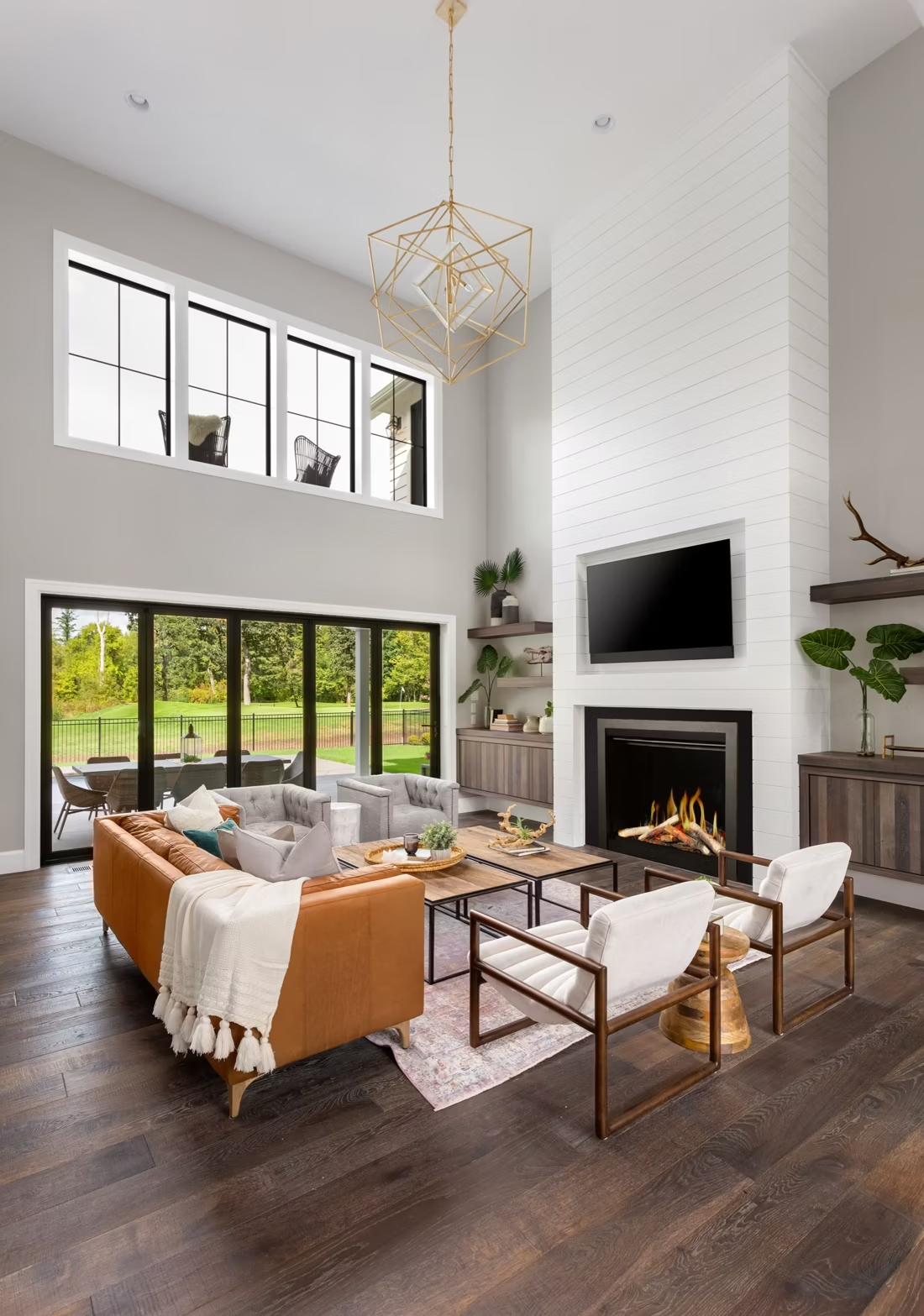
Four fuels. One honest answer for Clarke County.
Three steps. No salesperson until you're ready.
Tell us about your project
Your zip code, your situation, and the fuel you're leaning toward—or let the answers point you to one.
See what's actually available
The brands dealers within 100 miles genuinely carry—real options, never a catalog mirage.
Get your dealer & Project Guide
A trusted local dealer, plus the free Project Guide & Parts List that names every component of the job.
Frequently Asked Questions
Which fuel works best in Clarke County?
It depends on the home and how it's used. Wood is a strong fit here—oak, hickory, maple, and walnut are all locally available, and a lot of Clarke County properties have their own woodlot or a neighbor who sells firewood by the cord. A cast-iron or steel wood stove with a long secondary-burn time handles the sub-teen overnight lows without constant tending. Propane is the common convenience fuel for rural homes that don't have piped natural gas—instant heat with no wood-splitting labor. Pellet stoves are a solid middle ground, especially with Lignetics distribution reaching this part of Iowa, though homeowners should plan for reliable bag storage since rural delivery isn't always weekly. Electric units work well as supplemental heat in bedrooms or finished basements but shouldn't be relied on as the sole heat source through a full Clarke County winter.
Do I need a permit to install a fireplace in Clarke County?
In most cases, yes, though requirements depend on whether you're inside Osceola city limits or in unincorporated Clarke County. New wood stoves, inserts, gas fireplaces, and pellet stoves typically require a building permit, and any wood-burning appliance sold new must meet current federal EPA emissions standards. Gas installations also need a licensed gas-fitter for the line work, separate from the structural permit. Electric fireplaces generally don't require a permit unless the install involves new wiring or a dedicated circuit for a built-in unit. Local building and zoning questions go through the county offices in Osceola; most hearth retailers who install here handle the permit paperwork as part of the job, so you're rarely filing it yourself.
How much wood does a typical Clarke County home burn in a winter, and where does it come from?
With winters as cold and long as Clarke County sees, a wood stove used as primary heat in an older farmhouse can burn 4 to 6 full cords over a season—more if the house is drafty or poorly insulated. Oak and hickory are the preferred species locally because they burn longer and hotter per cord than softer woods like cottonwood, but they need a full year (sometimes two) of seasoning before they're dry enough to burn clean. Plenty of Clarke County households source their own wood from a family woodlot or timber along the Grand River; others buy seasoned cords from local sellers in and around Osceola. Either way, a moisture meter is worth the ten dollars—unseasoned wood is the single biggest cause of poor stove performance and creosote buildup in this climate.
What's the typical cost range for fireplace installation across all fuel types in Clarke County?
Ranges vary by fuel and by how much existing infrastructure you're working with. Wood stove or insert installation: roughly $4,000–$8,500 for a typical retrofit, more if a new chimney chase has to be built. Gas fireplace, insert, or stove: about $4,000–$10,000, with cost driven mostly by how far the unit sits from an existing gas line or propane tank. Pellet stove or insert: generally $4,000–$7,000 installed. Electric fireplace: $200–$2,800 for the unit itself, plus $300–$1,000 in labor for anything beyond a simple plug-in—most wall-mount and insert installs fall in that range. Rural properties can see slightly higher labor costs if a technician has to travel a distance from Osceola or the Des Moines metro.
How does installation and service work for homes outside Osceola?
Most hearth retailers and service technicians covering Clarke County are based in or near Osceola, with a smaller number working out of the Des Moines area for specialty gas or pellet work. Expect a modest trip charge for service calls out to Murray, Weldon, Woodburn, or Van Wert—usually in the $40–$80 range depending on distance. Scheduling annual chimney sweeps or gas inspections in late summer or early fall, before the first cold snap, is easier than trying to book a mid-January emergency call when every dealer in the region is slammed. If you're on a rural acreage, it's also worth keeping a backup heat source—a wood stove as backup to propane, for instance—in case of an ice storm or extended power outage.
How do I size a fireplace or stove correctly for an older Clarke County farmhouse?
A lot of the housing stock in Clarke County is older farmhouse construction—balloon-framed, moderately insulated, sometimes with additions that changed the airflow of the original layout. Undersizing is common when homeowners buy a stove based on square footage alone without accounting for ceiling height, insulation quality, or how open the floor plan is. A stove rated for 1,500–2,000 square feet in a tight, well-insulated home might barely keep up in a drafty two-story farmhouse of the same size. A local dealer who does an in-home walkthrough—checking insulation, window count, and where the heat needs to travel—will generally spec a unit correctly the first time, which matters more here than in a newer, tighter build.
Can a fireplace actually lower my heating bill?
Yes—by creating a comfort zone. A furnace heats every square foot of the house just to warm the one room you're in; a gas fireplace on low burns roughly a sixth of the gas a typical furnace does. Set the furnace around 55–60 degrees as a baseline, then heat the rooms your family actually uses. Families who heat this way commonly save $20–$60 a month.
Can I install a fireplace myself?
If you're putting a fire in your house on purpose, it's best to work with an expert. Unless you're genuinely experienced in framing, gas line, vent pipe, and the national code on clearances to combustibles, have a professional do it—and ideally the same company that sells you the fireplace, so warranty, service, and liability all live under one roof.
Does a fireplace add value to my home?
On average, a fireplace adds back to the home about the same amount you spent installing it. Add the monthly savings from heating the rooms you actually use instead of the whole house—often hundreds of dollars a year—and the value case is strong before you even count what a fire does for how your family uses the room.
What is an in-home preview and do I need one?
It's a visit where a hearth professional measures your space, confirms the model you picked actually works in your home, and walks the specs—framing, gas line, venting, finish work—before anything is ordered. Some details you just can't know until you see the house. Never make a down payment without one; it's the single most-skipped step that burns buyers.
Stove and Fireplace Dealers in Clarke County
Listings include WhyFire partner dealers, dealers we have verified as authorized for the brands we recommend, and established local businesses that carry hearth products. Every listing shows which one it is. The ones marked Preferred run on WhyFire's software, so they can show you real pricing and book your appointment right here. No manufacturer pays for placement. How we verify dealers →
Solar Systems Of Iowa
Fireplace Stone & Patio - Waukee
Get matched with a Clarke County hearth dealer.
Tell us about your home and fuel preference, and I'll match you with a trusted local dealer plus a free Project Guide & Parts List—the exact parts, including the vent kit, for your fireplace project in Clarke County.
Find Your Fireplace →