
Find the right hearth for your Warrick County home.
Wood, gas, pellet, and electric fireplace resources for Boonville, Newburgh, Chandler, Elberfeld, Tennyson, Lynnville, Folsomville, and every other corner of Warrick County. Connect with a trusted local dealer who knows what actually fits and installs here.
Every Project Starts From One of These Five Situations
Steady four-season heating in southwestern Indiana.
Warrick County sits in Climate Zone 4A along the Ohio River in southwestern Indiana, with a solid, real Midwestern heating season and an average winter low near 25°F. That's a real Midwestern heating season, but it's a far cry from the sub-zero stretches homeowners deal with in Bismarck or Duluth—most Warrick County homes need a heating appliance sized for weeks of cold, damp, upper-20s nights rather than deep-freeze survival gear. Oak, hickory, maple, and beech are the wood species most commonly split and burned here, and hickory and oak in particular put out serious BTUs per cord, which is part of why wood stoves remain a genuinely popular choice around Boonville, Elberfeld, and the more rural townships.
On this hub you'll find hearth retailers, service technicians, and fuel suppliers covering every town in the county—from the county seat in Boonville to Newburgh's growing riverfront neighborhoods, out to Chandler, Tennyson, Lynnville, Folsomville, and Yankeetown. Because Warrick County sits right against the Evansville metro, some of the dealers and technicians serving these communities are based just across the county line and travel in regularly. Pick your fuel below for local dealers, installed cost ranges, and recommended units for your specific project.
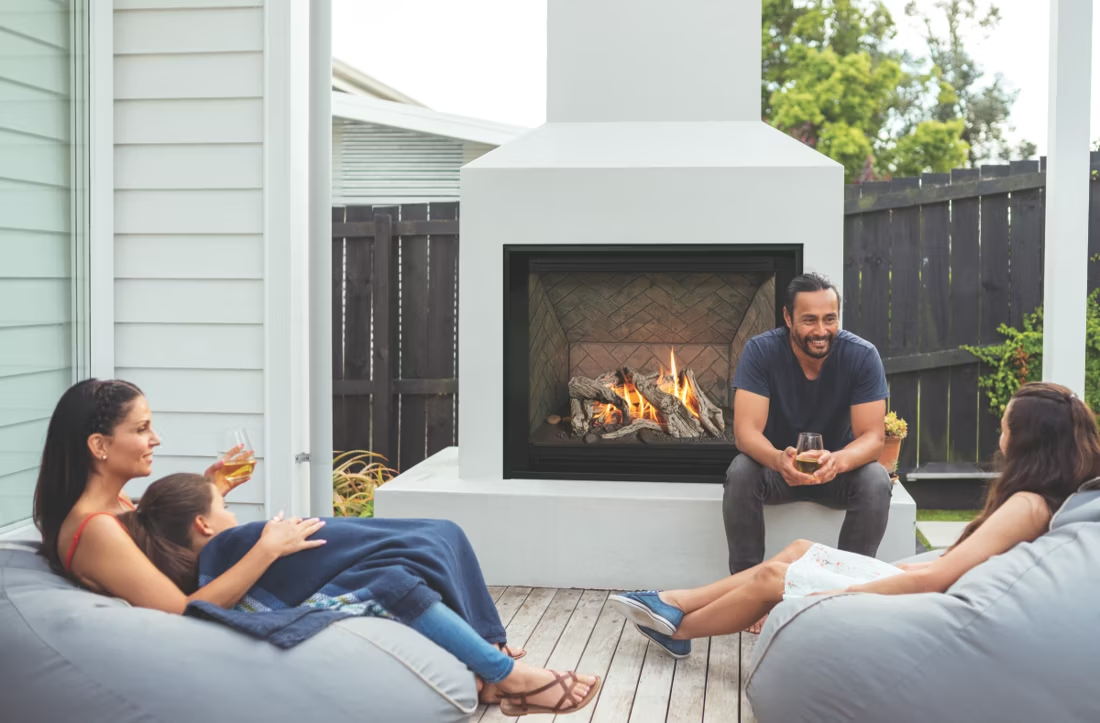
Four fuels. One honest answer for Warrick County.
Three steps. No salesperson until you're ready.
Tell us about your project
Your zip code, your situation, and the fuel you're leaning toward—or let the answers point you to one.
See what's actually available
The brands dealers within 100 miles genuinely carry—real options, never a catalog mirage.
Get your dealer & Project Guide
A trusted local dealer, plus the free Project Guide & Parts List that names every component of the job.
Frequently Asked Questions
Which fuel works best in Warrick County?
All four fuel types work well here—the right call depends on your home and priorities more than the climate. Wood is a strong option given how much oak and hickory move through the county; a mid-size catalytic or non-cat stove burning seasoned hardwood handles Warrick's solid, real Midwestern heating season without much strain, and it keeps working if the power goes out. Gas is the low-effort choice for homes in and around Newburgh and Boonville where natural gas service is available, or on propane elsewhere—no wood to split or stack, instant on/off. Pellet stoves are a good middle ground, especially with regional brands like Indeck Energy Services and Lignetics widely stocked, giving you wood-like ambiance with thermostat-style control. Electric fireplaces are mostly supplemental here—good for a bedroom, sunroom, or finished basement, but not typically a whole-home primary heat source given the length of the season. Plenty of Warrick County homes end up running two fuels: a wood or pellet stove as the workhorse, plus gas or electric in a secondary room.
Do I need a permit to install a fireplace in Warrick County?
In most cases, yes. New wood stoves, wood inserts, gas fireplaces, gas inserts, gas stoves, and pellet stoves generally require a building permit, and gas installations also need a separate gas-line permit pulled by a licensed installer. Within Boonville or Newburgh town limits, permits typically run through the town's own building office; outside those towns, they go through the county building permit office. Electric fireplaces are usually exempt unless the installation is a hardwired built-in that requires a new circuit. Most local retailers handle the permit paperwork as part of the installation quote, so it's worth asking upfront whether that's included.
Are there air quality restrictions on wood burning in Warrick County?
No—Warrick County has no wood-burning nonattainment designation and no seasonal burn advisories on the books, unlike some western basins where winter inversions trap smoke against the surface. That means wood stoves and fireplace inserts here are governed mainly by standard building-permit and EPA-certification requirements for new installations, not local air-quality curtailment. It's still worth burning well-seasoned oak or hickory rather than green wood—it burns cleaner, produces more usable heat, and is easier on your chimney and neighbors regardless of what the regulations require.
Can one local hearth retailer handle all four fuel types?
Several of the dealers serving Warrick County—particularly the larger showrooms based near Newburgh and just across the line in Evansville—carry wood, gas, pellet, and electric units under one roof, which makes them a good stop if you're still comparing fuels. Smaller shops closer to Boonville and the rural townships tend to specialize, often focusing on wood and pellet given how popular hardwood heat is with the local oak and hickory supply. If you already know your fuel, the county + fuel pages above point you to dealers that specifically stock it; if you're undecided, a multi-fuel showroom lets you see working displays side by side.
How does service work in rural areas of Warrick County?
Most chimney sweeps and gas or pellet technicians covering Warrick County are based in or near Newburgh and Boonville and drive out to the more rural parts of the county—Elberfeld, Tennyson, Lynnville, Folsomville, and the farmland around Yankeetown. Expect a modest trip charge for the farther stops, and expect fall booking windows to fill up fast since that's when most homeowners schedule their annual sweep or pellet-stove tune-up before the first cold snap. If you're well outside town limits, it's worth locking in a September or October appointment rather than waiting for a January service call.
What's the typical cost range for fireplace installation across all fuel types in Warrick County?
Costs vary by fuel and by how much venting or gas-line work is involved. Wood stove or insert installation typically runs $3,500–$8,000, depending on chimney condition and whether new masonry work is needed. Gas fireplace, insert, or stove installation runs roughly $4,000–$10,000, with gas-line extensions pushing toward the higher end. Pellet stove or insert installation generally falls between $3,500–$7,000. Electric fireplaces are the least expensive option—often $200–$2,500 for the unit itself, plus $300–$1,000 in labor for anything beyond a simple plug-in install. The county + fuel pages above break these down further with local retailer pricing.
Does a fireplace add value to my home?
On average, a fireplace adds back to the home about the same amount you spent installing it. Add the monthly savings from heating the rooms you actually use instead of the whole house—often hundreds of dollars a year—and the value case is strong before you even count what a fire does for how your family uses the room.
I know I want a fireplace—where do I actually start?
Do two things today: snap a photo of the wall or fireplace you want to transform, and take a tape measure to the space—width, height, depth. Those two artifacts answer most of a hearth professional's first questions. Then settle fuel (wood, gas, pellet, or electric) and set a realistic budget: $3,900–$5,500 covers fireplace, vent, and basic install for most homes.
Can a fireplace actually lower my heating bill?
Yes—by creating a comfort zone. A furnace heats every square foot of the house just to warm the one room you're in; a gas fireplace on low burns roughly a sixth of the gas a typical furnace does. Set the furnace around 55–60 degrees as a baseline, then heat the rooms your family actually uses. Families who heat this way commonly save $20–$60 a month.
Can I install a fireplace myself?
If you're putting a fire in your house on purpose, it's best to work with an expert. Unless you're genuinely experienced in framing, gas line, vent pipe, and the national code on clearances to combustibles, have a professional do it—and ideally the same company that sells you the fireplace, so warranty, service, and liability all live under one roof.
Stove and Fireplace Dealers in Warrick County
Listings include WhyFire partner dealers, dealers we have verified as authorized for the brands we recommend, and established local businesses that carry hearth products. Every listing shows which one it is. The ones marked Preferred run on WhyFire's software, so they can show you real pricing and book your appointment right here. No manufacturer pays for placement. How we verify dealers →
Leisure Distributors
Steinkamp Lumber
Find your fireplace in Warrick County.
Get matched with a trusted local dealer and a free Project Guide & Parts List—a plan for your specific fuel project in Warrick County, including the exact parts you'll need (vent kit included) and the local dealer we recommend for your install.
Find Your Fireplace →