
Find the Right Hearth for Your Tipton County Home.
Wood, gas, pellet, and electric fireplace resources for every farmhouse and in-town address across Tipton County—from Tipton and Windfall to Kempton and Sharpsville. Get matched with a trusted local hearth retailer who can actually install what fits your home.
Every Project Starts From One of These Five Situations
Flat farmland heating in north-central Indiana.
Tipton County is one of Indiana's smallest and flattest counties—about 261 square miles of corn and soybean ground with the county seat of Tipton near its center and a total population under 7,300. Climate zone 5A puts winters here on par with places like Madison, Wisconsin, though generally a notch milder: average winter lows near 17°F, roughly 5,879 heating degree days, and a heating season that typically runs October through April. Wind off the open fields makes the cold feel sharper than the thermometer suggests, especially for older farmhouses with limited insulation. Wood heat has deep roots in the county—oak, hickory, maple, and beech from local woodlots and fencerows have fueled stoves here for generations, and there are no air quality non-attainment designations or wintertime inversion advisories to worry about, unlike some western basin communities.
What you'll find on this hub: hearth retailers, service technicians, and fuel suppliers serving every community in the county—Tipton, Windfall, Kempton, Sharpsville, and the unincorporated crossroads like Curtisville. Because Tipton County is small and rural, many of the retailers and technicians who serve it are based in neighboring Kokomo, Noblesville, or Lafayette and travel in for installs and service calls. Pick your fuel below to drill into specifics—local dealers, installation costs, recommended units, and the resources that match your project.
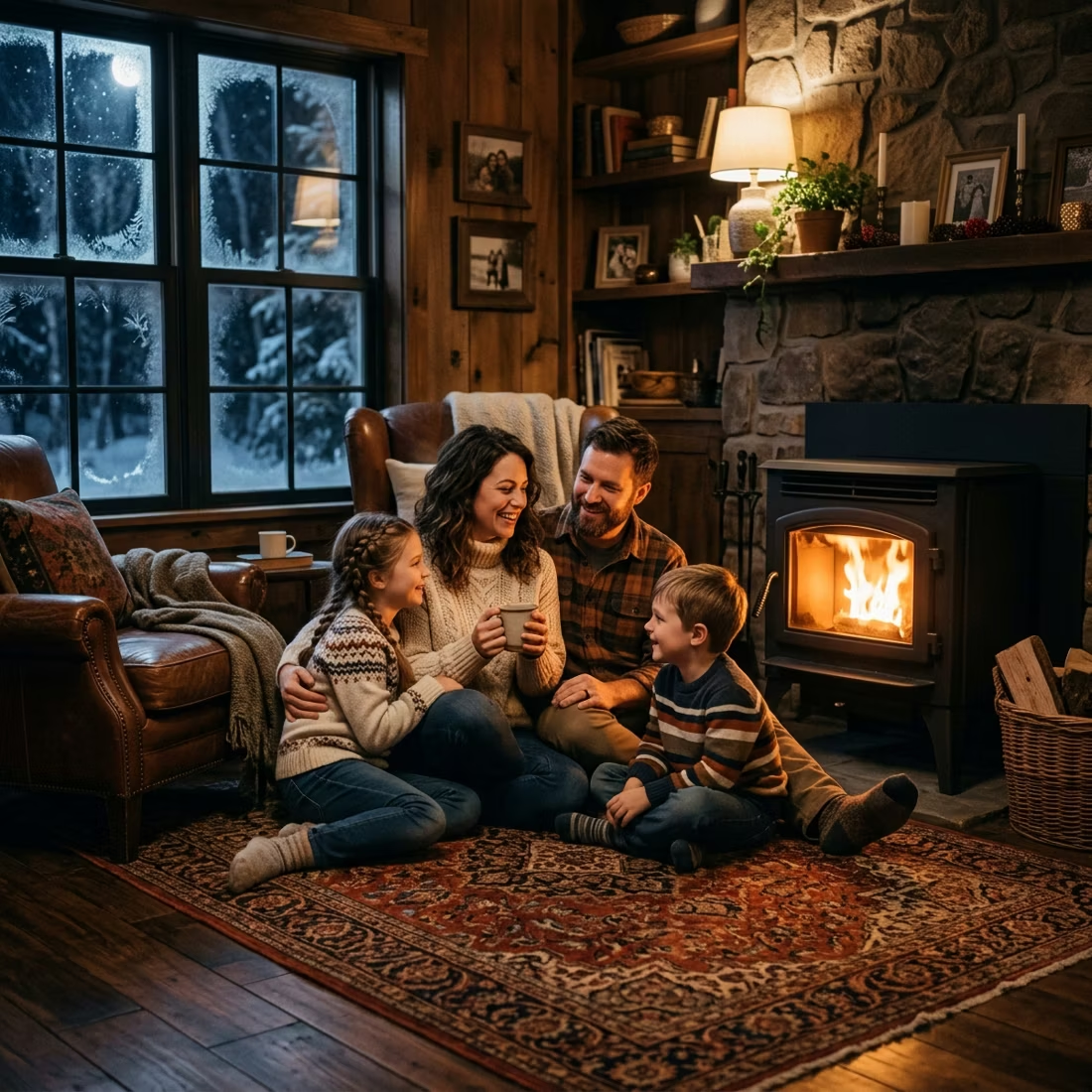
Four fuels. One honest answer for Tipton County.
Three steps. No salesperson until you're ready.
Tell us about your project
Your zip code, your situation, and the fuel you're leaning toward—or let the answers point you to one.
See what's actually available
The brands dealers within 100 miles genuinely carry—real options, never a catalog mirage.
Get your dealer & Project Guide
A trusted local dealer, plus the free Project Guide & Parts List that names every component of the job.
Frequently Asked Questions
Which fuel works best in Tipton County?
It depends on your home and how you use it. Wood is the traditional choice for the county's farmhouses—oak, hickory, maple, and beech from local woodlots and fencerows keep fuel costs down, and a properly sized wood stove handles the county's average winter lows near 17°F without trouble. Gas is the convenience pick for in-town homes with gas service—no splitting, no hauling, heat at the flip of a switch. Pellet stoves split the difference, offering wood-style ambiance with less labor; regional supply from Indeck Energy Services, Lignetics, and Somerset Pellet Fuel keeps bags reasonably accessible even though the county itself isn't a pellet-producing area. Electric works well as a supplemental heater in a bedroom or sunroom, but it depends on grid power, so it's not a good primary choice if you're worried about winter outages on rural lines. Many Tipton County homes end up running two fuels—wood or pellet as the workhorse, gas or electric for convenience elsewhere in the house.
Do I need a permit to install a fireplace in Tipton County?
In most cases, yes. New wood stoves and inserts, gas fireplaces and inserts, and pellet stoves typically require a building permit through the county building department, and gas work also requires a separate gas line permit pulled by a licensed installer. Wood stoves need to meet current EPA emissions standards and proper clearances to combustibles—important in the county's older farmhouse stock, where wall and ceiling clearances weren't always built with a stove in mind. Electric fireplaces usually skip the permit process unless you're hardwiring a built-in unit, which then needs an electrical permit. Most local hearth retailers serving Tipton County—whether they're based in town or driving in from Kokomo or Noblesville—handle the permitting as part of the installation, so it's rarely something homeowners have to manage on their own.
Are there any wood-burning restrictions in Tipton County?
No—Tipton County has no air quality non-attainment designation and no history of winter inversion advisories, so there's no voluntary or mandatory burn-curtailment program to plan around, unlike some western basin communities that issue yellow or red burn-advisory days. That said, standard fire code still applies: new wood stoves need to meet current EPA emissions certification, and clearances to combustibles have to be respected regardless of local air quality status. If you're burning oak, hickory, maple, or beech that's been properly seasoned for at least six months to a year, you'll get cleaner combustion and less creosote buildup than green or freshly split wood—good practice here even without an air quality mandate driving it.
Can one local dealer handle all four fuel types?
Given Tipton County's small population, it's less likely you'll find a single dealer inside the county carrying wood, gas, pellet, and electric side by side—most in-county retail presence is thin, and coverage comes from dealers based in nearby Kokomo, Noblesville, or Lafayette who serve Tipton County as part of a wider service radius. Some of those regional dealers do stock all four fuel types and can show working displays if you're still deciding what fits your home. Others specialize—a wood-and-pellet shop, for instance, or a gas-focused HVAC contractor who also handles fireplace inserts. Check the fuel-specific coverage noted on each retailer's listing before assuming they carry what you're looking for.
How does service work in rural areas of Tipton County?
Most technicians who service Tipton County are based outside it—in Kokomo, Noblesville, Lafayette, or Frankfort—and drive in for chimney sweeps, gas inspections, and pellet stove cleaning. The county's flat, open farmland actually makes travel straightforward compared to hillier terrain, but distances between rural addresses can still add a small trip fee, typically in the $40–$80 range depending on the technician and how far off the state road you are. Booking service in late summer or early fall, before the October-through-April heating season ramps up, gets you a wider choice of appointment times than waiting for a mid-winter breakdown. If you're on wood or pellet as a primary heat source, keeping a backup plan—a spare space heater, a second fuel source, or at minimum a way to reach a technician quickly—is worth building into your routine given how spread out service coverage is here.
What's the typical cost range for fireplace installation across all fuel types in Tipton County?
Costs vary by fuel and by how much existing infrastructure you're working with. Wood stove or insert installation: roughly $4,000–$8,500 for a typical retrofit into an existing chimney, higher if new chimney work or additional clearance framing is needed for an older farmhouse. Gas fireplace, insert, or stove: roughly $4,000–$10,000, with the wide range driven mainly by whether gas line work is required or an existing line can be tapped. Pellet stove or insert: roughly $4,000–$7,000 for most installs, with venting usually simpler than a full masonry chimney retrofit. Electric fireplace: $200–$2,500 for the unit itself, plus $300–$1,000 in labor for anything beyond a plug-and-play wall unit, such as a built-in with new wiring. See the county + fuel pages above for retailer-specific pricing tied to your exact project.
Can I install a fireplace myself?
If you're putting a fire in your house on purpose, it's best to work with an expert. Unless you're genuinely experienced in framing, gas line, vent pipe, and the national code on clearances to combustibles, have a professional do it—and ideally the same company that sells you the fireplace, so warranty, service, and liability all live under one roof.
What is an in-home preview and do I need one?
It's a visit where a hearth professional measures your space, confirms the model you picked actually works in your home, and walks the specs—framing, gas line, venting, finish work—before anything is ordered. Some details you just can't know until you see the house. Never make a down payment without one; it's the single most-skipped step that burns buyers.
Wood, gas, pellet, or electric—how do I choose?
Match the fuel to your life, not the other way around. Wood: lowest fuel cost and total power-outage independence, but you're hauling and stacking. Gas: press a button, set a thermostat, no maintenance to speak of. Pellet: wood economics with automatic feeding, in exchange for weekly cleaning and a need for electricity. Electric: plugs in anywhere with honest supplemental heat. Nobody regrets the fuel that fits how they actually live.
Can a fireplace actually lower my heating bill?
Yes—by creating a comfort zone. A furnace heats every square foot of the house just to warm the one room you're in; a gas fireplace on low burns roughly a sixth of the gas a typical furnace does. Set the furnace around 55–60 degrees as a baseline, then heat the rooms your family actually uses. Families who heat this way commonly save $20–$60 a month.
Stove and Fireplace Dealers in Tipton County
Listings include WhyFire partner dealers, dealers we have verified as authorized for the brands we recommend, and established local businesses that carry hearth products. Every listing shows which one it is. The ones marked Preferred run on WhyFire's software, so they can show you real pricing and book your appointment right here. No manufacturer pays for placement. How we verify dealers →
O'Malia's Living
Find your fireplace in Tipton County.
Pick your fuel below and I'll match you with a trusted local dealer serving Tipton County, plus a free Project Guide & Parts List—the exact parts, including the vent kit, and the dealer recommendation for your specific home.
Find Your Fireplace →