
Find the right fireplace for your Rush County home.
Wood, gas, pellet, and electric fireplace resources for Rushville, Milroy, Carthage, Manilla, and the farms in between. Find the right unit for your fuel and connect with a trusted local hearth retailer.
Every Project Starts From One of These Five Situations
Steady four-season heating in east-central Indiana.
Rush County sits in the flat farmland of east-central Indiana, where winters bring average lows around 19°F and roughly 5,683 heating degree days a year—colder than Nashville but well short of the extremes seen in Fargo or Bismarck. That's a solid, unremarkable heating season: cold enough that a supplemental heat source pays for itself most winters, mild enough that you're not designing around sub-zero survival heat like homeowners in Duluth or International Falls have to. Rush County's farm ground and windbreaks have long supplied firewood—oak, hickory, maple, and beech are the species you'll see split and stacked in barns and pole sheds across the county.
What you'll find on this hub: hearth retailers, service technicians, and fuel suppliers serving Rushville and the smaller communities around it—Milroy, Carthage, Manilla, Arlington, and the unincorporated crossroads that make up the rest of the county. Pick your fuel below to see local dealers, typical installation costs, and unit recommendations suited to a 5A climate. Whether you're heating a farmhouse outside Rushville or adding supplemental warmth to a in-town bungalow, this is the starting point.
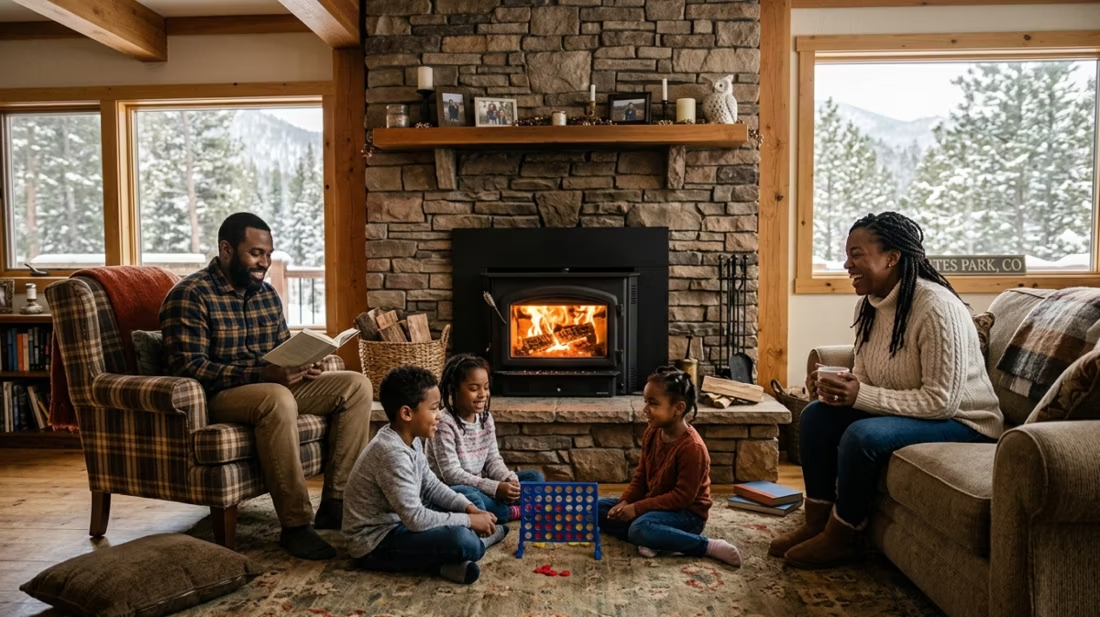
Four fuels. One honest answer for Rush County.
Three steps. No salesperson until you're ready.
Tell us about your project
Your zip code, your situation, and the fuel you're leaning toward—or let the answers point you to one.
See what's actually available
The brands dealers within 100 miles genuinely carry—real options, never a catalog mirage.
Get your dealer & Project Guide
A trusted local dealer, plus the free Project Guide & Parts List that names every component of the job.
Frequently Asked Questions
Which fuel works best in Rush County?
It depends on your home and budget more than climate extremes here—Rush County's winters are cold but moderate compared to places like Madison or Minneapolis. Wood remains popular on the county's farms, where oak and hickory are often already on the property from windbreak clearing or timber management, and a wood stove or insert provides reliable heat if the power goes out during an ice storm. Gas is the convenience pick for in-town Rushville homes and anywhere propane delivery is established—no wood handling, consistent output, easy to run on a timer. Pellet is a strong middle option—cleaner-burning than cordwood, with Indeck Energy Services and Lignetics both distributed regionally, though you're dependent on bag supply rather than a woodlot. Electric works well as supplemental heat in bedrooms or finished basements but isn't sized for whole-home heating in a 5A climate. Many Rush County households pair a wood or pellet unit as primary supplemental heat with gas or electric in secondary rooms.
Do I need a permit to install a fireplace in Rush County?
In most cases, yes. New wood stoves, wood inserts, gas fireplaces, gas inserts, gas stoves, and pellet stoves typically require a building permit through the applicable local building department, whether you're inside Rushville city limits or in unincorporated Rush County. Gas installations also need a separate gas line permit and licensed installer for the gas connection. Electric fireplaces usually don't require a permit unless the installation involves hardwiring a built-in unit into a new circuit. Most local hearth retailers handle permitting as part of the installation process, so you generally don't have to navigate it yourself—worth confirming with your chosen dealer up front.
Are there any burning restrictions or air quality concerns in Rush County?
No—Rush County doesn't have the winter inversion or non-attainment issues that trigger burn advisories in some western basin communities. There's no local air quality flag on file for the county, so wood burning here isn't subject to the voluntary curtailment days you'd see in a place like the Klamath Basin. That said, it's still worth installing an EPA-certified stove or insert if you're replacing an older unit—modern catalytic and non-catalytic designs burn oak and hickory more cleanly and efficiently, which matters for your chimney, your wood consumption, and your neighbors either way.
Can one local hearth retailer handle all four fuel types?
Coverage varies by dealer, and in a county this size you'll often find retailers that specialize rather than stock all four. Some Rushville-area dealers carry wood, gas, and pellet with strong showroom displays of working units, while electric fireplaces are more commonly picked up through furniture and appliance retailers or ordered directly for simple plug-in installs. If you're cross-shopping fuel types for a farmhouse retrofit, ask a multi-fuel dealer to walk you through wood versus pellet side by side—the trade-offs in wood handling versus bag storage tend to matter most for Rush County's rural households.
How does service work in the rural parts of Rush County?
Most chimney sweeps and gas techs serving Rush County are based in or near Rushville and drive out to Milroy, Carthage, Manilla, and the farm roads in between. Expect a modest travel fee for calls outside town, and know that pre-season scheduling—August through October—is far easier to book than a mid-winter emergency visit when everyone's furnace or stove problems surface at once. If your home is on a gravel road or set back from a county highway, mention that when you book so the tech can plan the visit accordingly.
What's the typical cost range for fireplace installation across all fuel types in Rush County?
Costs track pretty closely with regional Indiana pricing. Wood stove or insert installation: roughly $3,800–$8,000 for a typical retrofit, more if new chimney or hearth pad work is needed. Gas fireplace, insert, or stove: about $4,000–$9,500, with the range driven mostly by how much new gas line and venting work is required. Pellet stove or insert: typically $4,000–$7,000 installed. Electric fireplace: $200–$3,000 for the unit itself, plus $300–$1,000 in labor for anything beyond a simple plug-and-play placement. See the county + fuel pages above for retailer-specific pricing detail.
Can a fireplace actually lower my heating bill?
Yes—by creating a comfort zone. A furnace heats every square foot of the house just to warm the one room you're in; a gas fireplace on low burns roughly a sixth of the gas a typical furnace does. Set the furnace around 55–60 degrees as a baseline, then heat the rooms your family actually uses. Families who heat this way commonly save $20–$60 a month.
How much should I budget for a fireplace?
For an average home—covering the fireplace, the vent pipe, and basic installation—a budget between $3,900 and $5,500 gives you a lot of options across wood, gas, and pellet. By the time you add finish work, gas line, and electrical, the average complete installation lands between $5,000 and $12,000 all-in. In a remodel or new build, a good rule is to put about 2.5% of the total project cost toward the fireplace.
Does a fireplace add value to my home?
On average, a fireplace adds back to the home about the same amount you spent installing it. Add the monthly savings from heating the rooms you actually use instead of the whole house—often hundreds of dollars a year—and the value case is strong before you even count what a fire does for how your family uses the room.
I know I want a fireplace—where do I actually start?
Do two things today: snap a photo of the wall or fireplace you want to transform, and take a tape measure to the space—width, height, depth. Those two artifacts answer most of a hearth professional's first questions. Then settle fuel (wood, gas, pellet, or electric) and set a realistic budget: $3,900–$5,500 covers fireplace, vent, and basic install for most homes.
Stove and Fireplace Dealers in Rush County
Listings include WhyFire partner dealers, dealers we have verified as authorized for the brands we recommend, and established local businesses that carry hearth products. Every listing shows which one it is. The ones marked Preferred run on WhyFire's software, so they can show you real pricing and book your appointment right here. No manufacturer pays for placement. How we verify dealers →
Reliable Chimney Sweep LLC
Find your fireplace project in Rush County.
Pick your fuel below and I'll match you with a trusted local dealer who can walk your home, and send you a free Project Guide & Parts List—the exact parts, including the vent kit, for your project.
Find Your Fireplace →