
Find the right hearth for your Morgan County home.
Wood, gas, pellet, and electric fireplace resources for every town in Morgan County—from Martinsville and Mooresville out to Monrovia, Paragon, and Waverly. Find the right unit and connect with a trusted local hearth retailer.
Every Project Starts From One of These Five Situations
Wooded hills and hardwood heat in Morgan County, Indiana.
Morgan County sits in the hill country southwest of Indianapolis, where the Knobstone Escarpment breaks up the flatland into ridges and hollows covered in oak-hickory forest—the Morgan-Monroe State Forest straddles the Morgan/Monroe line and has supplied firewood permits to local households for decades. Winters here average a 19°F low with a real Midwest heating season, but noticeably milder than places like Madison, WI, where the heating season runs considerably longer and harder. Oak, hickory, maple, and beech are the everyday firewood species split and stacked across the county, and the moderate climate means wood heat here is a solid choice without being the survival necessity it is farther north.
What you'll find on this hub: hearth retailers, service technicians, and fuel suppliers serving every community in Morgan County—Martinsville as the county seat, Mooresville to the north, and the smaller towns of Monrovia, Paragon, Brooklyn, Waverly, and Centerton filling out the rest. Pick your fuel below to drill into specifics—local dealers, installation costs, recommended units, and the resources that match your project. Whether you're in a Martinsville subdivision or a farmhouse off SR 39, this is the starting point.
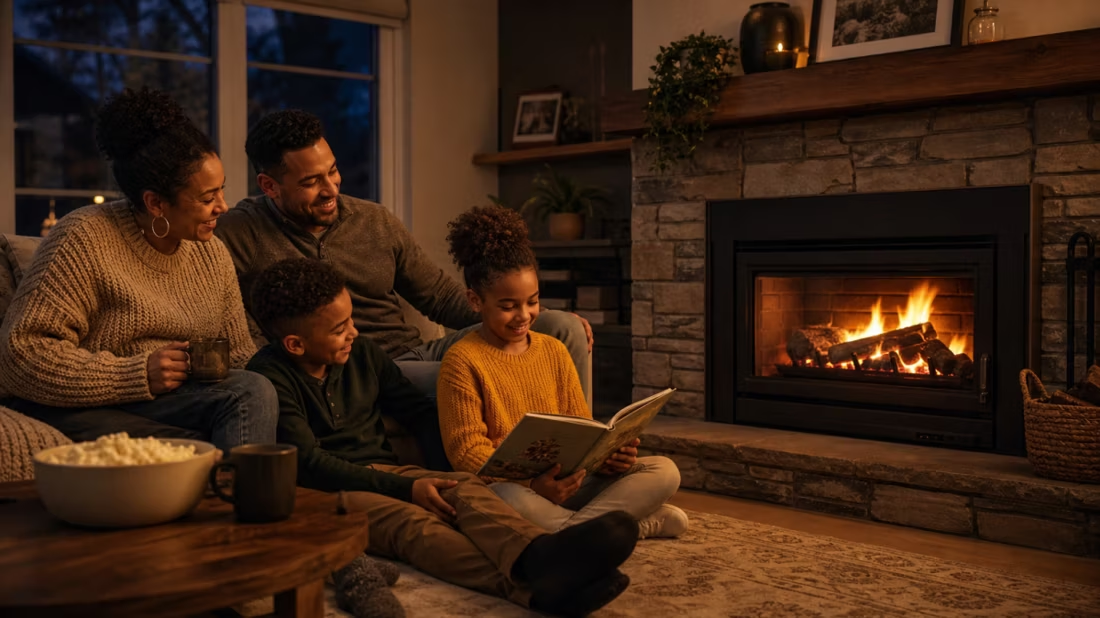
Four fuels. One honest answer for Morgan County.
Three steps. No salesperson until you're ready.
Tell us about your project
Your zip code, your situation, and the fuel you're leaning toward—or let the answers point you to one.
See what's actually available
The brands dealers within 100 miles genuinely carry—real options, never a catalog mirage.
Get your dealer & Project Guide
A trusted local dealer, plus the free Project Guide & Parts List that names every component of the job.
Frequently Asked Questions
Which fuel works best in Morgan County?
It depends on your home and priorities, but all four fuels are genuinely viable here. Wood remains a strong choice—the oak, hickory, maple, and beech forest that covers the hills (including Morgan-Monroe State Forest) keeps firewood affordable and abundant, and a 19°F average winter low doesn't demand the extreme catalytic setups you'd need farther north. Gas is the convenience pick, especially in Martinsville and Mooresville where natural gas service reaches many neighborhoods; rural homes further out typically run on propane instead. Pellet is a solid middle ground for households that want wood-style heat without splitting and stacking—Lignetics and Somerset Pellet Fuel both distribute in the region. Electric works well as supplemental heat for bedrooms, basements, or ambiance, though with a solid, moderate winter heating season it's rarely anyone's sole heat source. Many Morgan County homes end up running two fuels—wood or pellet as primary, gas or electric as backup and accent.
Do I need a permit to install a fireplace in Morgan County?
In most cases, yes. New wood stoves, wood inserts, gas fireplaces, gas inserts, gas stoves, and pellet stoves typically require a building permit, and wood-burning appliances need to meet current EPA 2020 NSPS emissions standards to pass inspection. Gas installations also need a separate gas line permit and licensed gas-fitter for the connection work. Electric fireplaces usually skip the permit process unless you're doing a hardwired built-in with a new circuit. If you're inside Martinsville or Mooresville, permits go through the town's building office; in the unincorporated parts of the county—Monrovia, Paragon, Brooklyn, and the rural stretches in between—permits route through the Morgan County building department. Most local hearth retailers handle this paperwork as part of the installation, so you typically don't have to file it yourself.
Are there air quality restrictions on wood burning in Morgan County?
No—Morgan County doesn't sit in a non-attainment area and there are no winter inversion or wildfire-smoke concerns driving burn bans or advisory days, unlike some western counties. That said, an EPA-certified stove still burns cleaner and more efficiently than an older uncertified unit, and it's what most local retailers will install by default since certified units are what's widely stocked now. If you're heating with wood day-to-day rather than occasionally, a newer catalytic or non-catalytic EPA 2020 stove will get more heat out of the same cord of oak or hickory than an old smoke-dragon design.
Can one local hearth retailer handle all four fuel types?
Several Morgan County dealers carry three or four fuel types, which is useful if you're still deciding between, say, a pellet stove and a gas insert. Retailers based in Martinsville and Mooresville tend to be the ones with the broadest floor displays, since they're serving the largest population centers in the county. Smaller shops in Monrovia or Paragon may specialize more narrowly—often wood and pellet, with less emphasis on gas line work or built-in electric units. If you're cross-shopping fuels, look for a multi-fuel dealer with working showroom displays so you can see and hear the difference between a wood insert and a gas insert before you commit.
How does service work in rural areas of Morgan County?
Most chimney sweeps, gas techs, and pellet service techs are based out of Martinsville or Mooresville and drive out to the rest of the county—Monrovia, Paragon, Brooklyn, Waverly, and the farm roads in between. With a county population around 31,500 spread across a mostly rural footprint, travel time is a real factor; expect to book service appointments a few weeks out during the fall rush (September–November) rather than waiting for a mid-winter emergency. If you're well outside Martinsville or Mooresville, ask upfront whether a trip fee applies, and consider scheduling wood chimney sweeps and pellet stove cleanings early in the fall so you're not competing with everyone else's last-minute pre-winter calls.
What's the typical cost range for fireplace installation across all fuel types in Morgan County?
Costs vary by fuel and by how much existing infrastructure you have. Wood stove or insert installation: roughly $4,000–$8,500 for a typical retrofit into an existing chimney, more if new chimney or hearth work is needed. Gas fireplace, insert, or stove: roughly $4,000–$10,000 depending on whether you're tapping existing natural gas service in town or running a new propane line out in the county. Pellet stove or insert: roughly $4,000–$7,000 for most installs. Electric fireplace: $200–$3,000 for the unit itself, plus $300–$1,000 in labor for anything beyond a plug-and-play wall unit. For a plan tied to your specific home, the county + fuel pages above break down costs by fuel in more detail.
What is an in-home preview and do I need one?
It's a visit where a hearth professional measures your space, confirms the model you picked actually works in your home, and walks the specs—framing, gas line, venting, finish work—before anything is ordered. Some details you just can't know until you see the house. Never make a down payment without one; it's the single most-skipped step that burns buyers.
Wood, gas, pellet, or electric—how do I choose?
Match the fuel to your life, not the other way around. Wood: lowest fuel cost and total power-outage independence, but you're hauling and stacking. Gas: press a button, set a thermostat, no maintenance to speak of. Pellet: wood economics with automatic feeding, in exchange for weekly cleaning and a need for electricity. Electric: plugs in anywhere with honest supplemental heat. Nobody regrets the fuel that fits how they actually live.
How much should I budget for a fireplace?
For an average home—covering the fireplace, the vent pipe, and basic installation—a budget between $3,900 and $5,500 gives you a lot of options across wood, gas, and pellet. By the time you add finish work, gas line, and electrical, the average complete installation lands between $5,000 and $12,000 all-in. In a remodel or new build, a good rule is to put about 2.5% of the total project cost toward the fireplace.
I know I want a fireplace—where do I actually start?
Do two things today: snap a photo of the wall or fireplace you want to transform, and take a tape measure to the space—width, height, depth. Those two artifacts answer most of a hearth professional's first questions. Then settle fuel (wood, gas, pellet, or electric) and set a realistic budget: $3,900–$5,500 covers fireplace, vent, and basic install for most homes.
Stove and Fireplace Dealers in Morgan County
Listings include WhyFire partner dealers, dealers we have verified as authorized for the brands we recommend, and established local businesses that carry hearth products. Every listing shows which one it is. The ones marked Preferred run on WhyFire's software, so they can show you real pricing and book your appointment right here. No manufacturer pays for placement. How we verify dealers →
RT's Fireplace Shop
Pool City
Mowery Inc.
Kindled Timber
Edwards Royal Comfort Heating & Air
Get matched with a Morgan County hearth dealer.
Tell us about your project and we'll match you with a trusted local dealer and send over a free Project Guide & Parts List—the exact parts, including the vent kit, and the dealer we recommend for your Morgan County home.
Find Your Fireplace →