
Find the right fireplace for your Montgomery County home.
Wood, gas, pellet, and electric fireplace resources for every city and rural community in Montgomery County—from Crawfordsville to Waveland and Ladoga. Connect with a trusted local hearth retailer who can install and service what actually works in your home.
Every Project Starts From One of These Five Situations
Hardwood country heating across Montgomery County, Indiana.
Montgomery County sits in west-central Indiana along Sugar Creek and the Wabash River drainage, home to Crawfordsville and Wabash College. Winters here average lows around 17°F with a winter heating load—a season not far off from what Madison, Wisconsin sees most years. The county's oak, hickory, maple, and beech woodlots have supplied farmhouses and small-town homes with firewood for generations, and self-cut or delivered hardwood remains a common way to heat through the coldest stretch of winter.
What you'll find on this hub: hearth retailers, service technicians, and fuel suppliers serving every community in the county—Crawfordsville, Ladoga, Waveland, Darlington, New Ross, Alamo, and Wingate. Pick your fuel below for dealer specifics, installation costs, and recommended units for your project. Whether you're heating a farmhouse near New Ross or a bungalow a few blocks from Wabash College, this is the starting point.
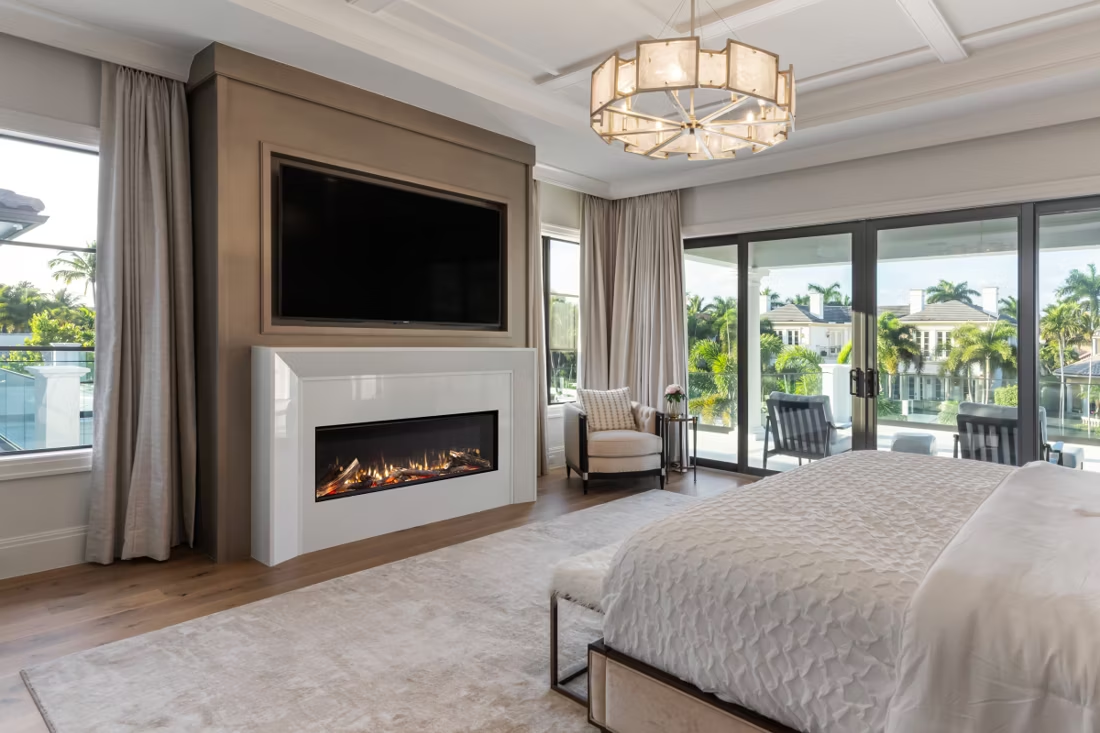
Four fuels. One honest answer for Montgomery County.
Three steps. No salesperson until you're ready.
Tell us about your project
Your zip code, your situation, and the fuel you're leaning toward—or let the answers point you to one.
See what's actually available
The brands dealers within 100 miles genuinely carry—real options, never a catalog mirage.
Get your dealer & Project Guide
A trusted local dealer, plus the free Project Guide & Parts List that names every component of the job.
Frequently Asked Questions
Which fireplace fuel is most common in Montgomery County?
It depends on the home. Wood remains a strong choice in Montgomery County's rural areas—the county's oak, hickory, maple, and beech woodlots keep firewood cheap and plentiful, and a well-run wood stove can hold a fire through a night when lows dip into the teens. Gas is the convenience pick for Crawfordsville homes and subdivisions with natural gas service—no wood-splitting, no ash, instant heat. Pellet stoves are a solid middle ground, especially with regional supply from Indeck Energy Services, Lignetics, and Somerset Pellet Fuel keeping bag prices reasonable. Electric fireplaces are supplemental almost everywhere in the county—good for a bedroom or sunroom, but not built to carry a house through a winter with an average low of 17°F. Most homes here run one fuel as primary heat and a second as backup or ambiance.
Do I need a permit to install a fireplace in Montgomery County?
In most cases, yes. New wood stoves, wood inserts, gas fireplaces, gas inserts, and pellet stoves typically require a building permit through the Montgomery County building department, or the City of Crawfordsville if you're inside city limits. Gas installations also need a licensed gas-fitter for the line work and a separate gas permit. New wood-burning appliances need to be EPA-certified units—older uncertified stoves don't meet current installation standards. Electric fireplaces generally skip the permit process unless you're hardwiring a built-in unit into a new circuit. Most local hearth retailers handle the paperwork as part of the installation, so you're usually not filing it yourself.
Are there air quality restrictions on wood burning in Montgomery County?
No—Montgomery County doesn't face the winter inversion or non-attainment issues you'd see in a place like the Klamath Basin or parts of the Pacific Northwest. There are no mandatory burn bans or voluntary curtailment advisories here. That said, an EPA-certified stove still makes sense: it burns oak and hickory more completely, uses less wood per BTU, and puts less smoke into the neighborhood on a still winter night. It's a good-neighbor upgrade even without a regulatory mandate behind it.
Will one local retailer carry all four fuel types?
Some do, some specialize. In a county this size, most hearth retailers cluster around Crawfordsville and typically carry two or three fuel types rather than all four—a shop heavy on wood stoves and inserts might only carry one or two gas lines, for instance. If you're cross-shopping fuels, it's worth asking upfront which types a dealer stocks and installs regularly, rather than assuming a showroom covers everything. The county + fuel pages above break down which dealers carry what.
How does hearth service work if I live outside Crawfordsville?
Most chimney sweeps, gas techs, and pellet service pros serving Montgomery County are based in or near Crawfordsville and drive out to Ladoga, Waveland, Darlington, New Ross, Alamo, and Wingate for appointments. Expect a modest travel charge for the more outlying calls, and know that scheduling gets tighter as the weather turns—booking your annual sweep or gas inspection in September or October, before the first cold snap, is easier than trying to get someone out in January.
What does fireplace installation typically cost across fuel types in Montgomery County?
Costs vary by fuel and by how much venting or gas line work is involved. Wood stove or insert: roughly $4,000–$8,500 for a typical install, more if a full chimney liner or masonry work is needed. Gas fireplace, insert, or stove: roughly $4,000–$10,000 depending on whether a gas line extension is required. Pellet stove or insert: roughly $4,000–$7,000 for a standard install. Electric fireplace: $200–$3,000 for the unit itself, plus $300–$1,000 in labor for anything beyond a plug-and-play wall unit. The county + fuel pages above break these down further with local pricing detail.
What is an in-home preview and do I need one?
It's a visit where a hearth professional measures your space, confirms the model you picked actually works in your home, and walks the specs—framing, gas line, venting, finish work—before anything is ordered. Some details you just can't know until you see the house. Never make a down payment without one; it's the single most-skipped step that burns buyers.
Does a fireplace add value to my home?
On average, a fireplace adds back to the home about the same amount you spent installing it. Add the monthly savings from heating the rooms you actually use instead of the whole house—often hundreds of dollars a year—and the value case is strong before you even count what a fire does for how your family uses the room.
Can I install a fireplace myself?
If you're putting a fire in your house on purpose, it's best to work with an expert. Unless you're genuinely experienced in framing, gas line, vent pipe, and the national code on clearances to combustibles, have a professional do it—and ideally the same company that sells you the fireplace, so warranty, service, and liability all live under one roof.
Can a fireplace actually lower my heating bill?
Yes—by creating a comfort zone. A furnace heats every square foot of the house just to warm the one room you're in; a gas fireplace on low burns roughly a sixth of the gas a typical furnace does. Set the furnace around 55–60 degrees as a baseline, then heat the rooms your family actually uses. Families who heat this way commonly save $20–$60 a month.
Stove and Fireplace Dealers in Montgomery County
Listings include WhyFire partner dealers, dealers we have verified as authorized for the brands we recommend, and established local businesses that carry hearth products. Every listing shows which one it is. The ones marked Preferred run on WhyFire's software, so they can show you real pricing and book your appointment right here. No manufacturer pays for placement. How we verify dealers →
Royal Comfort
Certified Chimney Care
Henry Poor Lumber
Find your fireplace in Montgomery County.
Pick your fuel below and we'll match you with a trusted local hearth dealer—plus a free Project Guide & Parts List for your specific home and fuel type, including the exact vent kit and parts your installer will need.
Find Your Fireplace →