
Find the right fireplace for your Jay County home.
Wood, gas, pellet, and electric fireplace resources for every town and rural crossroads in Jay County—from Portland to Salamonia. Find the right unit and connect with a trusted local hearth retailer.
Every Project Starts From One of These Five Situations
Steady cold-season heating in east-central Jay County, Indiana.
Jay County sits in climate zone 5A, with a long winter heating season and average winter lows around 17°F—a season not unlike what homeowners deal with in Madison, WI, though without the lake-effect snow load. That's a long, real heating season, not a mild one. The county's farmland and hardwood stands still supply plenty of oak, hickory, maple, and beech for the woodstoves and inserts that remain common on rural properties outside Portland, Dunkirk, and Redkey. Wood heat here isn't decorative—it's a working part of how a lot of Jay County homes get through January.
What you'll find on this hub: hearth retailers, service technicians, and fuel suppliers serving every community in the county—Portland as the county seat, Dunkirk and Redkey along the rail corridors, and the smaller unincorporated communities like Salamonia and Bryant scattered across the townships. Pick your fuel below to drill into specifics—local dealers, installation costs, recommended units, and the resources that match your project. Whether you're heating a farmhouse outside Pennville or a in-town home in Portland, this is the starting point.
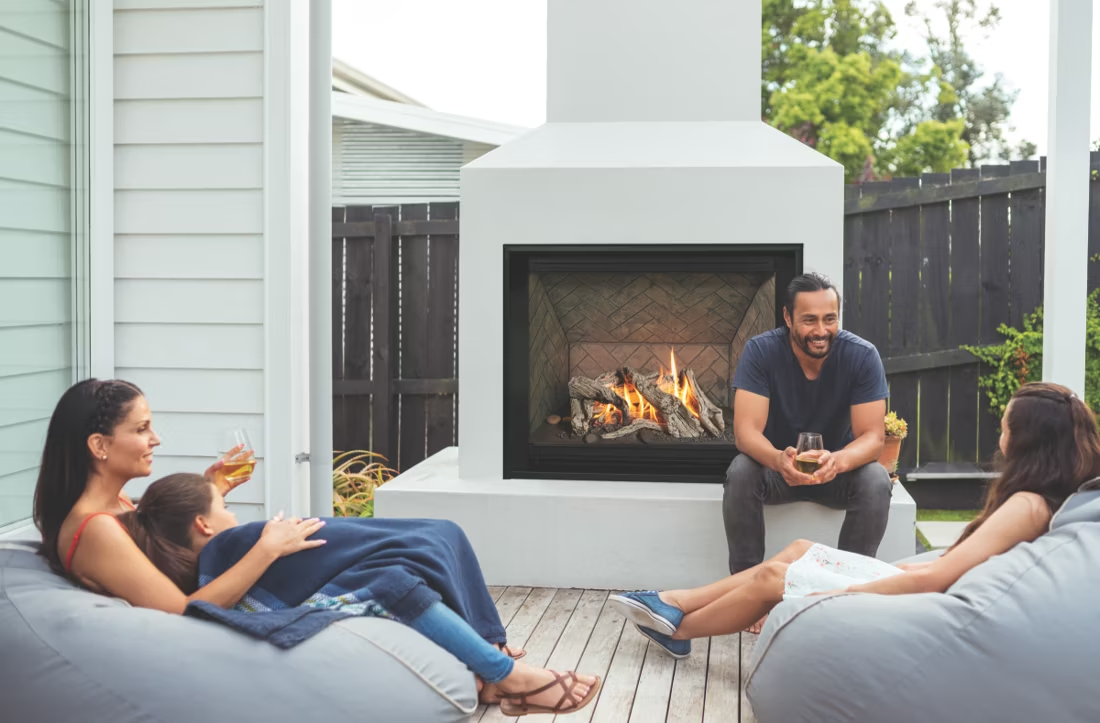
Four fuels. One honest answer for Jay County.
Three steps. No salesperson until you're ready.
Tell us about your project
Your zip code, your situation, and the fuel you're leaning toward—or let the answers point you to one.
See what's actually available
The brands dealers within 100 miles genuinely carry—real options, never a catalog mirage.
Get your dealer & Project Guide
A trusted local dealer, plus the free Project Guide & Parts List that names every component of the job.
Frequently Asked Questions
Which fuel works best in Jay County?
It depends on the home and the budget. Wood remains a strong choice on rural Jay County properties where oak and hickory are cut locally—a cast-iron or steel stove holds heat well through the kind of overnight lows (upper teens on average) the county sees most winters. Gas is the low-maintenance option for in-town homes in Portland and Dunkirk with natural gas service—no wood handling, consistent heat, thermostat control. Pellet splits the difference—regional supply from brands like Lignetics and Somerset Pellet Fuel keeps fuel accessible without the splitting and stacking wood requires. Electric works well as supplemental heat in bedrooms or additions, but on its own it won't carry a Jay County home through a full long, cold winter. Most households here end up pairing a primary wood, gas, or pellet appliance with electric for secondary rooms.
Do I need a permit to install a fireplace in Jay County?
In most cases, yes. New wood stoves, wood inserts, gas fireplaces, gas inserts, gas stoves, and pellet stoves typically require a building permit through the local jurisdiction—the City of Portland for in-town installs, or the Jay County building office for unincorporated areas and townships. Gas installations also need a separate gas line permit and licensed gas-fitter for the connection work. Electric fireplaces usually don't require a permit unless the installation involves hardwiring a built-in unit into a new circuit. Most hearth retailers serving the county handle this paperwork as part of the installation, so you generally don't have to navigate it alone.
Are there air quality restrictions on wood burning in Jay County?
No—Jay County doesn't have the kind of geographic setup (mountain basins, winter inversions) that triggers burn advisories in some western counties. There are no local wood-burning curtailment periods here. That said, any new wood stove installation still needs to meet current EPA emissions standards, and a properly sized, EPA-certified stove burning seasoned oak or hickory will produce far less smoke and creosote buildup than an old uncertified unit—worth factoring in even without a regulatory mandate.
Can one local hearth retailer handle all four fuel types?
In a county this size, most retailers focus on two or three fuel types rather than all four—Jay County's population is under 11,000, so dealers tend to specialize based on what sells locally, typically wood and gas, with pellet as a secondary line. Electric fireplaces are more often sold through big-box or furniture retailers than dedicated hearth shops. If you're cross-shopping fuels, check each retailer's listed coverage below before assuming they carry everything—a quick call ahead saves a wasted trip to Portland or Dunkirk.
How does service work in the rural parts of Jay County?
Technicians serving Jay County are generally based in or near Portland and travel out to the townships—Wabash, Richland, Bear Creek, and the areas around Bryant and Pennville. Expect a modest travel fee for the more remote stops, and know that scheduling in September or October, before the first cold snap, is far easier than trying to book a mid-January chimney sweep or gas inspection during peak demand. If you're on a rural property relying on wood as a primary heat source, an annual pre-season sweep is worth locking in early.
What's the typical cost range for fireplace installation across all fuel types in Jay County?
Ranges vary by fuel, similar to what you'd see across east-central Indiana. Wood stove or insert installation: roughly $3,800–$8,000 for most installs, higher if new chimney or hearth work is needed. Gas fireplace, insert, or stove: roughly $4,000–$9,500, with cost driven by how much gas line work and venting is required. Pellet stove or insert: roughly $4,000–$6,800 for a typical install. Electric fireplace: $200–$2,800 for the unit itself, plus $300–$1,000 in labor for anything beyond a simple plug-and-play placement. See the county + fuel pages above for cost detail tied to specific local retailers.
Can a fireplace actually lower my heating bill?
Yes—by creating a comfort zone. A furnace heats every square foot of the house just to warm the one room you're in; a gas fireplace on low burns roughly a sixth of the gas a typical furnace does. Set the furnace around 55–60 degrees as a baseline, then heat the rooms your family actually uses. Families who heat this way commonly save $20–$60 a month.
Does a fireplace add value to my home?
On average, a fireplace adds back to the home about the same amount you spent installing it. Add the monthly savings from heating the rooms you actually use instead of the whole house—often hundreds of dollars a year—and the value case is strong before you even count what a fire does for how your family uses the room.
What is an in-home preview and do I need one?
It's a visit where a hearth professional measures your space, confirms the model you picked actually works in your home, and walks the specs—framing, gas line, venting, finish work—before anything is ordered. Some details you just can't know until you see the house. Never make a down payment without one; it's the single most-skipped step that burns buyers.
Wood, gas, pellet, or electric—how do I choose?
Match the fuel to your life, not the other way around. Wood: lowest fuel cost and total power-outage independence, but you're hauling and stacking. Gas: press a button, set a thermostat, no maintenance to speak of. Pellet: wood economics with automatic feeding, in exchange for weekly cleaning and a need for electricity. Electric: plugs in anywhere with honest supplemental heat. Nobody regrets the fuel that fits how they actually live.
Stove and Fireplace Dealers in Jay County
Listings include WhyFire partner dealers, dealers we have verified as authorized for the brands we recommend, and established local businesses that carry hearth products. Every listing shows which one it is. The ones marked Preferred run on WhyFire's software, so they can show you real pricing and book your appointment right here. No manufacturer pays for placement. How we verify dealers →
Jd Farm Supply
Davis Cabinet & Design
Find your fireplace in Jay County.
Pick your fuel below, and we'll match you with a trusted local dealer and send a free Project Guide & Parts List—the parts, the vent kit, and the recommended installer for your Jay County home.
Find Your Fireplace →