
Reliable heat for every Whiteside County winter.
Wood, gas, pellet, and electric fireplace resources for every city and rural township in Whiteside County—from Sterling and Rock Falls to Morrison, Fulton, and Prophetstown. Find the right unit and connect with a trusted local hearth retailer.
Every Project Starts From One of These Five Situations
Steady, snow-belt heating along the Rock River.
Whiteside County sits in the Rock River valley of northwestern Illinois, with winters comparable to Madison, Wisconsin or Burlington, Vermont and average winter lows near 14°F. Winters bring long stretches of gray, damp cold rather than dramatic extremes, but the season runs deep, typically from October well into April. Farm ground and river-bottom timber here have long produced dense hardwood—oak, hickory, walnut, and maple—that seasons well and burns hot, which is a big part of why wood and pellet heat remain common secondary and primary sources across the county's small towns and rural sections.
What you'll find on this hub: hearth retailers, service technicians, and fuel suppliers serving every community in the county—from Sterling and Rock Falls along the river, south to Morrison and Prophetstown, and west to Fulton on the Mississippi. Pick your fuel below to drill into specifics—local dealers, installation costs, recommended units, and the resources that match your project. Whether you're heating a farmhouse outside Tampico or a river-town bungalow in Fulton, this is the starting point.
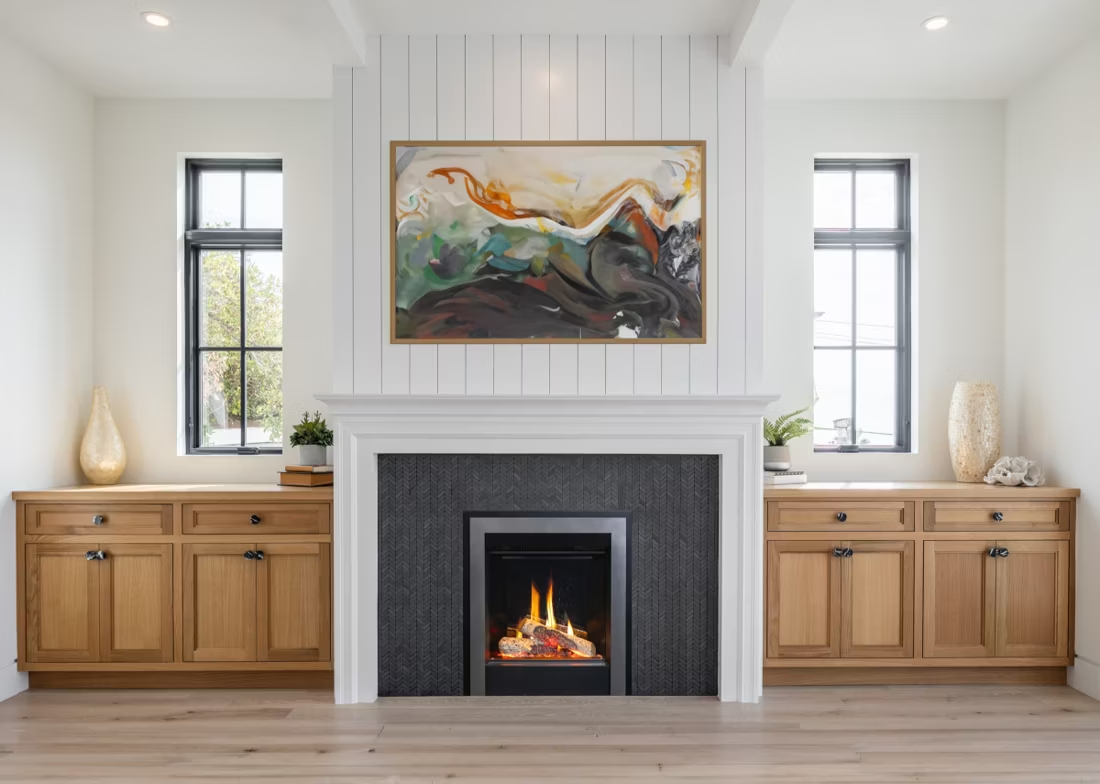
Four fuels. One honest answer for Whiteside County.
Three steps. No salesperson until you're ready.
Tell us about your project
Your zip code, your situation, and the fuel you're leaning toward—or let the answers point you to one.
See what's actually available
The brands dealers within 100 miles genuinely carry—real options, never a catalog mirage.
Get your dealer & Project Guide
A trusted local dealer, plus the free Project Guide & Parts List that names every component of the job.
Frequently Asked Questions
Which fuel works best in Whiteside County?
It depends on the home and how it's used. Wood is a strong fit here—local oak, hickory, walnut, and maple season well and burn long and hot, and plenty of Whiteside County homeowners on farm acreage or in river-bottom towns cut and split their own supply. Gas is the low-maintenance choice for Sterling and Rock Falls homes on natural gas service, or propane for rural properties off the main lines—instant heat with none of the wood-handling labor. Pellet splits the difference: automated, consistent heat without a woodpile, and with Indeck Energy Services and Lignetics both supplying pellets regionally, fuel availability isn't a concern. Electric works well as supplemental heat for bedrooms, sunrooms, or ambiance, but with a long, deep heating season here, it's rarely someone's only heat source. Many Whiteside County homes run wood or pellet as the primary heater with gas or electric backing it up in secondary rooms.
Do I need a permit to install a fireplace in Whiteside County?
In most cases, yes. New wood stoves, wood inserts, gas fireplaces, gas inserts, gas stoves, and pellet stoves generally require a building permit, and gas installations typically need a separate permit and licensed installer for the gas line connection. Requirements differ slightly depending on whether the property is inside Sterling, Rock Falls, Morrison, or another incorporated town, versus unincorporated Whiteside County—city building departments handle permits within their limits, while the county handles the rest. Electric fireplaces usually skip the permit process unless it's a built-in unit requiring a new hardwired circuit. Most local hearth retailers handle the paperwork as part of the installation, so it's rarely something homeowners have to navigate alone.
Are there air quality restrictions on wood burning in Whiteside County?
No—Whiteside County doesn't have the winter inversion or non-attainment issues that trigger burn advisories in some western basins. There's no local burn-ban program here. That said, any new wood stove installation should still meet current EPA emissions standards, both for safety and because newer catalytic and non-catalytic stoves burn noticeably cleaner and more efficiently than older units—useful given how long and deep the county's heating season runs each winter.
Can one local hearth retailer handle all four fuel types?
Many hearth retailers serving Whiteside County carry three or four fuel types, but it varies by dealer—some focus heavily on wood and pellet given the local hardwood supply, while others lean toward gas for Sterling and Rock Falls customers on natural gas lines. If you're not sure which fuel fits your home, a multi-fuel dealer can show you working displays side by side and walk through the trade-offs for your specific situation—heating load, whether you have gas service, and how much hands-on maintenance you want to take on.
How does service work in the rural parts of Whiteside County?
Most service technicians are based in Sterling or Rock Falls and travel out to Morrison, Fulton, Prophetstown, Tampico, and the farm townships in between. Expect a modest travel fee for the more remote calls. Since the heating season here runs long—often October through April—scheduling annual chimney sweeps or gas inspections in late summer or early fall, before the first cold snap, is easier than trying to book a mid-winter emergency appointment. For pellet stove owners in rural areas, keeping a spare auger motor or igniter on hand isn't a bad idea given the distance to a technician.
What's the typical cost range for fireplace installation across all fuel types in Whiteside County?
Ranges vary by fuel. Wood stove or insert installation typically runs $4,000–$8,500, higher if new chimney construction is involved. Gas fireplace, insert, or stove installation runs roughly $4,000–$10,000 depending on whether new gas line work or venting is required—conversions where gas service already exists tend toward the lower end. Pellet stove or insert installation generally falls between $4,000–$7,000. Electric fireplace costs range from $200–$3,000 for the unit itself, plus $400–$1,200 in labor for anything beyond a simple plug-and-play setup. For local specifics tied to Whiteside County retailer pricing, see the county + fuel pages above.
How much should I budget for a fireplace?
For an average home—covering the fireplace, the vent pipe, and basic installation—a budget between $3,900 and $5,500 gives you a lot of options across wood, gas, and pellet. By the time you add finish work, gas line, and electrical, the average complete installation lands between $5,000 and $12,000 all-in. In a remodel or new build, a good rule is to put about 2.5% of the total project cost toward the fireplace.
Wood, gas, pellet, or electric—how do I choose?
Match the fuel to your life, not the other way around. Wood: lowest fuel cost and total power-outage independence, but you're hauling and stacking. Gas: press a button, set a thermostat, no maintenance to speak of. Pellet: wood economics with automatic feeding, in exchange for weekly cleaning and a need for electricity. Electric: plugs in anywhere with honest supplemental heat. Nobody regrets the fuel that fits how they actually live.
What is an in-home preview and do I need one?
It's a visit where a hearth professional measures your space, confirms the model you picked actually works in your home, and walks the specs—framing, gas line, venting, finish work—before anything is ordered. Some details you just can't know until you see the house. Never make a down payment without one; it's the single most-skipped step that burns buyers.
Can I install a fireplace myself?
If you're putting a fire in your house on purpose, it's best to work with an expert. Unless you're genuinely experienced in framing, gas line, vent pipe, and the national code on clearances to combustibles, have a professional do it—and ideally the same company that sells you the fireplace, so warranty, service, and liability all live under one roof.
Stove and Fireplace Dealers in Whiteside County
Listings include WhyFire partner dealers, dealers we have verified as authorized for the brands we recommend, and established local businesses that carry hearth products. Every listing shows which one it is. The ones marked Preferred run on WhyFire's software, so they can show you real pricing and book your appointment right here. No manufacturer pays for placement. How we verify dealers →
Frary Lumber
Bradford Supply Co
The Fireplace Shop, Etc
Find your fireplace in Whiteside County.
Pick your fuel below and we'll match you with a trusted local dealer and a free Project Guide & Parts List—the exact parts, vent kit included, and the recommended installer for your project.
Find Your Fireplace →