
Find the right fireplace for your Putnam County winter.
Wood, gas, pellet, and electric fireplace resources for every town along the Illinois River in Putnam County—from Hennepin to Granville, Magnolia, McNabb, and Standard. Find the right unit and connect with a trusted local hearth retailer.
Every Project Starts From One of These Five Situations
Small county, serious winters, along the Illinois River.
Putnam County is the smallest county in Illinois by population—about 3,526 residents spread across farmland and river bluffs along the Illinois River. That small population doesn't mean easy winters: this is climate zone 5A, with roughly 6,053 heating degree days a year and average winter lows around 15°F, putting it in the same cold-climate range as Madison, Wisconsin. The bluffs and bottomland along the river grow dense stands of oak, hickory, walnut, and maple—some of the best hardwood firewood species available anywhere, and a big reason wood heat has stuck around on farmsteads here for generations.
What you'll find on this hub: hearth retailers, service technicians, and fuel suppliers covering every community in the county—Hennepin (the county seat), Granville, Magnolia, McNabb, Standard, and the unincorporated farmland in between. Pick your fuel below to drill into specifics—local dealers, installation costs, recommended units, and the resources that match your project. Whether you're heating a river-bottom farmhouse or a bluff-top home outside Granville, this is the starting point.
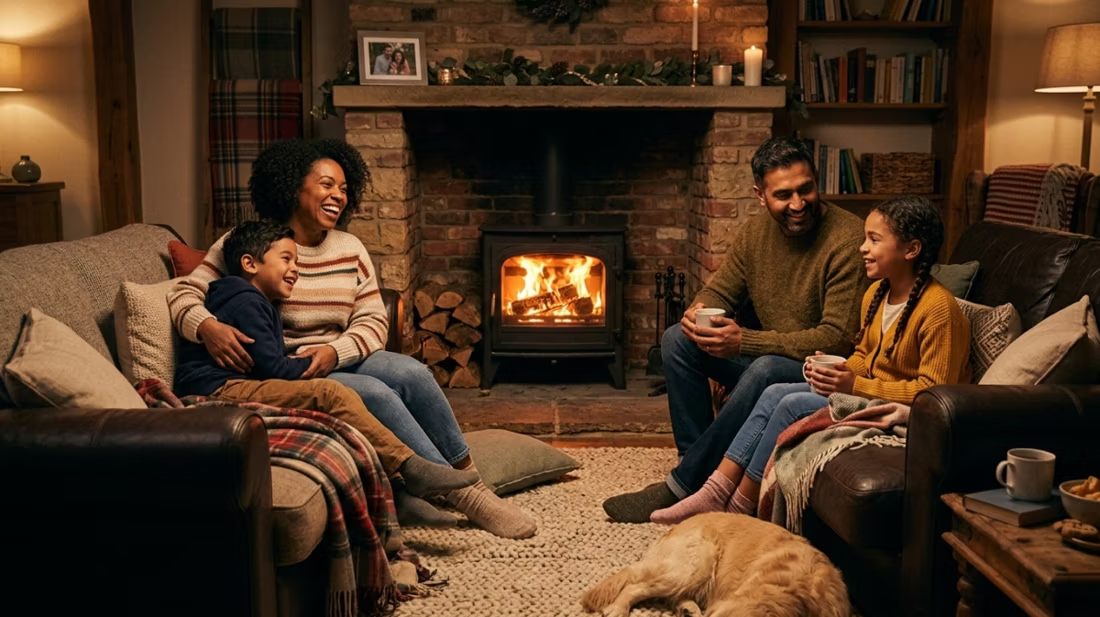
Four fuels. One honest answer for Putnam County.
Three steps. No salesperson until you're ready.
Tell us about your project
Your zip code, your situation, and the fuel you're leaning toward—or let the answers point you to one.
See what's actually available
The brands dealers within 100 miles genuinely carry—real options, never a catalog mirage.
Get your dealer & Project Guide
A trusted local dealer, plus the free Project Guide & Parts List that names every component of the job.
Frequently Asked Questions
Which fuel works best in Putnam County?
It depends on your home and situation, but the local hardwood supply tilts things toward wood. Oak, hickory, walnut, and maple grow thick along the Illinois River bluffs and in farm woodlots, and a lot of Putnam County homeowners either cut their own or buy from a neighbor—that keeps fuel costs low for a wood stove or insert. Gas is the convenience pick for homes in Hennepin or Granville with natural gas service, or for rural farmsteads on propane—no wood-splitting, no ash, instant heat. Pellet is the middle ground: less labor than wood, and regional producers like Indeck Energy Services and Lignetics keep supply steady through an Illinois winter. Electric works well as a supplemental heat source in bedrooms or a den, but on its own it won't carry a home through a stretch of 15°F nights. Most homes here end up with wood or pellet doing the heavy lifting and gas or electric filling in.
Do I need a permit to install a fireplace in Putnam County?
In most cases, yes. New wood stoves, wood inserts, gas fireplaces, gas inserts, gas stoves, and pellet stoves typically require a building permit through Putnam County's zoning and building office, and gas installations also need a licensed gas-fitter for the connection work along with a separate gas permit. Wood-burning appliances installed today should meet EPA 2020 NSPS emissions standards. Electric fireplaces are usually permit-free unless you're doing a built-in installation that involves new wiring or a dedicated circuit. Most local hearth retailers who serve Putnam County handle the permitting paperwork as part of the installation, so it's rarely something homeowners have to manage on their own.
Are there air quality restrictions on wood burning in Putnam County?
No—Putnam County doesn't have the kind of winter inversion or nonattainment issues that trigger burn advisories in places like the Klamath Basin or parts of the Pacific Northwest. There's no local burn-ban program here. That said, choosing an EPA-certified stove or insert still matters: newer catalytic and non-catalytic units burn cleaner and get more heat out of a cord of oak or hickory than an older uncertified stove, which is worth considering even without a regulatory push.
Can one local hearth retailer handle all four fuel types?
Many of the regional dealers who serve Putnam County from Ottawa, Peru-LaSalle, or Princeton carry three or four fuel types under one roof—a multi-fuel showroom like an Illinois Valley Hearth & Home or a Prairie Creek Stove & Fireplace lets you compare a wood insert, a gas unit, and a pellet stove side by side before deciding. Smaller shops closer to the county sometimes specialize in just wood and pellet, given how much of Putnam County still burns firewood off the land. If you're not sure which fuel fits your home, a multi-fuel dealer showing working displays is the fastest way to figure it out.
How does service work in rural areas of Putnam County?
Most technicians who cover Putnam County are based outside the county—in Ottawa, Peru-LaSalle, Princeton, or Streator—and drive in on a route basis to reach Hennepin, Granville, Magnolia, McNabb, and Standard. Expect a modest travel charge for the more scattered farmsteads, and know that scheduling ahead in late summer or early fall gets you a slot well before the first cold snap. Mid-winter emergency calls during a hard freeze are harder to book quickly, so pre-season chimney sweeping and gas inspection appointments are worth locking in early, especially if you're relying on wood or pellet heat as your primary source.
What's the typical cost range for fireplace installation across all fuel types in Putnam County?
Ranges vary by fuel and by how much venting or gas line work is involved. Wood stove or insert installation: roughly $4,000–$8,500 for a typical retrofit, higher if new chimney construction is needed. Gas fireplace, insert, or stove: roughly $4,000–$10,000 depending on gas line routing and venting, lower if you're converting an existing gas hearth. Pellet stove or insert: roughly $4,000–$7,000 for most installs. Electric fireplace: $200–$3,000 for the unit itself, plus $400–$1,200 in labor for anything beyond a simple plug-in unit. For a specific number, the free Project Guide & Parts List from a matched local dealer will lay out exact parts and pricing for your project.
What is an in-home preview and do I need one?
It's a visit where a hearth professional measures your space, confirms the model you picked actually works in your home, and walks the specs—framing, gas line, venting, finish work—before anything is ordered. Some details you just can't know until you see the house. Never make a down payment without one; it's the single most-skipped step that burns buyers.
Can I install a fireplace myself?
If you're putting a fire in your house on purpose, it's best to work with an expert. Unless you're genuinely experienced in framing, gas line, vent pipe, and the national code on clearances to combustibles, have a professional do it—and ideally the same company that sells you the fireplace, so warranty, service, and liability all live under one roof.
What are the biggest mistakes people make buying a fireplace?
Five come up constantly: budgeting for the unit but not the full job (vent, gas line, electrical, finish work); drowning in options instead of starting from style and fuel; buying without an in-home preview; handing installation to a handyman instead of a pro; and giving up out of sheer indecision. Every one is avoidable with a clear plan—step one, step two, step three.
How much should I budget for a fireplace?
For an average home—covering the fireplace, the vent pipe, and basic installation—a budget between $3,900 and $5,500 gives you a lot of options across wood, gas, and pellet. By the time you add finish work, gas line, and electrical, the average complete installation lands between $5,000 and $12,000 all-in. In a remodel or new build, a good rule is to put about 2.5% of the total project cost toward the fireplace.
Stove and Fireplace Dealers in Putnam County
Listings include WhyFire partner dealers, dealers we have verified as authorized for the brands we recommend, and established local businesses that carry hearth products. Every listing shows which one it is. The ones marked Preferred run on WhyFire's software, so they can show you real pricing and book your appointment right here. No manufacturer pays for placement. How we verify dealers →
Rk Dosemagen, Inc
Hampton Distributing
Find your fireplace in Putnam County.
Pick your fuel below and we'll match you with a trusted local dealer and send you a free Project Guide & Parts List—the exact parts, including the vent kit, for your project in Putnam County.
Find Your Fireplace →