
Heat your home right, Ford County, Illinois.
Wood, gas, pellet, and electric fireplace resources for every town and farmstead in Ford County—from Paxton to Gibson City to the smaller communities along Route 24. Find the right unit for your home and get matched with a trusted local hearth dealer.
Every Project Starts From One of These Five Situations
Prairie winters and pole barns: heating Ford County, Illinois.
Ford County sits in the flat corn-and-soybean country of east-central Illinois, home to about 10,566 people spread across a handful of small towns and a lot of open farmland. Winters here run cold and steady—average lows around 15°F, with a winter heating load in the same climate ballpark as Madison, Wisconsin. The heating season typically stretches from October through April. Farm woodlots throughout the county still supply plenty of oak, hickory, walnut, and maple for homeowners who split and burn their own firewood—a practical habit in a county where hardwood is often just a fencerow away.
What you'll find on this hub: hearth retailers, service technicians, and fuel suppliers covering every community in the county—Paxton, the county seat, along with Gibson City, Melvin, Piper City, Sibley, Roberts, and the surrounding rural townships. Pick your fuel below to get into specifics—local dealers, typical installation costs, recommended units, and next steps for your particular home, whether that's a farmhouse outside Gibson City or a house in town in Paxton.
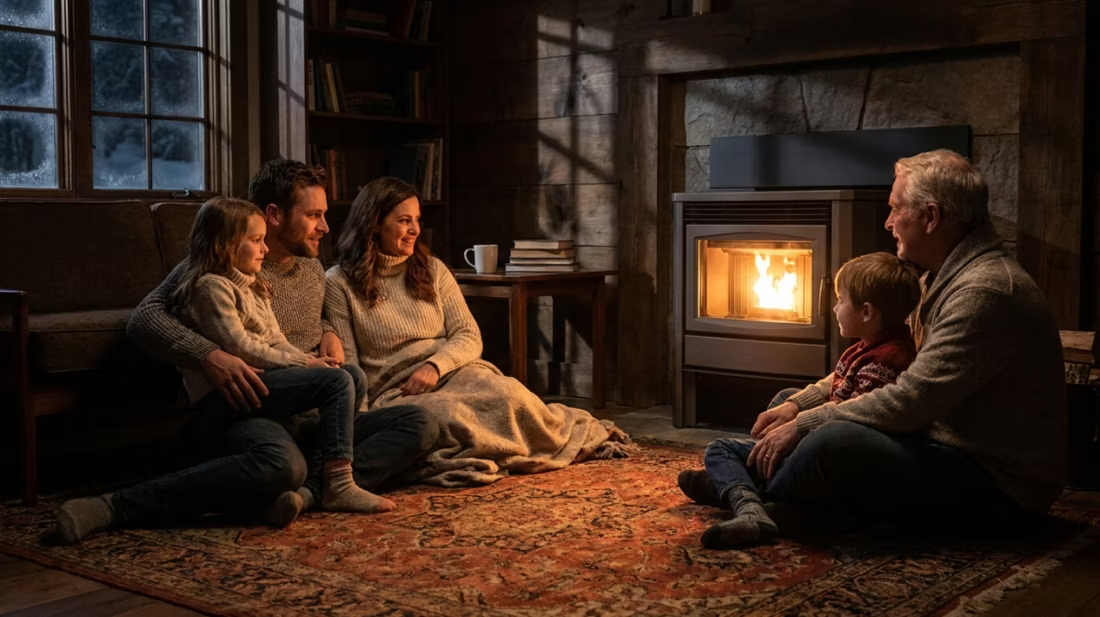
Four fuels. One honest answer for Ford County.
Three steps. No salesperson until you're ready.
Tell us about your project
Your zip code, your situation, and the fuel you're leaning toward—or let the answers point you to one.
See what's actually available
The brands dealers within 100 miles genuinely carry—real options, never a catalog mirage.
Get your dealer & Project Guide
A trusted local dealer, plus the free Project Guide & Parts List that names every component of the job.
Frequently Asked Questions
Which fuel works best in Ford County?
It depends on your property and how hands-on you want to be. Wood is a natural fit for Ford County's farm properties—oak, hickory, walnut, and maple are common in local woodlots, and plenty of homeowners here already cut and split their own supply. Gas is the low-maintenance choice; propane tanks are the norm on most rural properties outside town limits, while houses in Paxton and Gibson City may have access to municipal natural gas service. Pellet stoves are a solid middle ground—no splitting or stacking required, and regional producers like Indeck Energy Services, Lignetics, and Somerset Pellet Fuel keep bagged pellets reasonably available across the Midwest. Electric fireplaces work well as supplemental heat for bedrooms, additions, or outbuildings, but with average winter lows around 15°F, they're not typically anyone's primary heat source here. Many Ford County households end up running two fuels—wood or propane as the main heat, electric or pellet in a secondary room.
Do I need a permit to install a fireplace in Ford County?
Generally yes for wood, gas, and pellet installations. New wood stoves, wood inserts, gas fireplaces, gas inserts, and pellet stoves typically require a building permit through your local jurisdiction—in unincorporated areas that's Ford County's building and zoning office, and in town it's usually handled through the municipal office (Paxton and Gibson City each have their own). Propane installations also involve tank placement rules and, if you're adding a new gas line, a licensed installer for that portion of the work. Electric fireplaces are usually permit-free for plug-in units, though a built-in unit that requires a new circuit will need an electrical permit. Most local hearth dealers pull the permit as part of the installation, so it's rarely something the homeowner has to sort out solo.
Are there air quality restrictions on wood burning in Ford County?
No—Ford County isn't in an EPA non-attainment area and doesn't deal with the winter inversion issues that trigger burn advisories in mountain basins or metro areas. Wood burning is largely unrestricted here for residential heating. The one local air-quality topic that does come up seasonally is agricultural field burning of crop residue, which is a separate matter from home heating and is generally managed by the farmer doing the burning, not homeowners with wood stoves. If you're installing a new wood appliance, it should still meet current EPA emissions standards, but you won't run into curtailment days or voluntary no-burn advisories the way homeowners in other parts of the country sometimes do.
Can one local hearth retailer handle all four fuel types?
In a county this size—just over 10,000 people spread across several small towns—it's common for a single hearth retailer to carry multiple fuel types rather than specialize narrowly, simply because the local market doesn't support four separate single-fuel shops. Dealers based in Paxton or Gibson City often stock wood, gas, and pellet units side by side, with electric fireplaces as an add-on line. If you're after a more specialized selection or want to compare several premium units in person, it's also worth checking dealers in Champaign-Urbana, about 30-40 minutes south, which serves a much larger population and supports more specialty inventory.
How does service work in rural areas of Ford County?
Most technicians serving Ford County are based in Paxton or Gibson City and drive out to farms and smaller towns like Melvin, Piper City, Sibley, and Roberts—some homeowners also pull in techs from Champaign-Urbana for gas service or specialty pellet stove work. Expect a modest travel fee for calls well outside town limits. Fall (September–October) is the easiest window to book annual chimney sweeping or gas inspection before the first hard freeze; waiting until a cold snap hits means longer lead times. If your property is remote, it's worth scheduling early and keeping basic backup supplies—split wood or a spare pellet bag—on hand for outages during Ford County's coldest stretches.
What's the typical cost range for fireplace installation across all fuel types in Ford County?
Wood stove or insert installation: roughly $4,000–$8,500 for a typical install, more if new chimney or hearth pad work is involved. Gas fireplace, insert, or stove: roughly $4,000–$10,000, with propane tank setup or gas line extension pushing toward the higher end for rural properties without existing service. Pellet stove or insert: roughly $4,000–$7,000 for most installs. Electric fireplace: $200–$3,000 for the unit itself, plus $300–$1,000 in labor for anything beyond a simple plug-in—most wall-mount and insert units fall in that range. Exact pricing depends on the specific dealer and the scope of venting or gas work your home needs; local retailers can walk through the details for your property.
Does a fireplace add value to my home?
On average, a fireplace adds back to the home about the same amount you spent installing it. Add the monthly savings from heating the rooms you actually use instead of the whole house—often hundreds of dollars a year—and the value case is strong before you even count what a fire does for how your family uses the room.
How much should I budget for a fireplace?
For an average home—covering the fireplace, the vent pipe, and basic installation—a budget between $3,900 and $5,500 gives you a lot of options across wood, gas, and pellet. By the time you add finish work, gas line, and electrical, the average complete installation lands between $5,000 and $12,000 all-in. In a remodel or new build, a good rule is to put about 2.5% of the total project cost toward the fireplace.
What is an in-home preview and do I need one?
It's a visit where a hearth professional measures your space, confirms the model you picked actually works in your home, and walks the specs—framing, gas line, venting, finish work—before anything is ordered. Some details you just can't know until you see the house. Never make a down payment without one; it's the single most-skipped step that burns buyers.
I know I want a fireplace—where do I actually start?
Do two things today: snap a photo of the wall or fireplace you want to transform, and take a tape measure to the space—width, height, depth. Those two artifacts answer most of a hearth professional's first questions. Then settle fuel (wood, gas, pellet, or electric) and set a realistic budget: $3,900–$5,500 covers fireplace, vent, and basic install for most homes.
Stove and Fireplace Dealers in Ford County
Listings include WhyFire partner dealers, dealers we have verified as authorized for the brands we recommend, and established local businesses that carry hearth products. Every listing shows which one it is. The ones marked Preferred run on WhyFire's software, so they can show you real pricing and book your appointment right here. No manufacturer pays for placement. How we verify dealers →
The Hearthside Shoppe
Bratcher Heating & A/c
Nordines Heating Cooling & Fireplaces
Find your fireplace match in Ford County.
Pick your fuel below and we'll match you with a trusted local dealer plus a free Project Guide & Parts List—the exact parts, vent kit included, for your Ford County project.
Find Your Fireplace →