
Heat built for McCall winters—and everywhere else in Valley County.
With 8,665 heating degree days and winter lows averaging 14°F, Valley County heats harder than most of the country. Wood, gas, pellet, and electric fireplace resources for McCall, Cascade, Donnelly, and every rural community tucked into the Payette National Forest.
Every Project Starts From One of These Five Situations
Mountain-town heating in one of Idaho's coldest counties.
Valley County sits almost entirely inside the Payette National Forest, with McCall perched at over 5,000 feet on Payette Lake and Cascade and Donnelly strung along Highway 55 through Long Valley. At 8,665 heating degree days, this county runs colder than Duluth, Minnesota, in a typical winter—snowpack stacks up for months, and the heating season regularly stretches from October into May. Wood heat is part of daily life here: lodgepole pine, ponderosa pine, douglas fir, and larch are all abundant on Forest Service land, and personal-use firewood cutting permits through the Payette National Forest office keep a lot of households in fuel through the winter.
This hub covers the whole county at 5,552 residents spread across a lot of forested ground—hearth retailers, service technicians, and fuel suppliers who serve McCall, Cascade, Donnelly, and smaller communities like Yellow Pine and Warm Lake. Pick your fuel below for installation costs, recommended units, and dealer specifics. Whether you're heating a lake cabin near McCall or a homestead out toward Warm Lake, this is the starting point—and it's worth noting summer wildfire smoke, not winter air quality, is the main air-quality concern shaping appliance choice here.
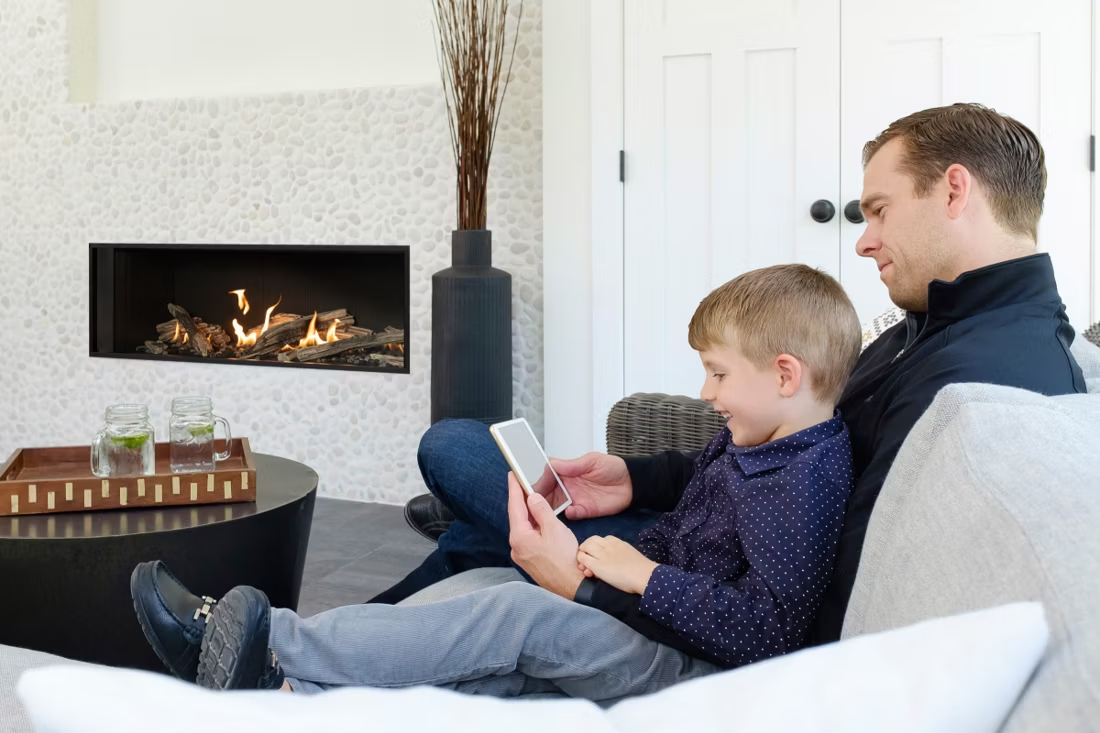
Four fuels. One honest answer for Valley County.
Three steps. No salesperson until you're ready.
Tell us about your project
Your zip code, your situation, and the fuel you're leaning toward—or let the answers point you to one.
See what's actually available
The brands dealers within 100 miles genuinely carry—real options, never a catalog mirage.
Get your dealer & Project Guide
A trusted local dealer, plus the free Project Guide & Parts List that names every component of the job.
Frequently Asked Questions
Which fuel works best in Valley County?
It depends on the home and how remote it is. Wood is the deep local tradition—lodgepole pine, ponderosa pine, douglas fir, and larch are all cut locally, many under Payette National Forest personal-use permits, and a catalytic stove can hold an overnight burn through the kind of single-digit cold McCall regularly sees. Gas here almost always means propane, since Valley County has no natural gas utility—it's the convenience option for instant heat without stacking wood. Pellet is a solid middle ground, especially with Bear Mountain and Lignetics pellets stocked regionally, though delivery in a hard winter is worth planning around. Electric works fine for supplemental heat in a bedroom or den, but at 8,665 heating degree days it's not enough on its own. Most Valley County homes lean on wood or pellet as primary heat with propane or electric as backup.
Do I need a permit to install a fireplace in Valley County?
Yes, in most cases. New wood stoves, wood inserts, gas fireplaces, gas inserts, gas stoves, and pellet stoves require a building permit through the Valley County Building Department for unincorporated areas, or through the city if you're inside McCall, Cascade, or Donnelly limits. Wood-burning appliances need to meet current EPA emissions standards to pass inspection. This building permit is separate from the Payette National Forest personal-use firewood permit—one covers your cutting rights on Forest Service land, the other covers the appliance installation in your home. Propane installations also need a licensed gas-fitter for the line work. Electric fireplaces generally skip the permit process unless they're hardwired built-ins. Most local retailers handle the paperwork as part of the install.
Are there air quality restrictions on wood burning in Valley County?
Winter burning itself isn't heavily restricted here—Valley County doesn't have the winter inversion problems that trigger advisory days in some Idaho basins. The bigger air quality issue is wildfire smoke in summer, which can blanket McCall, Cascade, and Donnelly for weeks during fire season and is managed separately from residential heating through Idaho DEQ smoke management rules for outdoor burning. For your indoor wood stove or insert, the main requirement is that new installations meet current EPA emissions standards. An EPA-certified stove also burns roughly a third of the wood a pre-1990s stove needs for the same heat output, which matters when your firewood came from a personal-use cutting permit rather than a delivery truck.
Can one local hearth retailer handle all four fuel types?
In a county this size, most retailers carry more than one fuel out of necessity—there simply aren't enough households to support single-fuel specialty shops the way a larger market might. A McCall-area dealer covering the whole county typically stocks wood and pellet stoves as a baseline, with propane fireplaces and inserts as the standard 'gas' offering, and electric units available for smaller installs. If you're deciding between fuels, a multi-fuel dealer with working showroom displays is the easiest way to compare a lodgepole-pine-burning wood stove against a propane insert side by side before committing.
How does service work in the more remote parts of Valley County?
Technicians based in McCall or Cascade travel out to Donnelly, Warm Lake, and the Yellow Pine area, but winter road conditions and seasonal closures around the Payette National Forest can add real delay to a service call—sometimes weeks, not days. Expect a travel fee for calls outside the main Highway 55 corridor. The practical move is scheduling chimney sweeps, gas inspections, and pellet stove service in September or early October, before the passes get difficult and before every other homeowner in the valley is calling for the same appointment slots.
What's the typical cost range for fireplace installation across all fuel types in Valley County?
Wood stove or insert installation: roughly $4,500–$9,500 for a typical setup, more for new chimney construction given the snow-load and clearance requirements common at this elevation. Propane fireplace, insert, or stove: $4,500–$10,500 depending on gas line and tank work—new propane service on a remote lot adds cost versus an existing tank. Pellet stove or insert: $4,500–$7,500 for most installs. Electric fireplace: $200–$3,000 for the unit itself, plus $400–$1,200 in labor for anything beyond a plug-and-play setup. Remote-property travel fees can push any of these ranges higher—ask your local dealer for a site-specific quote.
Does a fireplace add value to my home?
On average, a fireplace adds back to the home about the same amount you spent installing it. Add the monthly savings from heating the rooms you actually use instead of the whole house—often hundreds of dollars a year—and the value case is strong before you even count what a fire does for how your family uses the room.
Wood, gas, pellet, or electric—how do I choose?
Match the fuel to your life, not the other way around. Wood: lowest fuel cost and total power-outage independence, but you're hauling and stacking. Gas: press a button, set a thermostat, no maintenance to speak of. Pellet: wood economics with automatic feeding, in exchange for weekly cleaning and a need for electricity. Electric: plugs in anywhere with honest supplemental heat. Nobody regrets the fuel that fits how they actually live.
How much should I budget for a fireplace?
For an average home—covering the fireplace, the vent pipe, and basic installation—a budget between $3,900 and $5,500 gives you a lot of options across wood, gas, and pellet. By the time you add finish work, gas line, and electrical, the average complete installation lands between $5,000 and $12,000 all-in. In a remodel or new build, a good rule is to put about 2.5% of the total project cost toward the fireplace.
I know I want a fireplace—where do I actually start?
Do two things today: snap a photo of the wall or fireplace you want to transform, and take a tape measure to the space—width, height, depth. Those two artifacts answer most of a hearth professional's first questions. Then settle fuel (wood, gas, pellet, or electric) and set a realistic budget: $3,900–$5,500 covers fireplace, vent, and basic install for most homes.
Stove and Fireplace Dealers in Valley County
Listings include WhyFire partner dealers, dealers we have verified as authorized for the brands we recommend, and established local businesses that carry hearth products. Every listing shows which one it is. The ones marked Preferred run on WhyFire's software, so they can show you real pricing and book your appointment right here. No manufacturer pays for placement. How we verify dealers →
McCall Stove & Fireplace
Quality Heating, A/c & Electric
Ontario Ace Hardware
Cj Construction Specialties
Anderson Hardware
Baker County Heating & Cooling
Blind Appeal, Inc.
Best Built Builders Supply
Find your fireplace in Valley County.
Get matched with a trusted local dealer and a free Project Guide & Parts List—the exact parts, including the vent kit, sized for your fuel and your Valley County home.
Find Your Fireplace →