
Find the right hearth for a Minidoka County winter.
Wood, gas, pellet, and electric fireplace resources for every town and farm community in Minidoka County—from Rupert to Heyburn and the rural stretches along the Snake River plain. Find the right unit and connect with a trusted local hearth retailer.
Every Project Starts From One of These Five Situations
Snake River plain winters, comparable to Bismarck ND.
Minidoka County sits on the flat, open farmland of south-central Idaho's Snake River plain, with a winter heating load in the same range as Bismarck, North Dakota. Average winter lows near 19°F, combined with wind that moves unobstructed across the plain, make sustained indoor heat a real necessity rather than an amenity. Lodgepole pine, ponderosa pine, Douglas fir, and larch—all sourced from the nearby Sawtooth National Forest and BLM Twin Falls District lands—are the wood species most local burners split and stack for the season.
What you'll find on this hub: hearth retailers, service technicians, and fuel suppliers serving every community in the county—Rupert, Heyburn, Paul, Acequia, and the unincorporated farm crossroads in between. Pick your fuel below to drill into specifics—local dealers, installation costs, recommended units, and the resources that match your project. Whether you're heating a farmhouse outside Paul or a Rupert bungalow near downtown, this is the starting point.
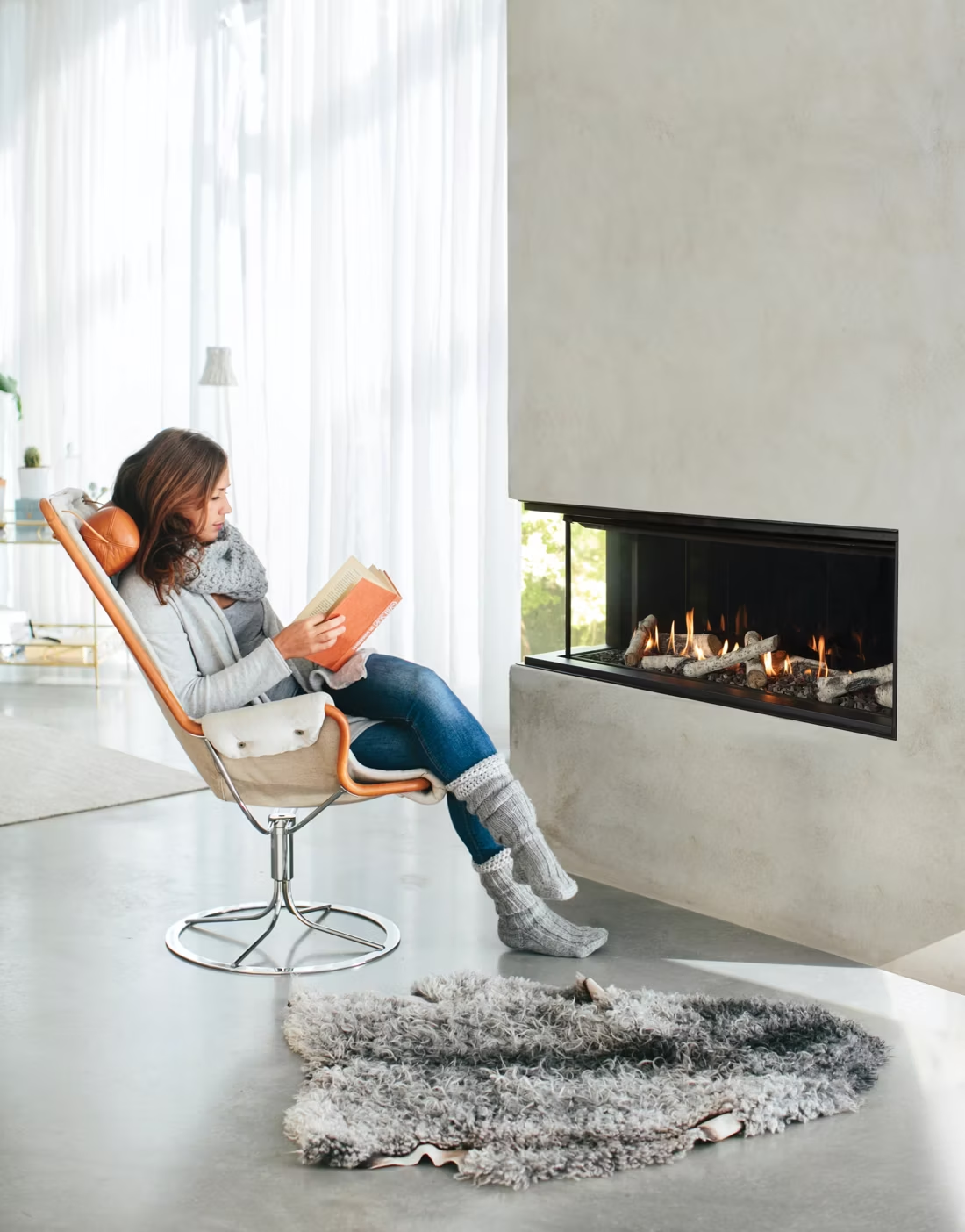
Four fuels. One honest answer for Minidoka County.
Three steps. No salesperson until you're ready.
Tell us about your project
Your zip code, your situation, and the fuel you're leaning toward—or let the answers point you to one.
See what's actually available
The brands dealers within 100 miles genuinely carry—real options, never a catalog mirage.
Get your dealer & Project Guide
A trusted local dealer, plus the free Project Guide & Parts List that names every component of the job.
Frequently Asked Questions
Which fuel works best for a Minidoka County home?
It depends on your home and your habits. Wood remains a strong, practical choice for rural Minidoka County properties—self-cut permits through the Sawtooth National Forest or BLM Twin Falls District keep fuel costs down, and a well-loaded stove can carry a farmhouse through a windy, single-digit night without relying on the grid. Gas is the low-maintenance option for Rupert and Heyburn homes with natural gas or propane service—instant heat with none of the wood-handling labor. Pellet splits the difference: consistent, wood-style heat without splitting or hauling rounds, and regional brands like Bear Mountain and Lignetics keep supply reliable in this part of Idaho. Electric works well as supplemental heat in bedrooms or additions but isn't sized to carry a home through a winter with a heating load in the same range as Bismarck, North Dakota on its own. Many households here run wood or pellet as the primary heat source with gas or electric backing it up in secondary rooms.
Do I need a permit to install a fireplace in Minidoka County?
Generally yes for solid-fuel and gas appliances. New wood stoves, wood inserts, gas fireplaces, gas inserts, and pellet stoves typically require a building permit, and gas installations need a separate gas-line permit completed by a licensed installer. Wood-burning appliances installed new must meet current EPA emissions standards—this matters if you're replacing an older uncertified stove. Electric fireplace installs are usually permit-free unless the project involves new wiring or a dedicated circuit for a built-in unit. Whether you're in Rupert, Heyburn, or unincorporated county land, most local hearth retailers handle the permit paperwork as part of the installation, so it's rarely something a homeowner has to manage solo.
Does wildfire smoke affect burning decisions in Minidoka County?
Yes, seasonally. South-central Idaho, including Minidoka County, sees periods of regional wildfire smoke in late summer and early fall that can linger for days, driven by fires burning in the Sawtooth National Forest and surrounding wildlands. This is a different concern than the winter wood-smoke air quality issues seen in some Western basin communities—it's mostly a warm-season visibility and health advisory, not a winter burning restriction. That said, it's worth checking regional air quality alerts before doing any outdoor burning near your property in August and September, and it's part of why some homeowners lean toward pellet or gas as a lower-smoke option for their primary heat, reserving wood for supplemental or backup use.
Can one local hearth retailer handle all four fuel types?
Coverage varies by dealer, and in a county this size, most retailers focus on two or three fuel types rather than all four. Some Rupert- and Heyburn-based dealers carry wood, gas, and pellet with strong installed inventory, since those three fuels see the most demand locally; electric fireplaces are often a smaller side offering rather than a dedicated showroom line. If you're trying to compare fuel types side by side, it's worth asking a dealer directly which lines they stock and install rather than assuming—our matching process accounts for this and points you to the retailer whose actual inventory fits your project, not just the closest storefront.
How does service work in the rural parts of Minidoka County?
Most chimney sweeps and gas technicians serving the county are based in or near Rupert and travel out to Heyburn, Paul, Acequia, and the farm properties in between. Expect a modest travel charge for calls further from town, and expect scheduling to tighten up in October and November as everyone tries to get pre-season service done before the cold sets in. Given the wind exposure on the open plain here, it's worth having chimneys and vent terminations checked annually—wind-driven debris and nesting material can affect draft more than in sheltered areas. Booking service in late summer, before the fall rush, is the easiest way to avoid a mid-winter wait.
What's the typical cost range for fireplace installation across all fuel types in Minidoka County?
Costs track fairly closely with other rural Idaho markets. Wood stove or insert installation: roughly $4,000–$8,500 for a typical install, more if new chimney chase work is needed for new construction. Gas fireplace, insert, or stove: roughly $4,000–$10,000, with cost driven mainly by how much new gas line or venting has to be run. Pellet stove or insert: roughly $4,000–$7,000 for a standard install. Electric fireplace: $200–$3,000 for the unit itself, plus $400–$1,200 in labor for anything beyond a simple plug-and-play placement. County + fuel pages above break these numbers down further against specific local retailer pricing.
Does a fireplace add value to my home?
On average, a fireplace adds back to the home about the same amount you spent installing it. Add the monthly savings from heating the rooms you actually use instead of the whole house—often hundreds of dollars a year—and the value case is strong before you even count what a fire does for how your family uses the room.
What is an in-home preview and do I need one?
It's a visit where a hearth professional measures your space, confirms the model you picked actually works in your home, and walks the specs—framing, gas line, venting, finish work—before anything is ordered. Some details you just can't know until you see the house. Never make a down payment without one; it's the single most-skipped step that burns buyers.
Can a fireplace actually lower my heating bill?
Yes—by creating a comfort zone. A furnace heats every square foot of the house just to warm the one room you're in; a gas fireplace on low burns roughly a sixth of the gas a typical furnace does. Set the furnace around 55–60 degrees as a baseline, then heat the rooms your family actually uses. Families who heat this way commonly save $20–$60 a month.
Can I install a fireplace myself?
If you're putting a fire in your house on purpose, it's best to work with an expert. Unless you're genuinely experienced in framing, gas line, vent pipe, and the national code on clearances to combustibles, have a professional do it—and ideally the same company that sells you the fireplace, so warranty, service, and liability all live under one roof.
Stove and Fireplace Dealers in Minidoka County
Listings include WhyFire partner dealers, dealers we have verified as authorized for the brands we recommend, and established local businesses that carry hearth products. Every listing shows which one it is. The ones marked Preferred run on WhyFire's software, so they can show you real pricing and book your appointment right here. No manufacturer pays for placement. How we verify dealers →
Stars Ferry Bldg. Supply
Precision Heating
Terry's Heating & Air Conditioning
Element Heating & Cooling
Brizee Heating, A/c & Fireplaces
Find your fireplace in Minidoka County.
Pick your fuel below and we'll match you with a trusted local dealer and send you a free Project Guide & Parts List—the exact parts, including the vent kit, and the retailer we recommend for your project.
Find Your Fireplace →