
Find the Right Fireplace for Jerome County's Winters.
Wood, gas, pellet, and electric fireplace resources for every town in Jerome County—from Jerome to Hazelton and Eden. Get matched with a trusted local hearth dealer who knows what's actually available and installable across the Magic Valley.
Every Project Starts From One of These Five Situations
Farm Country Heating on Idaho's Snake River Plain.
Jerome County sits on Idaho's Snake River Plain in the heart of the Magic Valley, at roughly 3,800 feet elevation, surrounded by the irrigated dairy and potato farms that anchor the local economy. Winters here are genuinely cold—an average low of 22°F and a winter heating load in the same range as Bozeman, Montana, even though the landscape is high desert rather than mountain forest. The heating season typically runs from October through April. Firewood cut from lodgepole pine, ponderosa pine, Douglas fir, and larch—much of it harvested under Sawtooth National Forest or BLM Twin Falls District firewood permits—has long supplemented the natural gas and propane that also heat homes across the county.
This hub rounds up hearth retailers, service technicians, and fuel suppliers serving every community in Jerome County—the city of Jerome itself, plus Hazelton and Eden and the farmland in between. Pick your fuel below to see local dealers, typical installation costs, and the specifics that matter for your project, whether you're heating a farmhouse outside Eden or a newer build in town.
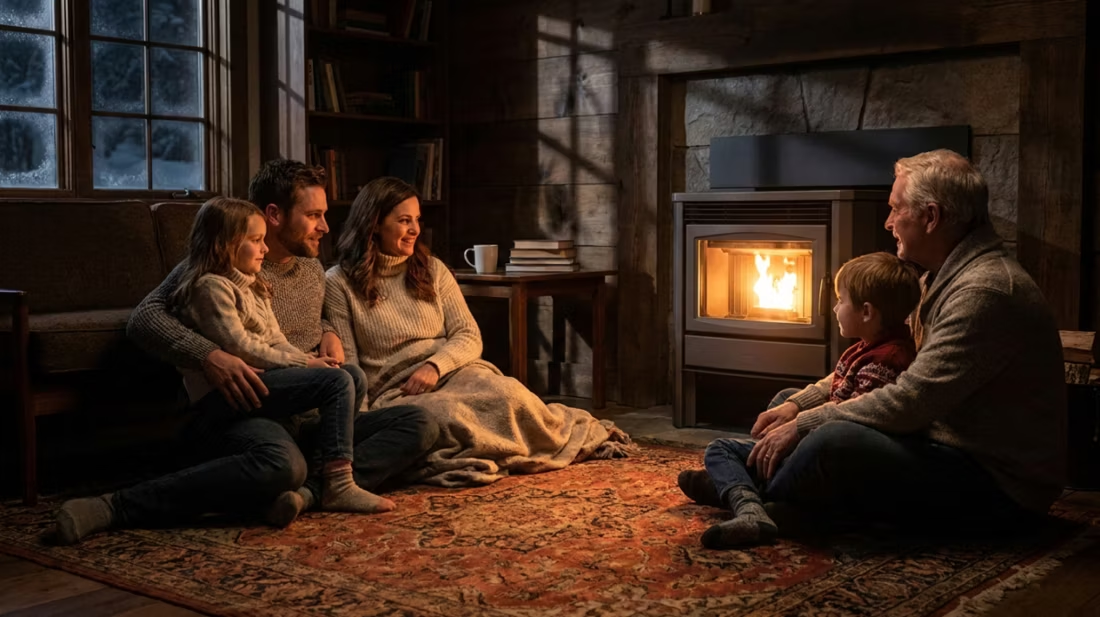
Four fuels. One honest answer for Jerome County.
Three steps. No salesperson until you're ready.
Tell us about your project
Your zip code, your situation, and the fuel you're leaning toward—or let the answers point you to one.
See what's actually available
The brands dealers within 100 miles genuinely carry—real options, never a catalog mirage.
Get your dealer & Project Guide
A trusted local dealer, plus the free Project Guide & Parts List that names every component of the job.
Frequently Asked Questions
Which heating fuel makes the most sense for a home in Jerome County?
It depends on the property. Wood remains a solid choice for rural farms across the Snake River Plain—Sawtooth National Forest and BLM Twin Falls District firewood permits keep fuel costs down, and EPA-certified stoves burning lodgepole pine or Douglas fir can carry a house through a winter power outage, which matters on farm properties served by long rural power lines. Gas is the convenience pick where Intermountain Gas Company runs a line—mostly in and around the city of Jerome—with propane filling in for outlying homes. Pellet is the middle ground: Bear Mountain and Lignetics pellets are both stocked regionally, giving you wood-style ambiance without stacking cords. Electric works well as supplemental heat for bedrooms or sunrooms given Idaho Power's relatively low rates, but it's not built to carry a house through a January cold snap at 22°F. Most Jerome County homes end up pairing wood or pellet as the primary heat source with gas or electric in secondary rooms.
Do I need a permit to install a wood stove or fireplace in Jerome County?
In most cases, yes. New wood stoves, inserts, gas fireplaces, gas inserts, gas stoves, and pellet stoves generally require a building permit through the Jerome County Building Department, or through the City of Jerome for properties inside city limits. Wood-burning appliances installed today must meet EPA 2020 NSPS emissions standards. Gas installations also require a separate gas line permit and a licensed gas fitter, particularly for new hookups to Intermountain Gas service or new propane tank connections. Electric fireplaces usually skip the permit process unless the install involves hardwiring or a new dedicated circuit for a built-in unit. Most local hearth retailers handle the permit paperwork as part of the installation, so you're not filing it yourself.
Are there wood-burning restrictions in Jerome County because of wildfire smoke?
The air quality concern here isn't winter temperature inversion the way it is in some Pacific Northwest basins—it's wildfire smoke that settles over the Magic Valley during late summer and early fall, when smoke from Sawtooth National Forest fires and other regional wildfires can hang over the Snake River Plain for days at a time. During those stretches, outdoor burn permits—including BLM Twin Falls District permits and county debris-burning permits—are commonly suspended, and Idaho DEQ may issue air quality advisories. This mostly affects outdoor burning rather than indoor wood stove use. Any wood stove installed since 2020 needs to meet EPA NSPS certification regardless of the season, and it's worth checking current advisories before doing any outdoor burning between roughly July and October.
Can one local retailer handle wood, gas, pellet, and electric fireplaces?
Several Magic Valley hearth dealers, based in Jerome or nearby Twin Falls, carry three or four fuel types under one roof, which makes it easier to compare options side by side rather than driving to multiple stores. Smaller specialty shops sometimes focus narrowly—just wood and pellet, or just gas—so it's worth confirming a dealer's actual fuel lineup before making the trip. If you're not sure which fuel fits your home and budget, a multi-fuel dealer with working display units can walk you through the real trade-offs rather than just showing you a catalog.
How does installation and service work for rural farms outside Jerome?
Most technicians serving Jerome County are based in Jerome or Twin Falls and drive out to Hazelton, Eden, and the scattered farm properties across the Snake River Plain. Expect a modest travel fee, typically $50–$100, for service calls outside the city. Scheduling annual service in August or September—before the first hard freeze drives up demand—is easier than trying to book a mid-winter emergency visit. Given how much of the county is rural farmland on long power lines, it's also worth planning for redundancy: a wood or pellet stove as backup heat if your primary system is electric or gas-fired with an electronic igniter that needs grid power to run.
What does fireplace installation typically cost in Jerome County?
Costs vary by fuel. Wood stove or insert installation: roughly $4,000–$8,500 for a typical retrofit, up to about $12,000 for new construction with full chimney work. Gas fireplace, insert, or stove: roughly $4,000–$10,000, depending on whether it requires a new Intermountain Gas line, a propane tank hookup, or just a conversion where gas service already exists. Pellet stove or insert: roughly $4,000–$7,000 for a standard install. Electric fireplace: $200–$2,800 for the unit itself, plus $300–$1,000 in labor for anything beyond a simple plug-and-play placement, which covers most wall-mount and insert installs. For details tied to specific dealers, see the county + fuel pages above.
Can a fireplace actually lower my heating bill?
Yes—by creating a comfort zone. A furnace heats every square foot of the house just to warm the one room you're in; a gas fireplace on low burns roughly a sixth of the gas a typical furnace does. Set the furnace around 55–60 degrees as a baseline, then heat the rooms your family actually uses. Families who heat this way commonly save $20–$60 a month.
What is an in-home preview and do I need one?
It's a visit where a hearth professional measures your space, confirms the model you picked actually works in your home, and walks the specs—framing, gas line, venting, finish work—before anything is ordered. Some details you just can't know until you see the house. Never make a down payment without one; it's the single most-skipped step that burns buyers.
Can I install a fireplace myself?
If you're putting a fire in your house on purpose, it's best to work with an expert. Unless you're genuinely experienced in framing, gas line, vent pipe, and the national code on clearances to combustibles, have a professional do it—and ideally the same company that sells you the fireplace, so warranty, service, and liability all live under one roof.
Wood, gas, pellet, or electric—how do I choose?
Match the fuel to your life, not the other way around. Wood: lowest fuel cost and total power-outage independence, but you're hauling and stacking. Gas: press a button, set a thermostat, no maintenance to speak of. Pellet: wood economics with automatic feeding, in exchange for weekly cleaning and a need for electricity. Electric: plugs in anywhere with honest supplemental heat. Nobody regrets the fuel that fits how they actually live.
Stove and Fireplace Dealers in Jerome County
Listings include WhyFire partner dealers, dealers we have verified as authorized for the brands we recommend, and established local businesses that carry hearth products. Every listing shows which one it is. The ones marked Preferred run on WhyFire's software, so they can show you real pricing and book your appointment right here. No manufacturer pays for placement. How we verify dealers →
Brizee Heating, A/c & Fireplaces
Terry's Heating & Air Conditioning
Element Heating & Cooling
Precision Heating
Find your next fireplace dealer in Jerome County.
Answer a few questions about your home and we'll match you with a trusted local dealer and send over your free Project Guide & Parts List—the exact parts, including the vent kit, for your project in Jerome County.
Find Your Fireplace →