
Heating solutions built for Elmore County's high desert winters.
Wood, gas, pellet, and electric fireplace resources for every community in Elmore County—from Mountain Home to Pine and the Sawtooth foothills. Find the right unit and get matched with a trusted local hearth retailer.
Every Project Starts From One of These Five Situations
From the Snake River Plain to the Sawtooth foothills, heating needs shift with elevation.
Elmore County spans a wide range of terrain—the Snake River Plain around Mountain Home and Glenns Ferry sits under 3,000 feet, while communities like Pine and Featherville climb into the foothills near the Sawtooth and Boise National Forests. With a winter heating load a bit lighter than Bozeman or Helena and average winter lows near 23°F, the climate here isn't as brutal as those spots, but the heating season still runs from October into April, and mountain properties see real snow load and colder overnight temps than the valley floor. Lodgepole pine, ponderosa pine, Douglas fir, and larch are the wood species most homeowners burn, and many households still hold cutting permits through Boise National Forest, BLM Boise District, or Sawtooth National Forest for their own firewood.
What you'll find on this hub: hearth retailers, service technicians, and fuel suppliers serving every community in the county—Mountain Home Air Force Base families, Glenns Ferry along the Snake River, and the smaller mountain communities of Pine, Featherville, and Atlanta. Pick your fuel below to see local dealers, typical installation costs, and recommended units for your specific project. Whether you're heating a ranch home on the plain or a cabin up near Anderson Ranch Reservoir, this is the starting point.
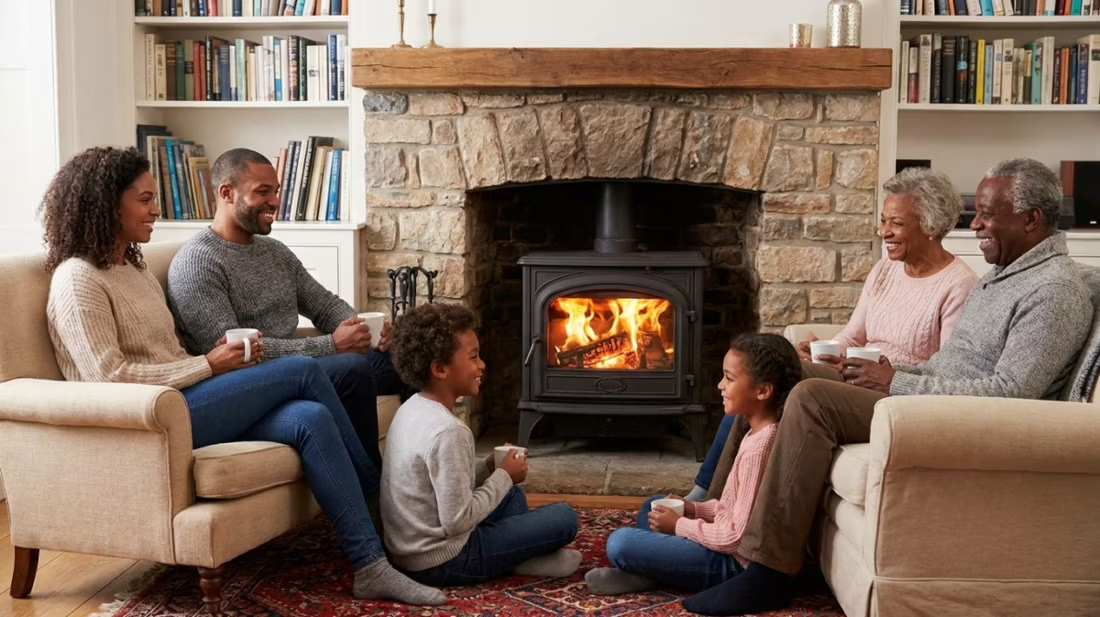
Four fuels. One honest answer for Elmore County.
Three steps. No salesperson until you're ready.
Tell us about your project
Your zip code, your situation, and the fuel you're leaning toward—or let the answers point you to one.
See what's actually available
The brands dealers within 100 miles genuinely carry—real options, never a catalog mirage.
Get your dealer & Project Guide
A trusted local dealer, plus the free Project Guide & Parts List that names every component of the job.
Frequently Asked Questions
Which fuel works best in Elmore County?
It depends on where in the county you live and what you're trying to solve. Wood remains a strong choice for the mountain communities—Pine, Featherville, and Atlanta—where Forest Service cutting permits through Boise National Forest and Sawtooth National Forest keep firewood costs low and power outages are a real consideration. Gas is the practical choice for Mountain Home and Glenns Ferry homes on natural gas or propane service—no wood handling, consistent heat, and a cleaner install for suburban lots near the Air Force base. Pellet stoves split the difference—less labor than cordwood, and regional supply from Bear Mountain and Lignetics keeps fuel accessible. Electric fireplaces work well as supplemental heat in bedrooms or additions, but with winter lows averaging 23°F, most Elmore County homes still lean on wood, gas, or pellet as the primary heat source.
Do I need a permit to install a fireplace in Elmore County?
In most cases, yes. New wood stoves, inserts, gas fireplaces, gas inserts, and pellet stoves typically require a building permit, and gas installations need a licensed gas-fitter for the line work. Within Mountain Home, permits are handled through the city; outside city limits, they go through Elmore County. If you're heating a cabin near Anderson Ranch Reservoir or another property on land bordering Boise National Forest or BLM Boise District ground, check whether your firewood cutting permit and your home's building permit are separate processes—they usually are. Most local hearth retailers handle the permitting paperwork as part of the installation, so homeowners rarely have to navigate it alone.
Are there air quality restrictions on wood burning in Elmore County?
Elmore County doesn't have the winter inversion issues that plague some Northwest basins, but wildfire smoke is the real air quality concern here—summer and early fall smoke from regional fires can linger for days, especially in the foothill communities near Pine and Featherville. This mostly affects outdoor burning and defensible-space planning rather than wood stove operation itself. There's no mandatory winter burn-ban program in the county currently, but if you're installing a new wood stove, it will need to meet current EPA emissions standards regardless—a detail your local retailer will confirm during permitting.
Can one local hearth retailer handle all four fuel types?
Several Mountain Home-area retailers carry three or four of the fuel types, which is useful if you're still deciding between wood, gas, pellet, and electric. A full-line dealer with working showroom displays lets you compare a catalytic wood stove against a direct-vent gas insert side by side, which matters when you're weighing trade-offs like firewood availability up near Atlanta versus the convenience of a propane tank at a Glenns Ferry property. If a retailer specializes in only one or two fuels, that's often a sign they're more focused on installation quality for those specific systems—worth asking about directly when you reach out.
How does service work in rural areas of Elmore County?
Most service technicians are based out of Mountain Home and travel to outlying areas, including Glenns Ferry to the west and the mountain communities of Pine, Featherville, and Atlanta up Highway 20's forest roads. Expect a modest trip fee for the farther mountain routes, and know that those roads can close or become difficult to service in heavy snow—scheduling your annual chimney sweep or gas inspection in September or October, before the season turns, is the safest bet. If you're on a mountain property with limited winter access, pairing a wood stove with a backup fuel source is common practice among longtime Elmore County residents.
What's the typical cost range for fireplace installation across all fuel types in Elmore County?
Costs vary by fuel and by how much venting or gas line work is involved. Wood stove or insert installation: roughly $4,000–$8,500 for a typical install, more if a full chimney system is needed for new construction. Gas fireplace, insert, or stove: roughly $4,000–$10,000 depending on whether a new gas line has to be run, with propane conversions often on the higher end for rural properties. Pellet stove or insert: roughly $4,000–$7,000 for most installs. Electric fireplace: $200–$3,000 for the unit itself, plus $400–$1,200 in labor for anything beyond a simple plug-and-play setup. The county + fuel pages above break these numbers down further with pricing tied to specific local retailers.
Can I install a fireplace myself?
If you're putting a fire in your house on purpose, it's best to work with an expert. Unless you're genuinely experienced in framing, gas line, vent pipe, and the national code on clearances to combustibles, have a professional do it—and ideally the same company that sells you the fireplace, so warranty, service, and liability all live under one roof.
Wood, gas, pellet, or electric—how do I choose?
Match the fuel to your life, not the other way around. Wood: lowest fuel cost and total power-outage independence, but you're hauling and stacking. Gas: press a button, set a thermostat, no maintenance to speak of. Pellet: wood economics with automatic feeding, in exchange for weekly cleaning and a need for electricity. Electric: plugs in anywhere with honest supplemental heat. Nobody regrets the fuel that fits how they actually live.
What is an in-home preview and do I need one?
It's a visit where a hearth professional measures your space, confirms the model you picked actually works in your home, and walks the specs—framing, gas line, venting, finish work—before anything is ordered. Some details you just can't know until you see the house. Never make a down payment without one; it's the single most-skipped step that burns buyers.
How much should I budget for a fireplace?
For an average home—covering the fireplace, the vent pipe, and basic installation—a budget between $3,900 and $5,500 gives you a lot of options across wood, gas, and pellet. By the time you add finish work, gas line, and electrical, the average complete installation lands between $5,000 and $12,000 all-in. In a remodel or new build, a good rule is to put about 2.5% of the total project cost toward the fireplace.
Stove and Fireplace Dealers in Elmore County
Listings include WhyFire partner dealers, dealers we have verified as authorized for the brands we recommend, and established local businesses that carry hearth products. Every listing shows which one it is. The ones marked Preferred run on WhyFire's software, so they can show you real pricing and book your appointment right here. No manufacturer pays for placement. How we verify dealers →
A To Z Lumber & Hardware, Inc
Wholesale Fireplaces Of Idaho
Standard Plumbing Boise
Franklin Building Supply
Anderson Hardware
Blind Appeal, Inc.
Get matched with a local Elmore County hearth dealer.
Pick your fuel below and we'll put together a free Project Guide & Parts List—the exact parts your install needs, including the vent kit, and the local dealer we recommend for your project.
Find Your Fireplace →