
Heat that holds through a Sawtooth winter.
Wood, gas, pellet, and electric fireplace resources for every town in Custer County—from Challis down to Mackay and up to Stanley. Get matched with a local hearth dealer who knows this terrain.
Every Project Starts From One of These Five Situations
Remote, high-elevation heating in Custer County, Idaho.
Custer County is one of the least populated counties in the Lower 48—roughly 1,700 people spread across 4,900 square miles of central Idaho, much of it inside the Salmon-Challis National Forest and the Sawtooth National Recreation Area. Elevations here run from around 5,000 feet in Challis to well over 7,000 feet near Stanley, and climate zone 6B means long, hard winters more comparable to Bozeman, Montana than to the rest of Idaho. Lodgepole pine, ponderosa pine, Douglas fir, and larch are the wood a lot of households cut and burn themselves, often under a Salmon-Challis National Forest personal-use permit. Distances between towns are long, propane delivery routes are extensive, and many properties are miles from the nearest grid-tied utility crew—which shapes what actually gets installed here.
This hub covers hearth retailers, service technicians, and fuel suppliers reaching every corner of the county—Challis, Stanley, Mackay, Clayton, and the scattered ranches and cabins in between. Pick a fuel below to see local dealers, real installed costs, and the units that actually hold up at altitude and in isolation. Whether you're heating a Stanley cabin buried in snow past Thanksgiving or a Mackay ranch house on the Big Lost River, this is where to start.
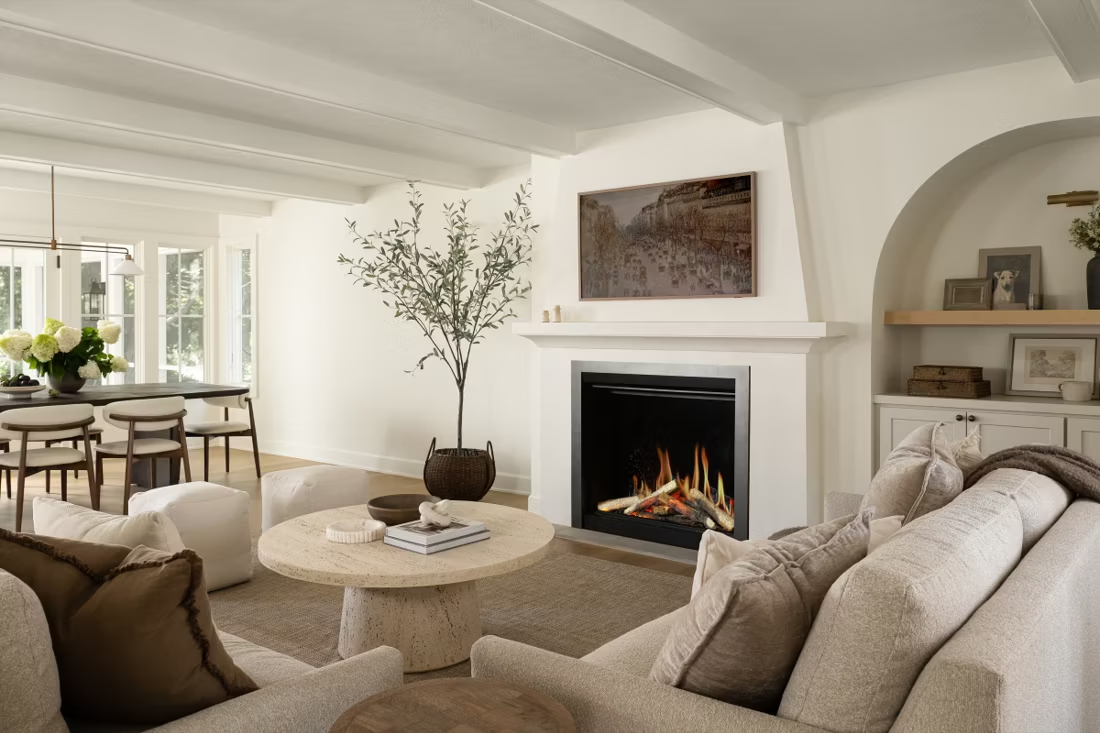
Four fuels. One honest answer for Custer County.
Three steps. No salesperson until you're ready.
Tell us about your project
Your zip code, your situation, and the fuel you're leaning toward—or let the answers point you to one.
See what's actually available
The brands dealers within 100 miles genuinely carry—real options, never a catalog mirage.
Get your dealer & Project Guide
A trusted local dealer, plus the free Project Guide & Parts List that names every component of the job.
Frequently Asked Questions
Which fuel makes sense for a Custer County home?
It depends heavily on how isolated your property is. Wood remains the backbone fuel across the county—Salmon-Challis National Forest personal-use permits keep cutting costs low, and a catalytic stove burning lodgepole or Douglas fir can hold heat through a Stanley night without power. Propane is the standard convenience fuel since there's no natural gas infrastructure in the county; most gas fireplaces and inserts here run on tank propane with scheduled delivery. Pellet works well in Challis and Mackay where dealers stock Bear Mountain and Lignetics, but it depends on reliable delivery routes and a consistent power supply for the auger—a real consideration on properties prone to winter outages. Electric fireplaces are supplemental at best; at 6B temperatures and given how many homes here lose grid power in storms, electric isn't a primary heat source for most Custer County households. Many homes pair wood or propane as primary heat with electric for ambiance in a secondary room.
Do I need a permit to install a fireplace in Custer County?
Generally yes for anything beyond a plug-in electric unit. New wood stoves, wood inserts, gas or propane fireplaces, gas stoves, and pellet stoves typically require a building permit through Custer County's building department, and wood-burning appliances need to meet current EPA emissions standards. Propane installations require a separate line and tank permit and work from a licensed propane installer, since there's no piped natural gas anywhere in the county. If you're cutting your own firewood on National Forest land, that requires a separate Salmon-Challis National Forest personal-use permit, which is a different process from the building permit for the stove itself. Most local hearth retailers who install in Custer County handle the building permit paperwork as part of the job, which matters given how far the county seat can be from some job sites.
Does wildfire smoke affect wood burning in Custer County?
Yes, though it's a summer and fall issue more than a winter one. Custer County sits inside and around the Salmon-Challis National Forest, and wildfire smoke events in dry summers can blanket the Challis and Stanley valleys for days or weeks. This doesn't typically restrict winter wood-stove burning, which is the primary heating season here, but it does affect timing for cutting and hauling firewood—many households try to get their wood in before smoke season limits visibility and air quality make outdoor work unpleasant. There's no formal winter burn-curtailment program in Custer County like you'll find in more populated Idaho air basins, but a certified, efficient stove still burns cleaner and uses less wood per BTU than an old uncertified unit—worth factoring in given how far a cord of wood has to be hauled out here.
Can one dealer in Custer County handle all four fuel types?
Given the county's small population, most local hearth retailers focus on two or three fuels rather than carrying all four with full showroom displays. Wood and pellet coverage is common, since Bear Mountain and Lignetics pellets and cut firewood serve a lot of the county's off-grid and semi-remote properties. Propane fireplace and stove installation is usually available through the same dealers or through a local propane company that also handles hearth appliances. Electric fireplace inventory tends to be thinner here—expect to special-order or have a unit shipped in for installation rather than seeing several models in a local showroom. If you want to compare fuels side by side, expect a drive to Challis or possibly out of county to a larger dealer in the Salmon or Sun Valley areas.
How does fireplace service work in a county this remote?
Plan ahead more than you would in a larger market. Technicians serving Custer County typically base out of Challis and build seasonal routes that reach Mackay, Clayton, Stanley, and the ranch roads in between—rather than offering same-week service calls. Expect a travel charge for anything outside Challis proper, and expect longer lead times for scheduling, especially in the fall pre-heating-season rush when everyone in the county is trying to get their chimney swept or their gas unit inspected before the first hard freeze. If you're on a wood or pellet stove, keep spare parts and a backup heat source on hand—a Stanley or upper-elevation property can go days without a tech visit if a winter storm closes the roads.
What does fireplace installation typically cost across fuel types in Custer County?
Costs run a bit higher here than in more populated Idaho counties, largely because of travel time built into every job. Wood stove or insert installation: roughly $5,000–$10,000 for a typical install, more if a masonry chimney needs rebuilding at altitude. Propane fireplace, insert, or stove: roughly $5,000–$12,000 depending on whether a new tank and line have to be run to the structure. Pellet stove or insert: roughly $5,000–$8,000 for a typical install. Electric fireplace: $200–$3,000 for the unit itself, plus $400–$1,500 in labor if it's a built-in requiring new wiring rather than a plug-and-play unit—labor costs skew higher here given the distances an electrician may need to travel. See the county + fuel pages above for cost detail tied to specific local dealers.
Can a fireplace actually lower my heating bill?
Yes—by creating a comfort zone. A furnace heats every square foot of the house just to warm the one room you're in; a gas fireplace on low burns roughly a sixth of the gas a typical furnace does. Set the furnace around 55–60 degrees as a baseline, then heat the rooms your family actually uses. Families who heat this way commonly save $20–$60 a month.
Wood, gas, pellet, or electric—how do I choose?
Match the fuel to your life, not the other way around. Wood: lowest fuel cost and total power-outage independence, but you're hauling and stacking. Gas: press a button, set a thermostat, no maintenance to speak of. Pellet: wood economics with automatic feeding, in exchange for weekly cleaning and a need for electricity. Electric: plugs in anywhere with honest supplemental heat. Nobody regrets the fuel that fits how they actually live.
Can I install a fireplace myself?
If you're putting a fire in your house on purpose, it's best to work with an expert. Unless you're genuinely experienced in framing, gas line, vent pipe, and the national code on clearances to combustibles, have a professional do it—and ideally the same company that sells you the fireplace, so warranty, service, and liability all live under one roof.
I know I want a fireplace—where do I actually start?
Do two things today: snap a photo of the wall or fireplace you want to transform, and take a tape measure to the space—width, height, depth. Those two artifacts answer most of a hearth professional's first questions. Then settle fuel (wood, gas, pellet, or electric) and set a realistic budget: $3,900–$5,500 covers fireplace, vent, and basic install for most homes.
Stove and Fireplace Dealers in Custer County
Listings include WhyFire partner dealers, dealers we have verified as authorized for the brands we recommend, and established local businesses that carry hearth products. Every listing shows which one it is. The ones marked Preferred run on WhyFire's software, so they can show you real pricing and book your appointment right here. No manufacturer pays for placement. How we verify dealers →
Fireplace Outfitters - Ketchum Location
Find your fireplace project in Custer County.
Tell us your fuel and your town, and we'll match you with a trusted local dealer and send a free Project Guide & Parts List—the exact parts, including the vent kit, for your Custer County installation.
Find Your Fireplace →