
Clean-burning heat for Boise's inversion winters.
Steady, low-emission heat for the Treasure Valley's cold, smoke-trapped winters. Find the right pellet stove and connect with a trusted local dealer.
Every Project Starts From One of These Five Situations
Pellet stoves fit the Treasure Valley's air quality reality.
Boise sits at 2,740 feet in the Treasure Valley, where winter lows average 26°F and the region logs a real heating season, comparable in length and intensity to a cold Rocky Mountain winter—not as brutal as Bismarck or Fargo, but far from mild. What makes Boise's winters distinct isn't just the cold, it's the inversions: cold air settles into the valley and traps wood smoke and wildfire particulate close to the ground for days at a time, which is why Ada County frequently issues winter air quality advisories. An EPA-certified pellet stove burns pellets far more completely than an open hearth or older wood stove, producing a fraction of the particulate matter—a real advantage in a valley where the air itself becomes the constraint on how you heat your home.
Pellet supply here is genuinely regional rather than trucked in from across the country. Bear Mountain, Lignetics, and Pacific Pellet all produce fuel from Pacific Northwest and Idaho sawmill residue—lodgepole pine, ponderosa pine, Douglas fir, and larch, the same species that come off Boise National Forest and BLM Boise District timber sales. That regional supply chain tends to keep pricing more stable than in markets that depend on pellets shipped in from the Midwest or East Coast. A pellet stove or insert gives Boise homeowners steady, thermostatically controlled heat, cleaner burning than cordwood, and a fuel source that's easy to store in a garage or shed without the splitting and stacking that wood requires.
Three steps. No salesperson until you're ready.
Tell us about your project
Your zip code, your situation, and the fuel you're leaning toward—or let the answers point you to one.
See what's actually available
The brands dealers within 100 miles genuinely carry—real options, never a catalog mirage.
Get your dealer & Project Guide
A trusted local dealer, plus the free Project Guide & Parts List that names every component of the job.
Frequently Asked Questions
How much does a pellet stove installation cost in Boise?
Most pellet stove and insert installations in the Boise area run $2,500 to $6,000, depending on the unit, whether it's a freestanding stove or an insert going into an existing masonry fireplace, and whether new venting or an electrical circuit needs to be run. Inserts into a fireplace that already has a usable chimney tend to land on the lower end since the vent path is shorter than a full through-wall or through-roof run. Local dealers will size the job and give a firm number after seeing your home.
Is a pellet stove or a wood stove better for Boise's air quality advisories?
Pellet stoves burn cleaner than nearly any wood-burning appliance, which matters directly here: the Treasure Valley's winter inversions trap smoke close to the ground, and Ada County issues air quality advisories most winters urging residents to cut back on wood burning. EPA-certified pellet stoves produce a fraction of the particulate emissions of an open fireplace or older non-catalytic wood stove, so they're less likely to be a target of any local burning guidance during inversion events. If your household wants solid-fuel heat but doesn't want to worry about smoke complaints from neighbors during a stagnant-air week in January, pellet is the more forgiving choice.
Where can I buy pellets in Boise, and what do they cost?
Regional brands like Bear Mountain, Lignetics, and Pacific Pellet are widely stocked at Boise-area hardware stores, farm supply retailers, and hearth dealers, with pricing typically running $250 to $350 per ton depending on the brand and whether you buy by the pallet (usually 50 forty-pound bags per ton). Because these mills source from Idaho and Pacific Northwest sawmill residue, supply tends to stay more consistent through the winter than in regions that rely on pellets trucked in from farther away. A stove burning as primary heat typically goes through 2 to 3 tons over a Boise winter; supplemental use is closer to half a ton to a ton.
Do I need a permit to install a pellet stove in Boise?
Yes—a new pellet stove or insert installation requires a building permit through the City of Boise's Planning and Development Services or Ada County's building department if you're outside city limits, along with an electrical permit since pellet stoves need a dedicated outlet to run the auger and combustion blower. Most local hearth dealers pull these permits as part of the installation, so you're not usually coordinating this yourself. Unlike some wood-burning appliance rules, pellet stoves are not typically subject to any burn-curtailment restrictions during inversion advisories, since their emissions are already well below the threshold those advisories target.
What size pellet stove do I need for my Boise home?
Sizing depends on square footage, ceiling height, and how open your floor plan is—but as a starting point for Boise's climate, a stove rated around 40,000 to 50,000 BTU handles 1,500 to 2,000 square feet as primary heat, while smaller 20,000 to 35,000 BTU units are better suited to supplemental heat in a single large room or an open-concept main level. Older Boise homes with less insulation and higher ceilings often need to size up a notch compared to newer construction. A local dealer will walk your home and recommend a specific model rather than relying on square-footage math alone.
Will my pellet stove work during a power outage?
Not without a backup power source. Pellet stoves rely on an electric auger to feed fuel and a blower to distribute heat, so a standard unit will shut down the moment Idaho Power service drops. Some homeowners pair a pellet stove with a small battery backup or a portable generator sized to handle the stove's modest draw, which is usually well under 500 watts. If uninterrupted heat during outages is a priority—say, for a home at higher elevation outside Boise where outages can run longer—a wood stove or a battery-equipped gas unit may be worth considering alongside pellet.
How much does a pellet stove cost to run compared to electric heat?
At Idaho Power's residential rate of roughly $0.1176 per kWh, electric resistance heat in Boise runs fairly cheap by national standards, but pellet stoves still typically undercut it for zone heating a single room or living area, since a ton of pellets running $250 to $350 delivers a lot of usable heat over a winter season. The pellet stove's own electrical draw for the auger and blower is minimal—a few dollars a month in most cases. For whole-home heating, the comparison depends heavily on your existing HVAC setup, but for supplemental heat in a main living space, pellet usually wins on operating cost.
How often does a pellet stove need cleaning and service?
Plan on cleaning the burn pot and ash pan weekly during regular use, a deeper glass and hopper cleaning monthly, and a full professional service—including the exhaust fan, venting, and gaskets—once a year, ideally before the season starts in late summer or early fall. Pellet stoves don't generate creosote the way wood stoves do, so the maintenance burden is lighter, but the mechanical components (auger motor, blower, igniter) do wear and benefit from an annual check. Local hearth dealers and service techs in the Boise area typically charge $150 to $250 for an annual service visit.
Pellet stove vs. wood stove—which fits Boise better?
Wood stoves work without electricity, pair with cheap or self-cut firewood from Boise National Forest and BLM permits running $5 to $20 per cord, and deliver more raw heat output per load—but they produce more particulate matter and creosote, and they're the first thing local guidance targets during winter inversion advisories. Pellet stoves burn cleaner, are easier to run day to day (load the hopper, set the thermostat), and are the more neighbor-friendly option in neighborhoods where smoke settles during stagnant-air weeks. If backup heat during outages matters most, wood has the edge. If clean, consistent, low-maintenance heat matters most in a valley that watches its air quality closely, pellet is usually the better fit.
How often does a pellet stove need cleaning?
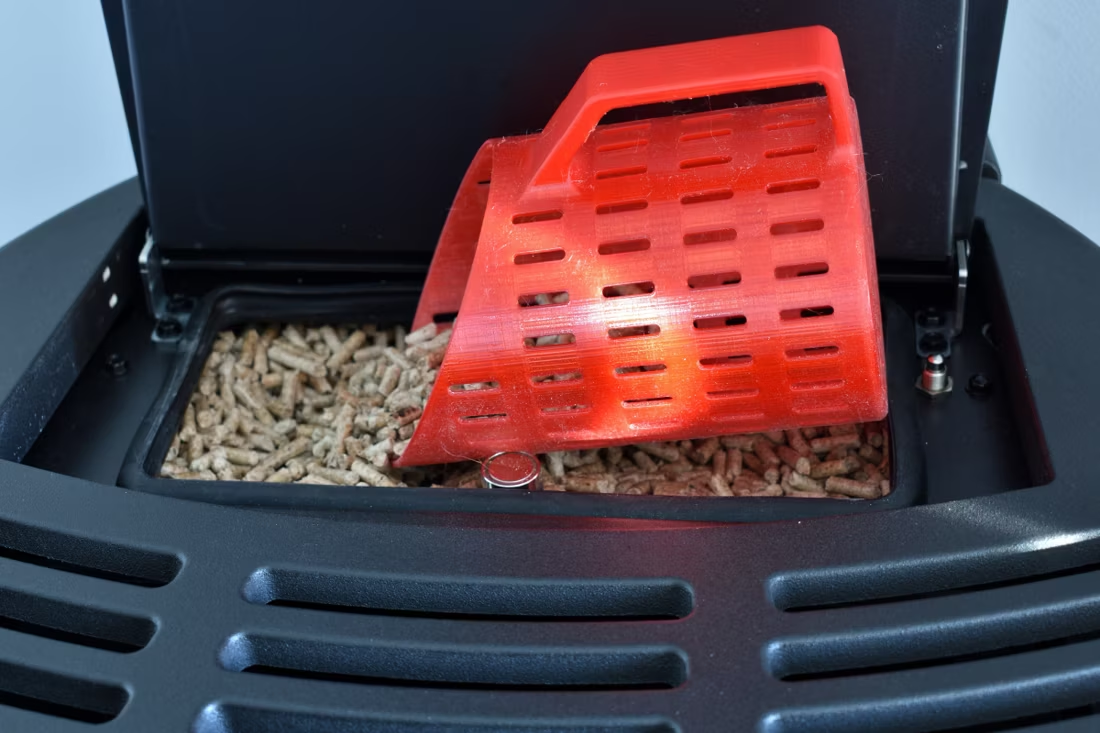
A clean pellet stove is a happy pellet stove. Plan on cleaning the burn pot about once a week when you're burning regularly—ash and clinkers gum up the air holes just like a pellet barbecue. Most pellet stove problems trace back to skipped cleaning that nobody explained up front. Some designs make it easy with a trapdoor burn pot: pull a lever and the gunk drops into the ash pan.
What's the difference between an insert and a zero-clearance fireplace?
An insert is a fireplace that slides into a pre-existing wood-burning fireplace—if you don't have one, there's nothing to insert it into. A zero-clearance fireplace is built into a framed wall, which makes it the answer for remodels and new construction. Simple test: existing masonry fireplace means insert; blank or framed wall means zero-clearance.
Does a fireplace add value to my home?
On average, a fireplace adds back to the home about the same amount you spent installing it. Add the monthly savings from heating the rooms you actually use instead of the whole house—often hundreds of dollars a year—and the value case is strong before you even count what a fire does for how your family uses the room.
What is an in-home preview and do I need one?
It's a visit where a hearth professional measures your space, confirms the model you picked actually works in your home, and walks the specs—framing, gas line, venting, finish work—before anything is ordered. Some details you just can't know until you see the house. Never make a down payment without one; it's the single most-skipped step that burns buyers.
Preferred Dealer in Boise
Marked Preferred because they run on WhyFire's software—so they can show you real pricing and book your appointment right here. No manufacturer pays for placement. How we verify dealers →
Pellet Brands Stocked Around Boise
Manufacturers will point you to the nearest stocking dealer.
Find your pellet stove in Boise.
Tell us about your home and we'll match you with a trusted local Boise dealer and send over a free Project Guide & Parts List—the exact equipment, vent kit, and install plan for your pellet project.
Find Your Fireplace →