
Reliable heat for Boise County's high country winters.
Wood, gas, pellet, and electric fireplace resources for Idaho City, Garden Valley, Lowman, Placerville, Crouch, and every mountain community in Boise County. Find the right unit and connect with a trusted local hearth retailer.
Every Project Starts From One of These Five Situations
Mountain heating across the Boise National Forest corridor.
Boise County is small in population—just 3,383 people—but it spans a lot of elevation, from around 3,000 feet along the South Fork Payette River up past 7,000 feet near Grimes Pass and Bald Mountain. Most of the county sits inside or adjacent to the Boise National Forest, and winters here run cold and long—a 6B climate zone comparable to Helena, Montana, with heavy mountain snowpack that can close Highway 21 at Banner Summit for stretches at a time. Wood heat is woven into daily life in towns like Idaho City, Garden Valley, and Lowman, where lodgepole pine, ponderosa pine, Douglas fir, and larch are cut locally, often under Boise National Forest personal-use firewood permits issued through the Idaho City and Lowman Ranger Districts.
What you'll find on this hub: hearth retailers, service technicians, and fuel suppliers covering the whole county, from the historic gold-rush town of Idaho City to the ranches and cabins along the South Fork Payette in Garden Valley and Lowman. Natural gas mains don't reach most of Boise County, so gas fireplaces here typically run on propane delivered by local suppliers rather than piped utility gas. Pick your fuel below to see local dealers, realistic installation costs, and the resources that match your project—whether you're heating a year-round home in Placerville or a seasonal cabin off Banks-Lowman Road.
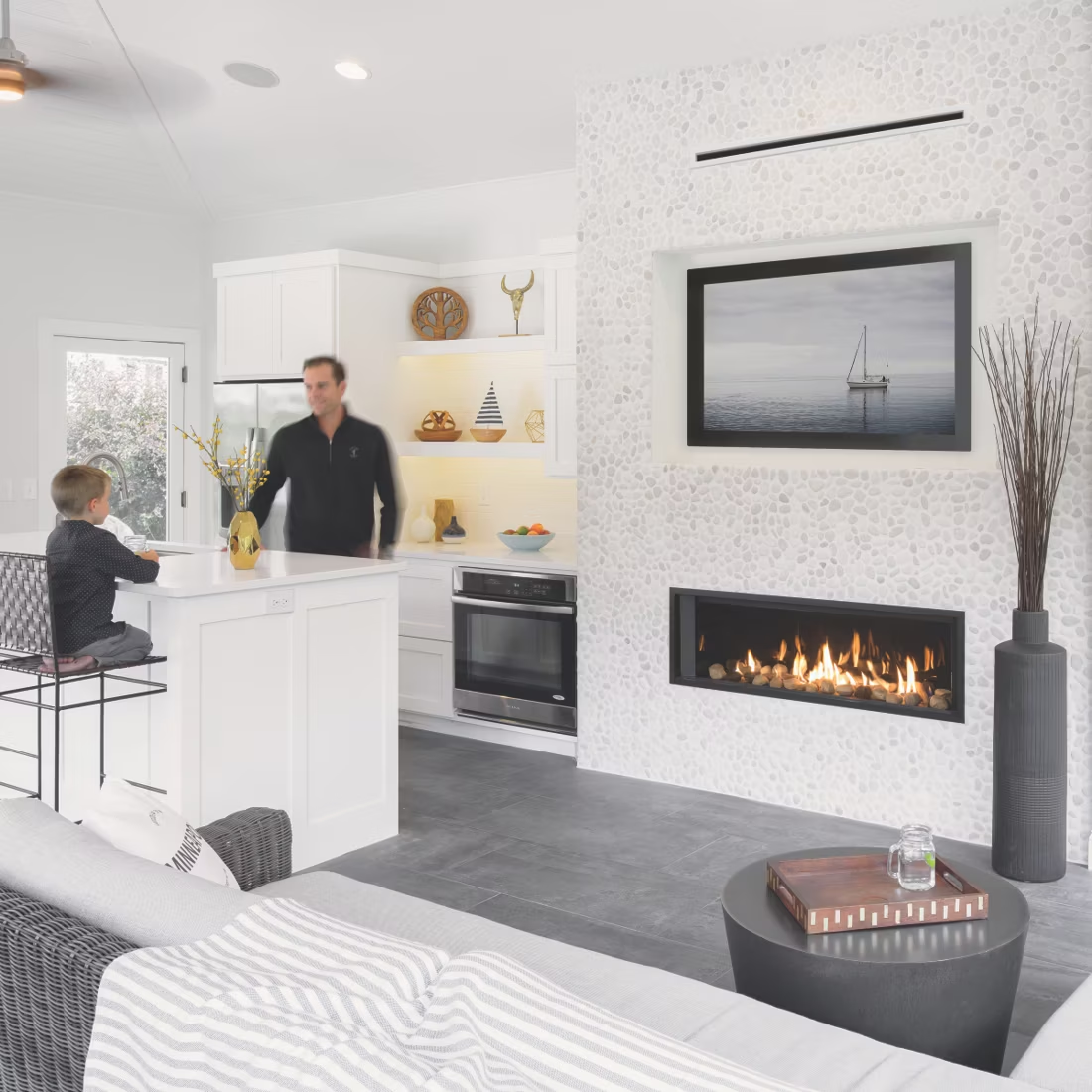
Four fuels. One honest answer for Boise County.
Three steps. No salesperson until you're ready.
Tell us about your project
Your zip code, your situation, and the fuel you're leaning toward—or let the answers point you to one.
See what's actually available
The brands dealers within 100 miles genuinely carry—real options, never a catalog mirage.
Get your dealer & Project Guide
A trusted local dealer, plus the free Project Guide & Parts List that names every component of the job.
Frequently Asked Questions
Which fuel works best in Boise County?
Wood is the traditional backbone fuel here—lodgepole pine, ponderosa pine, Douglas fir, and larch are all cut locally, and many Boise County residents hold Boise National Forest personal-use firewood permits through the Idaho City or Lowman Ranger Districts, which keeps fuel costs low. Gas is available, but since natural gas mains don't run through most of the county, gas fireplaces and inserts typically operate on delivered propane rather than piped utility gas—that changes the cost math slightly and means tank placement and delivery access matter during design. Pellet is a strong middle option: no splitting or stacking, and regional brands like Bear Mountain, Lignetics, and Pacific Pellet are stocked at fuel suppliers serving the county. Electric fireplaces work well as supplemental heat or ambiance in cabins and second homes around Garden Valley and Crouch, but they're not a primary heat source through a Boise County winter. Many full-time residents run wood or pellet as the main heater with propane or electric backing it up.
unused
unused
unused
unused
unused
unused
unused
unused
unused
unused
Can I install a fireplace myself?
If you're putting a fire in your house on purpose, it's best to work with an expert. Unless you're genuinely experienced in framing, gas line, vent pipe, and the national code on clearances to combustibles, have a professional do it—and ideally the same company that sells you the fireplace, so warranty, service, and liability all live under one roof.
Can a fireplace actually lower my heating bill?
Yes—by creating a comfort zone. A furnace heats every square foot of the house just to warm the one room you're in; a gas fireplace on low burns roughly a sixth of the gas a typical furnace does. Set the furnace around 55–60 degrees as a baseline, then heat the rooms your family actually uses. Families who heat this way commonly save $20–$60 a month.
How much should I budget for a fireplace?
For an average home—covering the fireplace, the vent pipe, and basic installation—a budget between $3,900 and $5,500 gives you a lot of options across wood, gas, and pellet. By the time you add finish work, gas line, and electrical, the average complete installation lands between $5,000 and $12,000 all-in. In a remodel or new build, a good rule is to put about 2.5% of the total project cost toward the fireplace.
What is an in-home preview and do I need one?
It's a visit where a hearth professional measures your space, confirms the model you picked actually works in your home, and walks the specs—framing, gas line, venting, finish work—before anything is ordered. Some details you just can't know until you see the house. Never make a down payment without one; it's the single most-skipped step that burns buyers.
Stove and Fireplace Dealers in Boise County
Listings include WhyFire partner dealers, dealers we have verified as authorized for the brands we recommend, and established local businesses that carry hearth products. Every listing shows which one it is. The ones marked Preferred run on WhyFire's software, so they can show you real pricing and book your appointment right here. No manufacturer pays for placement. How we verify dealers →
Anderson Hardware
Wholesale Fireplaces Of Idaho
Standard Plumbing Boise
Find your fireplace in Boise County.
Get matched with a trusted local dealer covering your part of Boise County and receive a free Project Guide & Parts List—a plan for your fireplace project with the exact parts, including the vent kit, and our recommended local installer.
Find Your Fireplace →