
Find the right fireplace for Bear Lake County winters.
Wood, gas, pellet, and electric fireplace resources for every town around the lake and up the valley—from Montpelier and Paris to St. Charles, Fish Haven, and Georgetown. Find the right unit for an 8,825-HDD climate and connect with a trusted local hearth retailer.
Every Project Starts From One of These Five Situations
Long, hard winters in Idaho's Bear Lake Valley.
Bear Lake County sits at high elevation along the Idaho-Utah border, and its winters back that up: 8,825 heating degree days and an average winter low of 7°F put it in colder territory than Bozeman, Montana, and within reach of Duluth, Minnesota-style cold snaps. The heating season here typically runs from October through April. With a year-round population of roughly 4,600, this is ranch and small-town country—Montpelier, Paris, St. Charles, Bloomington, Fish Haven, and Georgetown—where wood heat from lodgepole pine, ponderosa pine, Douglas fir, and larch has been a practical, low-cost way to stay warm for generations, alongside propane (natural gas service is limited to nonexistent in most of the unincorporated valley) and a growing number of pellet stoves stocked with regional brands like Bear Mountain, Lignetics, and Pacific Pellet.
What you'll find on this hub: hearth retailers, service technicians, and fuel suppliers serving the whole valley—from the lakefront cabins near Fish Haven and North Beach to the ranch homes up around Georgetown and Dingle. Because Bear Lake County's population is small, expect fewer dealers and more travel—several serve the county from Montpelier or make the drive up from Preston, Idaho, or Logan, Utah. Pick your fuel below to see local dealers, realistic installation costs, and the units that actually hold up to a valley winter this cold.
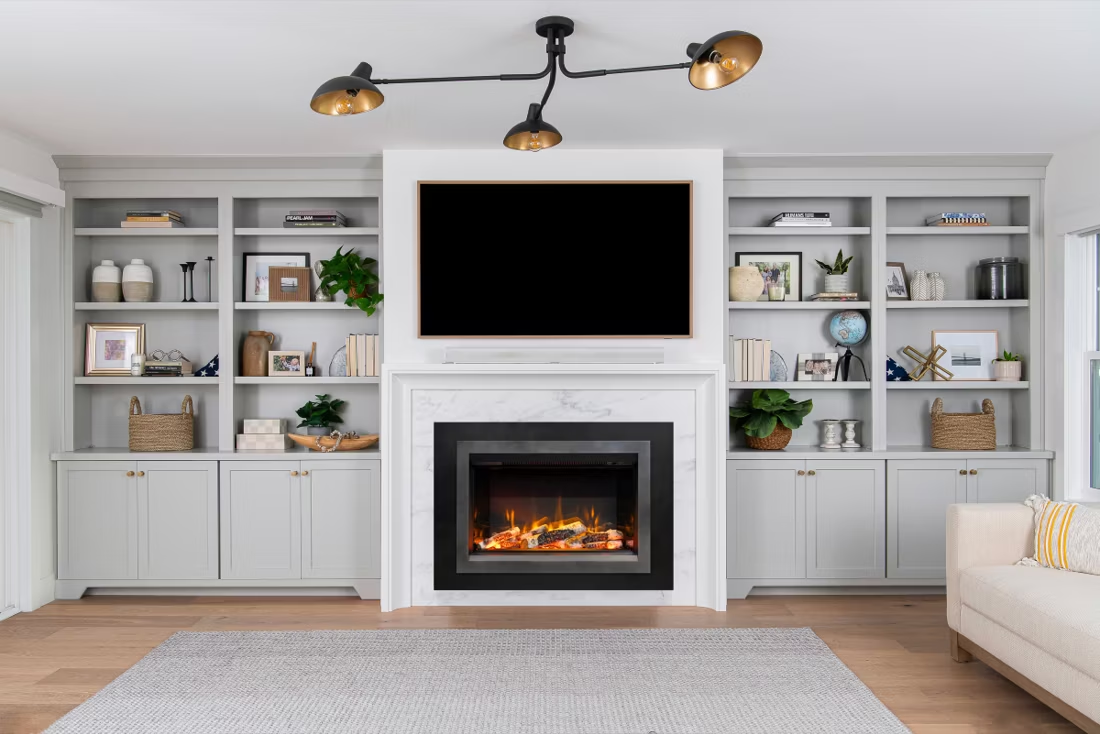
Four fuels. One honest answer for Bear Lake County.
Three steps. No salesperson until you're ready.
Tell us about your project
Your zip code, your situation, and the fuel you're leaning toward—or let the answers point you to one.
See what's actually available
The brands dealers within 100 miles genuinely carry—real options, never a catalog mirage.
Get your dealer & Project Guide
A trusted local dealer, plus the free Project Guide & Parts List that names every component of the job.
Frequently Asked Questions
Which fuel works best in Bear Lake County?
It depends on the home and how remote it is. Wood is the traditional backbone here—lodgepole pine and ponderosa pine burn hot and fast for quick heat, while Douglas fir and larch pack denser, longer-burning fuel for the coldest nights; a catalytic or EPA 2020 NSPS-certified stove can carry a home through an overnight stretch well below zero. Propane is the practical convenience fuel in most of the valley, since piped natural gas isn't widely available outside a few pockets—propane fireplaces and inserts give instant heat without the woodpile. Pellet stoves are a solid middle ground, especially with Bear Mountain and Lignetics pellets stocked regionally, and they don't require the physical labor wood does. Electric fireplaces work well for supplemental warmth in bedrooms or cabins near the lake, but given the 8,825 heating-degree-day climate, they're not a realistic primary heat source. Many Bear Lake County homes lean on wood or propane as the workhorse and add pellet or electric where it makes sense room by room.
Do I need a permit to install a fireplace in Bear Lake County?
In most cases, yes. New wood stoves, wood inserts, gas or propane fireplaces, gas or propane inserts and stoves, and pellet stoves typically require a building permit through your local building department, and wood-burning appliances need to meet EPA 2020 NSPS emissions certification. Propane installations also involve a licensed gas-fitter for the tank connection and line work, separate from the general building permit. Electric fireplaces usually skip the permit process unless you're doing a built-in installation with new wiring or a dedicated circuit. Given how spread out Bear Lake County is, most local hearth retailers handle the permitting and scheduling as part of the installation, which saves a lot of back-and-forth for homeowners in outlying areas like Georgetown or St. Charles.
Are there air quality restrictions on wood burning in Bear Lake County?
The Bear Lake Valley is bordered by mountains on both sides, which means it's prone to winter temperature inversions similar to other high-elevation Rocky Mountain valleys—cold air settles and can trap wood smoke close to the ground on calm, clear nights. There's also a summer wildfire smoke season that affects regional air quality even though it's not a wood-burning issue directly. New wood stove installations should meet EPA 2020 NSPS certification, which cuts particulate output significantly compared to older uncertified stoves. If you're burning during a stagnant, cold, high-pressure stretch, waiting for wind or a warm-up before a heavy load helps both your neighbors and your own chimney's draft.
Can one local hearth retailer handle all four fuel types in Bear Lake County?
With a county population around 4,600, don't expect the dealer density of a bigger market. Some Montpelier-area retailers carry three or four fuel types—wood, propane/gas, pellet, and electric—since serving a wide rural territory usually means stocking broadly rather than specializing narrowly. If a local dealer's showroom is thin on a particular fuel, it's common for Bear Lake County homeowners to also cross-shop in Preston, Idaho, or Logan, Utah, both within reasonable driving distance, especially for gas line work or larger installation projects. Ask any local retailer directly which fuels they install and service versus which they only sell—in a market this size, that distinction matters.
How does fireplace service work in the more remote parts of Bear Lake County?
Most technicians covering Bear Lake County are based in Montpelier or make regular trips up from Preston or Logan, Utah, to reach communities like Fish Haven, St. Charles, Bloomington, and Georgetown. Expect a modest travel fee for calls outside the Montpelier-Paris corridor. Given the length of the heating season here—October through April, per the 8,825 heating degree days—booking annual chimney sweeps or propane system checks in late summer or early fall is far easier than trying to get a mid-January emergency appointment when every wood stove and propane furnace in the valley is running flat out. If you're on a cabin near the lake that isn't occupied full-time, plan service around your visit schedule rather than waiting for a problem to show up.
What's the typical cost range for fireplace installation across fuel types in Bear Lake County?
Wood stove or insert installation: roughly $4,500–$9,500 for a typical retrofit, more for new chimney construction in a remote cabin. Propane fireplace, insert, or stove: roughly $4,000–$10,000 depending on whether a tank and line already exist or need to be run new. Pellet stove or insert: roughly $4,500–$7,500 for a standard install. Electric fireplace: $200–$3,000 for the unit itself, plus $400–$1,200 in labor for anything beyond a simple plug-and-play placement. Because Bear Lake County is rural, factor in a travel or mobilization fee if your home is well outside Montpelier or Paris—it's a smaller add than the fuel-type differences above, but it's worth asking about upfront.
Can a fireplace actually lower my heating bill?
Yes—by creating a comfort zone. A furnace heats every square foot of the house just to warm the one room you're in; a gas fireplace on low burns roughly a sixth of the gas a typical furnace does. Set the furnace around 55–60 degrees as a baseline, then heat the rooms your family actually uses. Families who heat this way commonly save $20–$60 a month.
Wood, gas, pellet, or electric—how do I choose?
Match the fuel to your life, not the other way around. Wood: lowest fuel cost and total power-outage independence, but you're hauling and stacking. Gas: press a button, set a thermostat, no maintenance to speak of. Pellet: wood economics with automatic feeding, in exchange for weekly cleaning and a need for electricity. Electric: plugs in anywhere with honest supplemental heat. Nobody regrets the fuel that fits how they actually live.
Should the dealer who sells my fireplace also install it?
Ideally, yes. A fireplace project involves vent pipe, gas line, electrical, and often tile or stone. Hire three or four separate trades and you own the liability and the game of telephone between them. One company selling and installing means one accountable party, start to finish—ask about factory training, on-time completion records, and what happens if an inspection fails.
Can I install a fireplace myself?
If you're putting a fire in your house on purpose, it's best to work with an expert. Unless you're genuinely experienced in framing, gas line, vent pipe, and the national code on clearances to combustibles, have a professional do it—and ideally the same company that sells you the fireplace, so warranty, service, and liability all live under one roof.
Stove and Fireplace Dealers in Bear Lake County
Listings include WhyFire partner dealers, dealers we have verified as authorized for the brands we recommend, and established local businesses that carry hearth products. Every listing shows which one it is. The ones marked Preferred run on WhyFire's software, so they can show you real pricing and book your appointment right here. No manufacturer pays for placement. How we verify dealers →
Bear Lake Heating
Valley Wide Co-Op
Mr Cool Inc
Advanced Mechanical Solutions
Valley Wide Co-Op
Find your fireplace in Bear Lake County.
Pick your fuel below and I'll match you with a trusted local dealer who knows what actually holds up in an 8,825-HDD valley winter—plus a free Project Guide & Parts List with the exact parts, vent kit, and recommended dealer for your project.
Find Your Fireplace →