
Find the right fireplace for Washington County's mild winters.
Wood, gas, pellet, and electric fireplace resources for every town in Washington County—from Sandersville and Tennille out to Davisboro, Deepstep, Oconee, and Riddleville. Find the right unit and connect with a trusted local hearth retailer.
Every Project Starts From One of These Five Situations
Mild winters and Kaolin-country heritage in Washington County, Georgia.
Washington County sits in the rolling Piedmont-to-Coastal-Plain transition of central Georgia, home to the kaolin clay industry that's earned Sandersville the nickname 'Kaolin Capital of the World.' With around 10,490 residents spread across a mostly rural landscape of timberland and farms, this is climate zone 3A—average winter lows sit near 35°F and the county has a short, mild winter heating season, a fraction of what a place like Duluth MN or Burlington VT sees in a single hard winter. That means fireplaces here do real work on genuinely cold nights but aren't fighting six months of sub-freezing weather. Oak, pine, and hickory come off local timber tracts and family land, and wood heat is still common on rural properties even where it's more supplemental than essential. There are no air-quality non-attainment issues or wood-burning curtailment periods in this county—burning here is a matter of preference and permit, not seasonal restriction.
What you'll find on this hub: hearth retailers, service technicians, and fuel suppliers serving Sandersville, Tennille, Davisboro, Deepstep, Oconee, Warthen, and Riddleville. Pick your fuel below to see local dealers, installation costs, recommended units, and the resources that fit your project—whether you're heating a farmhouse outside Deepstep or adding ambiance to a home in town.
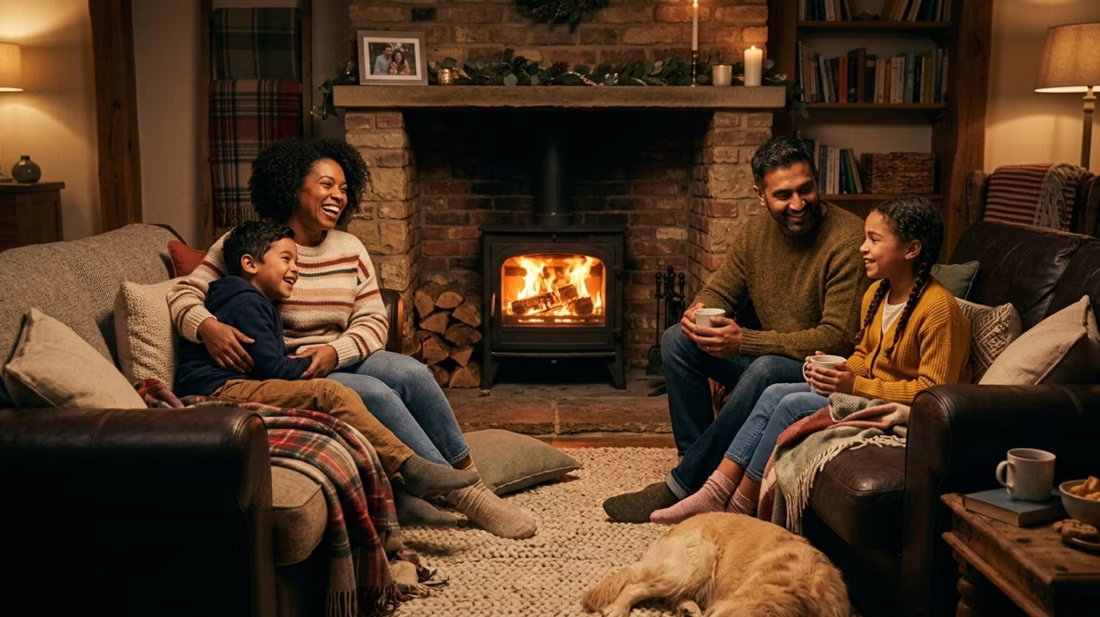
Four fuels. One honest answer for Washington County.
Three steps. No salesperson until you're ready.
Tell us about your project
Your zip code, your situation, and the fuel you're leaning toward—or let the answers point you to one.
See what's actually available
The brands dealers within 100 miles genuinely carry—real options, never a catalog mirage.
Get your dealer & Project Guide
A trusted local dealer, plus the free Project Guide & Parts List that names every component of the job.
Frequently Asked Questions
Which fuel works best in Washington County?
It depends on how you plan to use it. With average winter lows around 35°F and only a short, mild winter heating season each year, Washington County doesn't demand the all-night, single-digit-burn performance a place like Fargo ND requires—so the choice comes down more to lifestyle than survival. Wood remains popular on rural properties around Deepstep, Warthen, and Riddleville, where oak, pine, and hickory are often cut from family land or nearby timber tracts; it's a low-cost, reliable option and works during outages. Gas is the convenience pick for in-town homes in Sandersville and Tennille, especially where propane service is already in place—instant heat with none of the wood-stacking labor. Pellet is a solid middle ground, with Lignetics, Hamer Pellet Fuel, and Greenway Renewable Energy all distributed regionally, giving steady, thermostat-controlled heat without a chainsaw. Electric fireplaces do well here precisely because winters are mild—many homeowners want ambiance and light supplemental warmth rather than a whole-house heat source, and electric delivers that without any venting at all.
Do I need a permit to install a fireplace in Washington County?
In most cases, yes. New wood stoves, wood inserts, gas fireplaces, gas inserts, gas stoves, and pellet stoves typically require a building permit through the county building department, and wood-burning appliances need to meet current EPA 2020 NSPS emissions standards. Gas installations also call for a licensed gas-fitter and, if propane, coordination with your propane supplier for the tank and line work. Electric fireplaces generally don't need a permit unless you're hardwiring a built-in unit into a new circuit—plug-in units are typically exempt. Most local hearth retailers in Sandersville and the surrounding towns handle the permitting paperwork as part of a full installation, so you're rarely filing it yourself.
Are there air quality restrictions on wood burning in Washington County?
No—Washington County has no non-attainment status, no winter inversion pattern, and no curtailment or voluntary burn-advisory program tied to wood smoke. That's a real contrast with basin or valley counties out West that issue yellow or red burn-advisory days during winter inversions. Here, the practical considerations are simpler: keep your chimney swept after a season of burning oak and hickory (both run hot and can build creosote if the flue isn't sized or maintained properly), and if you're installing new, choose an EPA 2020 NSPS-certified stove for cleaner, more efficient burns—good practice everywhere, even without a local mandate driving it.
Can one local hearth retailer handle all four fuel types?
In a county this size, it's less common to find a single retailer stocking wood, gas, pellet, and electric with equal depth—some Sandersville-area dealers lean toward wood and gas, others focus on pellet stoves given the regional availability of Lignetics and Hamer Pellet Fuel, and electric units are often carried as an add-on line rather than a specialty. For the widest side-by-side comparison across all four fuels, it's worth checking dealers that also serve nearby markets like Milledgeville or Augusta, which tend to carry broader multi-fuel showroom floors than a strictly local Washington County retailer. The county + fuel pages above break down exactly which dealers carry what.
How does service work in rural areas of Washington County?
With around 10,490 residents spread across a large, mostly rural county, service technicians often travel in from Sandersville or from nearby regional hubs to reach homes around Davisboro, Deepstep, Oconee, Warthen, and Riddleville. Expect a modest travel charge for the most remote calls, and know that pre-season scheduling—ideally before the first cold snap in late fall—is easier to book than an emergency call mid-winter. Because heating demand here is lighter than in colder climates, annual service intervals matter just as much for longevity and safety, even if the unit isn't running around the clock.
What's the typical cost range for fireplace installation across all fuel types in Washington County?
Costs run lower here than in harsher-climate markets, in part because units don't need to be sized for extreme, sustained cold. Wood stove or insert installation: roughly $3,500–$7,500 for a typical install, more if new chimney construction is involved. Gas fireplace, insert, or stove: about $4,000–$9,000 depending on whether it's a propane conversion with existing line service or a new gas-fitting job. Pellet stove or insert: generally $4,000–$6,500 for a standard install. Electric fireplace: $200–$2,500 for the unit itself, with $300–$1,000 in labor for anything beyond a simple plug-in placement, such as a built-in wall unit. For details tied to specific dealer pricing, see the county + fuel pages above.
Does a fireplace add value to my home?
On average, a fireplace adds back to the home about the same amount you spent installing it. Add the monthly savings from heating the rooms you actually use instead of the whole house—often hundreds of dollars a year—and the value case is strong before you even count what a fire does for how your family uses the room.
What is an in-home preview and do I need one?
It's a visit where a hearth professional measures your space, confirms the model you picked actually works in your home, and walks the specs—framing, gas line, venting, finish work—before anything is ordered. Some details you just can't know until you see the house. Never make a down payment without one; it's the single most-skipped step that burns buyers.
Can I install a fireplace myself?
If you're putting a fire in your house on purpose, it's best to work with an expert. Unless you're genuinely experienced in framing, gas line, vent pipe, and the national code on clearances to combustibles, have a professional do it—and ideally the same company that sells you the fireplace, so warranty, service, and liability all live under one roof.
Wood, gas, pellet, or electric—how do I choose?
Match the fuel to your life, not the other way around. Wood: lowest fuel cost and total power-outage independence, but you're hauling and stacking. Gas: press a button, set a thermostat, no maintenance to speak of. Pellet: wood economics with automatic feeding, in exchange for weekly cleaning and a need for electricity. Electric: plugs in anywhere with honest supplemental heat. Nobody regrets the fuel that fits how they actually live.
Stove and Fireplace Dealers in Washington County
Listings include WhyFire partner dealers, dealers we have verified as authorized for the brands we recommend, and established local businesses that carry hearth products. Every listing shows which one it is. The ones marked Preferred run on WhyFire's software, so they can show you real pricing and book your appointment right here. No manufacturer pays for placement. How we verify dealers →
Antebellum Installation Sales & Service
Thompson Gas
Find your fireplace in Washington County.
Pick your fuel below to see local dealers, understand installation costs for your town, and get matched with a trusted hearth retailer near you.
Find Your Fireplace →