
Find the right fireplace for your Tattnall County home.
With winter lows averaging 38°F and just a brief, light heating season each year, Tattnall County homes rarely need serious heat backup—but a gas or electric fireplace still adds ambiance and takes the edge off cold snaps in Reidsville, Glennville, Cobbtown, Collins, and Manassas.
Every Project Starts From One of These Five Situations
Mild winters, modest heating needs across Tattnall County, Georgia.
Tattnall County sits in climate zone 2A in southeast Georgia's coastal plain, home to about 9,214 people spread across Reidsville (the county seat), Glennville, Cobbtown, Collins, and Manassas. Winters here are short and mild—average lows around 38°F and only a brief, light heating season each year, a fraction of what a place like Duluth, MN or Burlington, VT logs in a single season. Oak, pine, and hickory grow throughout the county's farmland and timberland, but with heating needs this light, a wood stove or insert makes little practical sense as a primary heat source. Pellet stoves face the same math—even with pellet brands like Lignetics, Hamer Pellet Fuel, and Greenway Renewable Energy available regionally, there's rarely enough cold-weather demand locally to justify one for heat rather than novelty.
What you'll find on this hub: gas and electric fireplace retailers, installation technicians, and fuel suppliers serving every community in the county. Pick your fuel below to see local dealers, typical installation costs, and recommended units for your specific project—whether that's a propane insert for a farmhouse near Cobbtown or an electric wall unit for a Reidsville living room.
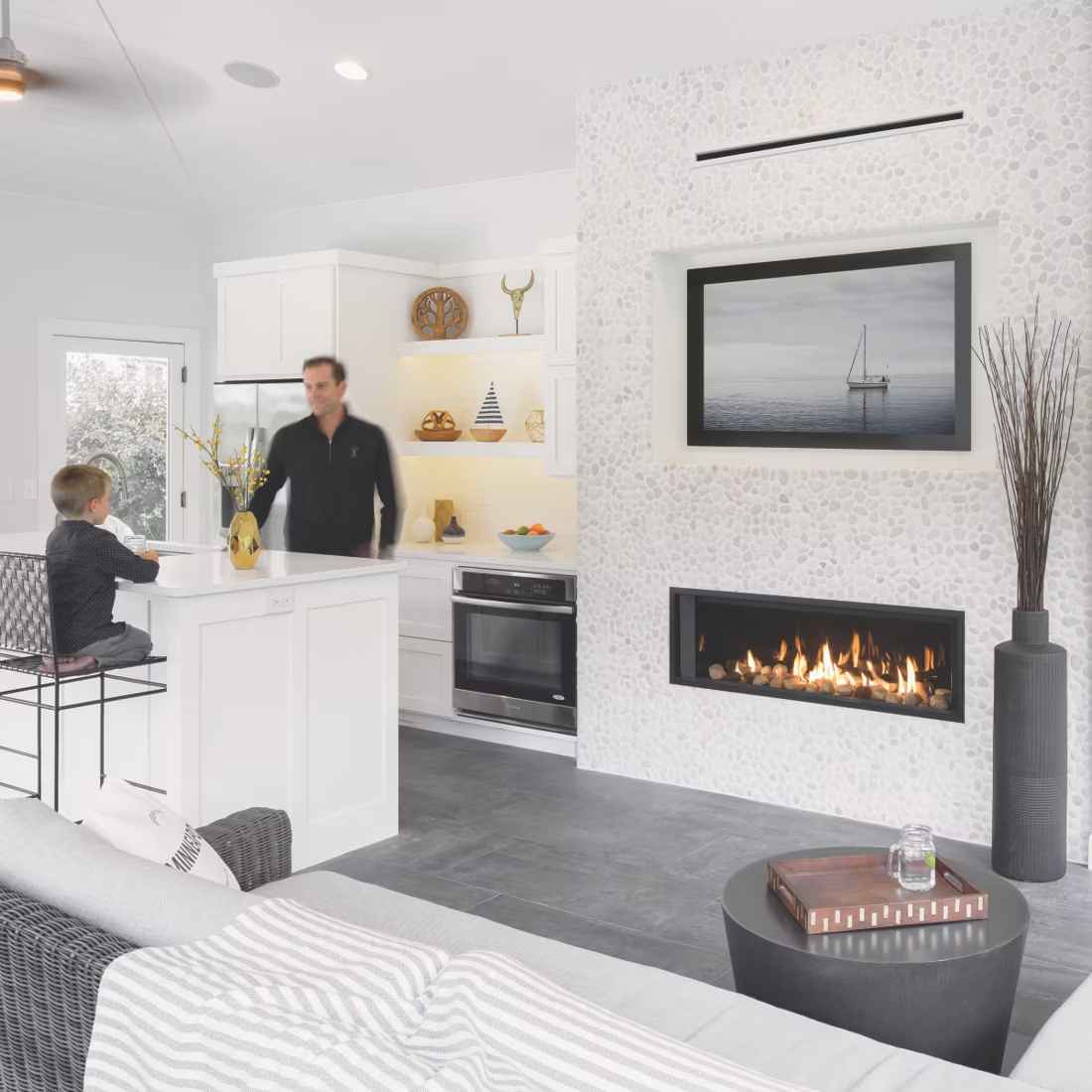
Four fuels. One honest answer for Tattnall County.
Three steps. No salesperson until you're ready.
Tell us about your project
Your zip code, your situation, and the fuel you're leaning toward—or let the answers point you to one.
See what's actually available
The brands dealers within 100 miles genuinely carry—real options, never a catalog mirage.
Get your dealer & Project Guide
A trusted local dealer, plus the free Project Guide & Parts List that names every component of the job.
Frequently Asked Questions
Which fuel works best in Tattnall County?
For most homes here, gas and electric are the practical choices. Propane fireplaces and inserts are common since piped natural gas is limited in this part of southeast Georgia—they give instant heat on the occasional cold night without any woodpile or venting hassle. Electric fireplaces work well for bedrooms, dens, and homes that just want ambiance rather than supplemental heat, and installation is usually simple wiring work rather than a full masonry project. Wood fireplaces exist here—oak, pine, and hickory are all locally available—but with only a brief, light heating season each year, most homeowners treat wood as occasional or decorative rather than a real heat source. Pellet stoves are rare for the same reason: the cold-weather demand just isn't there to justify one over a simpler gas or electric unit.
Do I need a permit to install a fireplace in Tattnall County?
Generally yes for gas installations and for electric fireplaces that require new wiring or a built-in surround. Propane and gas fireplace or insert installs typically need a permit through the county building department, plus licensed gas-fitter work for the line connection. Electric fireplaces that simply plug into an existing outlet usually don't require a permit, but hardwired built-ins with a dedicated circuit do. Wood-burning installations, while less common here, still fall under standard building code review if you're adding a new chimney or altering an existing one. Most local dealers handle the permitting paperwork as part of the installation, so you're not filing it yourself.
Are there air quality restrictions on burning in Tattnall County?
No—Tattnall County has no air quality non-attainment designation and no winter burn advisories like you'd find in a smoke-prone basin out West. There's no equivalent here to the inversion-driven burn bans you'd see in places like Klamath Falls, OR. That said, with wood fireplaces being a minor, mostly decorative part of the local hearth mix, air quality simply isn't a major factor shaping fireplace choices in this county the way fuel practicality and upfront cost are.
Can one local retailer handle both gas and electric fireplace projects?
Yes, and that's the norm here. Because wood and pellet appliances see so little demand in a 2A climate zone with such a short, mild heating season, most Tattnall County hearth retailers focus their inventory on propane and natural gas units alongside electric fireplaces and inserts. That makes it easier to compare a gas insert against an electric alternative in the same showroom visit rather than needing to shop separately by fuel type.
How does service work in rural parts of Tattnall County?
Technicians serving the county are generally based around Reidsville or Glennville and travel out to Cobbtown, Collins, Manassas, and the surrounding farmland. Because heating demand is light and most service calls are for propane fireplace tune-ups or electric fireplace installs rather than wood chimney work, scheduling is usually less seasonal than in colder climates—you're not racing a hard freeze deadline. Still, booking ahead of the occasional cold snap in December and January avoids the scramble that comes when everyone calls at once.
What's the typical cost range for fireplace installation across fuel types in Tattnall County?
Gas fireplace, insert, or stove: roughly $3,500–$8,500 depending on whether you're converting an existing propane line or adding new gas service. Electric fireplace: $200–$2,500 for the unit itself, with $300–$900 in labor for anything beyond a simple plug-and-play install, such as a wall-mount with a dedicated circuit or a built-in surround. Wood fireplace or insert projects, when they do happen, run higher—often $4,000–$8,000—since they're less common locally and typically involve more custom chimney work. For exact pricing tied to local dealers, see the county + fuel pages above.
Wood, gas, pellet, or electric—how do I choose?
Match the fuel to your life, not the other way around. Wood: lowest fuel cost and total power-outage independence, but you're hauling and stacking. Gas: press a button, set a thermostat, no maintenance to speak of. Pellet: wood economics with automatic feeding, in exchange for weekly cleaning and a need for electricity. Electric: plugs in anywhere with honest supplemental heat. Nobody regrets the fuel that fits how they actually live.
Does a fireplace add value to my home?
On average, a fireplace adds back to the home about the same amount you spent installing it. Add the monthly savings from heating the rooms you actually use instead of the whole house—often hundreds of dollars a year—and the value case is strong before you even count what a fire does for how your family uses the room.
What is an in-home preview and do I need one?
It's a visit where a hearth professional measures your space, confirms the model you picked actually works in your home, and walks the specs—framing, gas line, venting, finish work—before anything is ordered. Some details you just can't know until you see the house. Never make a down payment without one; it's the single most-skipped step that burns buyers.
Can I install a fireplace myself?
If you're putting a fire in your house on purpose, it's best to work with an expert. Unless you're genuinely experienced in framing, gas line, vent pipe, and the national code on clearances to combustibles, have a professional do it—and ideally the same company that sells you the fireplace, so warranty, service, and liability all live under one roof.
Stove and Fireplace Dealers in Tattnall County
Listings include WhyFire partner dealers, dealers we have verified as authorized for the brands we recommend, and established local businesses that carry hearth products. Every listing shows which one it is. The ones marked Preferred run on WhyFire's software, so they can show you real pricing and book your appointment right here. No manufacturer pays for placement. How we verify dealers →
Travertine And More
Sikes Propane Inc
Liberty Propane
Gaslog Solutions Plus
Thompson Gas - Statesboro
L.a. Waters Furniture
Find your fireplace in Tattnall County.
Tell us about your home and we'll match you with a trusted local dealer and send a free Project Guide & Parts List—the exact parts, including venting, and the local pro who can install it right in Reidsville, Glennville, or anywhere else in Tattnall County.
Find Your Fireplace →