
Heat Your Home the Way North Georgia Always Has.
Wood, gas, pellet, and electric fireplace resources for Toccoa, Eastanollee, Martin, and the smaller communities scattered through the Stephens County foothills. Find the right unit and connect with a trusted local hearth dealer.
Every Project Starts From One of These Five Situations
Mild winters, mixed hardwood forests, and a county that heats itself close to home.
Stephens County sits in the foothills of the Blue Ridge Mountains along the Georgia–South Carolina line, anchored by Toccoa and the falls that share its name. Winters here are mild by national standards—average lows around 33°F and less than half the winter heating load of a place like Madison, Wisconsin racks up in a typical winter. That doesn't mean heat isn't needed; it means the county's oak, pine, and hickory forests do double duty as both landscape and fuel supply, and a well-sized stove or insert can carry a home through the whole season without the punishing overnight burns required farther north.
This hub covers hearth retailers, service technicians, and fuel suppliers working across Stephens County's roughly 9,700 residents—a small, rural population spread between Toccoa, Eastanollee, Martin, and the unincorporated stretches around Lake Hartwell and the Tugaloo River. With no air-quality non-attainment designation in the county, wood burning here isn't subject to the seasonal curtailment rules you'd see in a smoke-prone basin—though good burning practices still matter for your neighbors and your chimney. Pick your fuel below to see local dealers, typical installation costs, and the resources that fit your specific project.
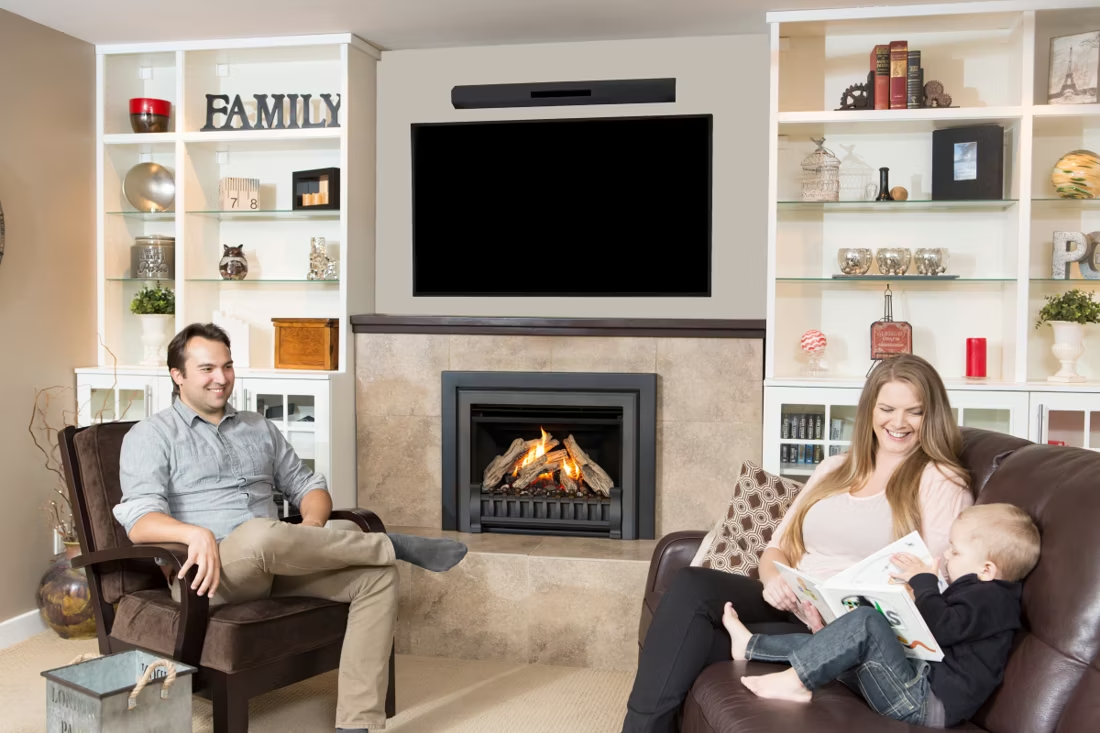
Four fuels. One honest answer for Stephens County.
Three steps. No salesperson until you're ready.
Tell us about your project
Your zip code, your situation, and the fuel you're leaning toward—or let the answers point you to one.
See what's actually available
The brands dealers within 100 miles genuinely carry—real options, never a catalog mirage.
Get your dealer & Project Guide
A trusted local dealer, plus the free Project Guide & Parts List that names every component of the job.
Frequently Asked Questions
Which fuel works best in Stephens County?
It depends on the home, but the county's mild winters—average lows around 33°F and a fairly short, light heating season—open up more options than you'd have farther north. Wood is the traditional choice and stays cheap here thanks to the abundance of oak, hickory, and pine on private land; a mid-size stove is often oversized for the actual heat load, so sizing matters more than raw output. Gas, almost always via propane rather than piped natural gas in most of the county, gives instant heat with none of the wood-hauling. Pellet is well supported locally through Lignetics, Hamer Pellet Fuel, and Greenway Renewable Energy, and works well for homeowners who want wood-style ambiance without the splitting and stacking. Electric fireplaces are genuinely viable here, not just supplemental—the mild heating load means an electric insert can meaningfully offset a room's heat bill in a way it couldn't in a place with Fargo-style winters.
Do I need a permit to install a fireplace in Stephens County?
In most cases, yes. New wood stoves, wood inserts, gas fireplaces, gas inserts, gas stoves, and pellet stoves typically require a building permit through the Stephens County Building Department (or the City of Toccoa's permitting office, if you're inside city limits). Wood-burning appliances need to meet current EPA New Source Performance Standards, and gas installations require a licensed gas-fitter for the propane or gas line connection, usually pulled as a separate permit. Electric fireplaces generally don't require a permit unless the installation involves new wiring or a dedicated circuit for a built-in unit. Most local retailers handle the permitting on your behalf as part of the installation quote, so it's worth asking upfront rather than pulling it yourself.
Are there air quality or burning restrictions in Stephens County?
There's no non-attainment designation here, and the county doesn't have the winter inversion problems that trigger voluntary burn advisories in basin or valley regions. That said, the Georgia Forestry Commission does issue outdoor burning permits and can restrict debris and yard burning during dry stretches—that's a separate rule from your indoor wood stove or insert, which isn't affected by those restrictions. New wood-burning appliance installations still need to meet EPA emissions standards regardless of local air quality status, so an EPA-certified stove is the baseline for any new install.
Can one local hearth retailer handle all four fuel types?
In a county this size, it's less common to find a single dealer stocked deep across wood, gas, pellet, and electric the way you might in a larger metro market. Most Stephens County retailers carry two or three fuel types well and can special-order or refer out for the fourth. If you want to compare all four side by side with working displays, it's worth checking dealers in nearby Habersham or Franklin County, or across the state line in Anderson County, South Carolina, where the market supports a broader selection. Ask any local retailer directly which fuels they install and service—most are upfront about what falls outside their specialty.
What's the typical cost range for fireplace installation across all fuel types in Stephens County?
Because the mild climate here means smaller heating loads than colder regions, installs often land toward the lower end of national ranges. Wood stove or insert installation: roughly $4,000–$8,000 for a typical retrofit, more if a full masonry chimney is being built new. Gas fireplace, insert, or stove: about $4,000–$9,000, with propane tank setup or line work adding to the cost if there's no existing gas service. Pellet stove or insert: typically $4,000–$7,000 installed. Electric fireplace: $200–$2,500 for the unit itself, plus $300–$1,000 in labor for anything beyond a plug-in wall unit, such as a built-in with new wiring. Actual pricing depends on the dealer and the specifics of your home—see the fuel-specific pages for more detail.
Is local firewood good quality for a wood stove in Stephens County?
Yes, with the right seasoning. Oak and hickory, both common in the Stephens County foothills, are dense hardwoods that burn hot and long once properly dried—plan on 9 to 12 months of covered, off-ground seasoning to get moisture content down where it needs to be. Pine is also widely available locally and burns fine as a shoulder-season or kindling wood, but it burns faster and leaves more resin in the flue, so more frequent chimney sweeping is worth budgeting for if pine makes up a large share of your wood pile. Given the humid Piedmont summers here, stacking wood off the ground with good airflow and a top cover—rather than a fully enclosed tarp—makes a real difference in how well it dries before the season starts.
What is an in-home preview and do I need one?
It's a visit where a hearth professional measures your space, confirms the model you picked actually works in your home, and walks the specs—framing, gas line, venting, finish work—before anything is ordered. Some details you just can't know until you see the house. Never make a down payment without one; it's the single most-skipped step that burns buyers.
Wood, gas, pellet, or electric—how do I choose?
Match the fuel to your life, not the other way around. Wood: lowest fuel cost and total power-outage independence, but you're hauling and stacking. Gas: press a button, set a thermostat, no maintenance to speak of. Pellet: wood economics with automatic feeding, in exchange for weekly cleaning and a need for electricity. Electric: plugs in anywhere with honest supplemental heat. Nobody regrets the fuel that fits how they actually live.
Can I install a fireplace myself?
If you're putting a fire in your house on purpose, it's best to work with an expert. Unless you're genuinely experienced in framing, gas line, vent pipe, and the national code on clearances to combustibles, have a professional do it—and ideally the same company that sells you the fireplace, so warranty, service, and liability all live under one roof.
Can a fireplace actually lower my heating bill?
Yes—by creating a comfort zone. A furnace heats every square foot of the house just to warm the one room you're in; a gas fireplace on low burns roughly a sixth of the gas a typical furnace does. Set the furnace around 55–60 degrees as a baseline, then heat the rooms your family actually uses. Families who heat this way commonly save $20–$60 a month.
Stove and Fireplace Dealers in Stephens County
Listings include WhyFire partner dealers, dealers we have verified as authorized for the brands we recommend, and established local businesses that carry hearth products. Every listing shows which one it is. The ones marked Preferred run on WhyFire's software, so they can show you real pricing and book your appointment right here. No manufacturer pays for placement. How we verify dealers →
Toccoa Service Gas Company Inc.
Southern Chimney Sweep
Tugalo Gas Company Inc.
Blossman Gas And Appliance
Yoder Building Supply
The Fire Place - Clayton
Tugalo Gas Company Inc.
Tri-State Distributors, Inc
Find your fireplace in Stephens County.
Pick your fuel below and I'll match you with a trusted local dealer, plus a free Project Guide & Parts List—the exact parts, including the vent kit, for your specific home in Stephens County.
Find Your Fireplace →