
Real heat for Randolph County's mild Georgia winters.
Fireplace resources for Cuthbert, Shellman, Coleman, and every community in Randolph County. Stoves are rare here given the short heating season, but if you want one for ambiance, we'll point you to a dealer who can source it.
Every Project Starts From One of These Five Situations
Coastal Plain winters keep heating needs light in Randolph County.
Randolph County sits in southwest Georgia's Coastal Plain, with Cuthbert as the county seat and a population of just over 4,000 spread across a farming landscape of peanuts, cotton, and pine timber. Winters are short and mild—average lows sit around 35°F, and the county has a light overall winter heating load, a fraction of what a place like Duluth, Minnesota sees in a single season. That climate shapes the local hearth market: gas fireplaces and electric units carry the load for supplemental warmth and ambiance, while central heat pumps handle the day-to-day heating. Oak, pine, and hickory grow all over this part of Georgia, but with so few genuinely cold nights, a dedicated wood stove rarely pencils out as a primary heat source for most households here.
What you'll find on this hub: gas and electric hearth retailers, service technicians, and fuel suppliers serving Cuthbert, Shellman, Coleman, and the smaller communities around them. Wood-burning fireplaces and pellet stoves do show up occasionally—mostly for ambiance during a cold front or in older farmhouses—and pellet brands like Lignetics, Hamer Pellet Fuel, and Greenway Renewable Energy circulate through regional suppliers if you want to go that route. Pick your fuel below to see local dealers, typical costs, and the specifics for your project.
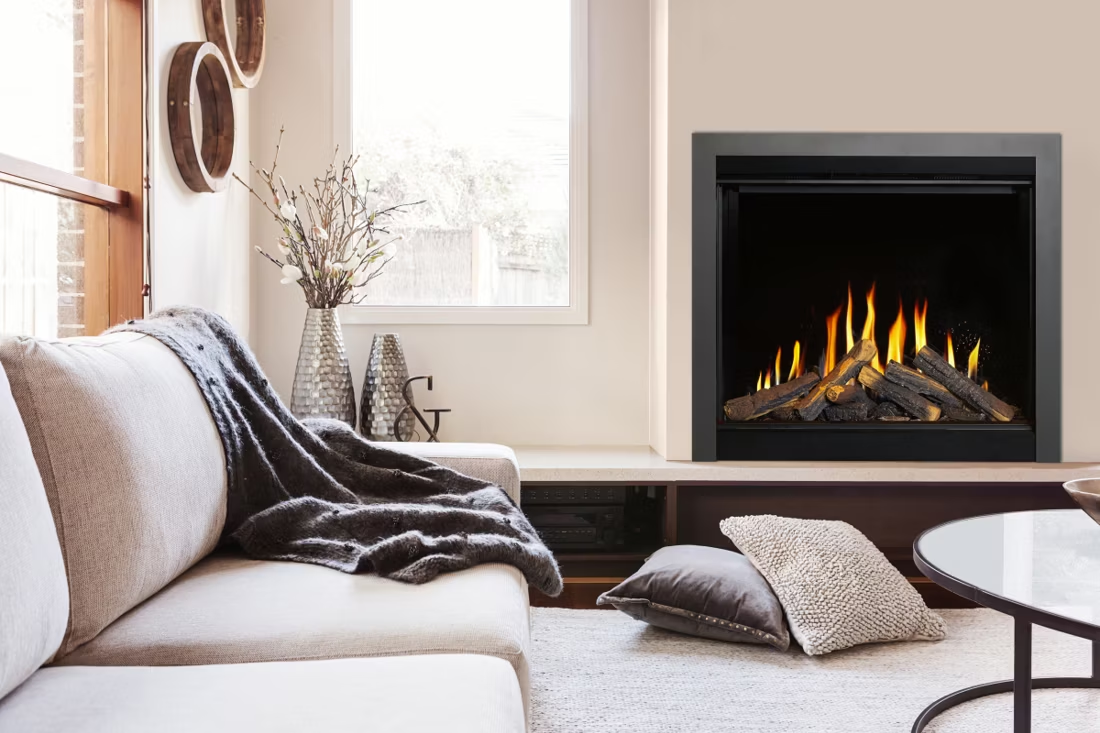
Four fuels. One honest answer for Randolph County.
Three steps. No salesperson until you're ready.
Tell us about your project
Your zip code, your situation, and the fuel you're leaning toward—or let the answers point you to one.
See what's actually available
The brands dealers within 100 miles genuinely carry—real options, never a catalog mirage.
Get your dealer & Project Guide
A trusted local dealer, plus the free Project Guide & Parts List that names every component of the job.
Frequently Asked Questions
Which fireplace fuel makes the most sense in Randolph County?
For most homes here, it's gas or electric. With winter lows averaging around 35°F and an overall winter heating load that's well under half of what a cold-climate city like Fargo, ND sees, Randolph County simply doesn't demand the kind of sustained heat output a wood stove is built for. Gas fireplaces (usually propane-fed, since natural gas mains are limited across this rural county) give instant ambiance and supplemental warmth without a woodpile to manage. Electric units work well in bedrooms or as a simple ambiance add in a living room. Wood stoves and pellet stoves both show up occasionally, mostly in older farmhouses or for homeowners who like the look and feel of a real fire, but they're the exception rather than the rule.
Do I need a permit to install a fireplace in Randolph County?
Generally yes, for gas and hardwired electric installs. Gas fireplace and gas insert installations typically require a building permit plus a separate gas line permit handled by a licensed gas fitter, issued through the Randolph County Building Department for anything outside Cuthbert's city limits. Plug-in electric fireplaces usually don't need a permit; built-in electric units that require new wiring do. If a homeowner does install a wood or pellet appliance, it still needs to meet current EPA emissions standards and go through the same permitting process. Most local retailers who service this county handle the permit paperwork as part of the installation.
Is wood burning common in Randolph County?
Not really, and that's worth being upfront about. Oak, pine, and hickory are everywhere in the local landscape—this is timber country—but with mild winters and so few genuinely cold nights, wood stoves aren't the practical heating choice they'd be in a colder region. When a wood appliance does go into a Randolph County home, it's usually a fireplace insert added for occasional ambiance during a winter cold front, not a household's primary heat source. If you specifically want a wood-burning unit, a dealer serving the county can still source and install one—it's just a smaller slice of the local market than gas or electric.
What about pellet stoves—are they available here?
Pellet stoves are uncommon in Randolph County for the same reason wood stoves are: the heating season is short and the winters are mild, so the ongoing cost and effort of a pellet appliance rarely pays off compared to a gas or electric unit. That said, pellet fuel itself is available through regional suppliers—brands like Lignetics, Hamer Pellet Fuel, and Greenway Renewable Energy move through the broader southwest Georgia supply chain, mostly serving colder markets nearby. If a homeowner here wants a pellet stove, a dealer can order one in, but don't expect a local showroom full of display units the way you might find in a colder part of the state.
How does gas fireplace installation work in a small county like this?
Because natural gas main coverage is limited across rural Randolph County, most gas fireplace and gas log installations run on propane rather than piped natural gas. That means a local propane supplier delivers and maintains the tank, and a licensed gas fitter handles the line connection and venting as part of the install—typically coordinated by the hearth retailer. Permits go through the Randolph County Building Department for work outside Cuthbert. Because the local retail footprint is thin, expect your installer to be based in a nearby larger market like Albany or Columbus and to travel in for the consultation and install.
What's the typical cost range across fuel types in Randolph County?
Gas fireplace, insert, or log set: roughly $3,500–$8,500 installed, with propane conversions or new gas line runs pushing toward the higher end. Electric fireplace: $200–$3,000 for the unit itself, plus $400–$1,200 in labor for anything beyond a plug-and-play install, such as a built-in or wall-mounted unit needing new wiring. Wood stove or insert: $4,000–$8,500 when a homeowner does go this route, since units and venting parts often have to be special-ordered rather than pulled from local stock. Pellet stove or insert: similarly $4,000–$7,000, with the same special-order consideration. See the county + fuel pages for details tied to specific local dealer pricing.
Can I install a fireplace myself?
If you're putting a fire in your house on purpose, it's best to work with an expert. Unless you're genuinely experienced in framing, gas line, vent pipe, and the national code on clearances to combustibles, have a professional do it—and ideally the same company that sells you the fireplace, so warranty, service, and liability all live under one roof.
Can a fireplace actually lower my heating bill?
Yes—by creating a comfort zone. A furnace heats every square foot of the house just to warm the one room you're in; a gas fireplace on low burns roughly a sixth of the gas a typical furnace does. Set the furnace around 55–60 degrees as a baseline, then heat the rooms your family actually uses. Families who heat this way commonly save $20–$60 a month.
Does a fireplace add value to my home?
On average, a fireplace adds back to the home about the same amount you spent installing it. Add the monthly savings from heating the rooms you actually use instead of the whole house—often hundreds of dollars a year—and the value case is strong before you even count what a fire does for how your family uses the room.
What are the biggest mistakes people make buying a fireplace?
Five come up constantly: budgeting for the unit but not the full job (vent, gas line, electrical, finish work); drowning in options instead of starting from style and fuel; buying without an in-home preview; handing installation to a handyman instead of a pro; and giving up out of sheer indecision. Every one is avoidable with a clear plan—step one, step two, step three.
Stove and Fireplace Dealers in Randolph County
Listings include WhyFire partner dealers, dealers we have verified as authorized for the brands we recommend, and established local businesses that carry hearth products. Every listing shows which one it is. The ones marked Preferred run on WhyFire's software, so they can show you real pricing and book your appointment right here. No manufacturer pays for placement. How we verify dealers →
Driver Energies LLC
Ever-Glo Propane Propane Gas Service, Inc.
Find your fireplace in Randolph County.
Tell us about your home and we'll match you with a local dealer and send a free Project Guide & Parts List—the exact parts, including the vent kit, for your Randolph County project.
Find Your Fireplace →