
Find your fireplace in Muscogee County.
Fireplace resources for Columbus and every corner of Muscogee County. Get matched with a trusted local dealer who knows what's actually installable in the Chattahoochee Valley's mild winters—no big-box guesswork, no oversized unit you'll never need.
Every Project Starts From One of These Five Situations
Mild Chattahoochee Valley winters, 2,444 heating degree days, and a county where gas fireplaces do the real work.
Muscogee County sits along the Chattahoochee River in west-central Georgia, home to Columbus—the state's second-largest city—and the Fort Moore military reservation just south of town. Georgia's climate zone 3A puts the county in the humid-subtropical belt: winter lows average a mild 33°F, and the county logs just 2,444 heating degree days a year, a fraction of the roughly 10,000 a place like Duluth, Minnesota sees in a single winter. Columbus and Muscogee County have run under a consolidated city-county government since 1971, so a single building inspections office—not a patchwork of city and county desks—handles hearth permitting for the whole county.
That mild heating load is exactly why wood and pellet stoves never became fixtures here the way they are farther north: oak, pine, and hickory are the wood species people do burn locally, but almost always in an existing masonry fireplace for ambiance on an occasional 30-degree night, not as a heat source anyone depends on to get through winter. Pellet stoves are rarer still—Lignetics, Hamer Pellet Fuel, and Greenway Renewable Energy pellets are distributed regionally, but they mostly end up warming garages, workshops, or hunting camps near Fort Moore rather than living rooms in Columbus subdivisions. What actually carries the load here is gas—Atlanta Gas Light delivers the pipeline, and homeowners pick a retail marketer such as Georgia Natural Gas, SCANA Energy, or Gas South for service—paired with electric fireplaces on Georgia Power circuits for supplemental warmth and easy ambiance. This hub rolls up hearth retailers, service techs, and fuel suppliers across Columbus and the rest of the county; pick a fuel below to see what a real local dealer can actually install near you.
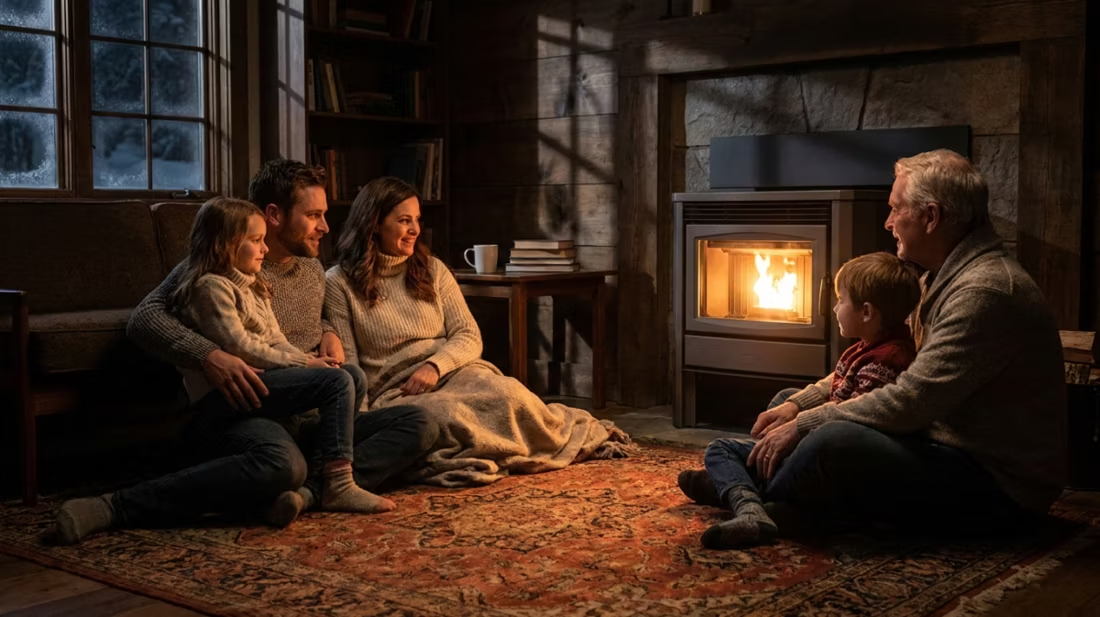
Four fuels. One honest answer for Muscogee County.
Three steps. No salesperson until you're ready.
Tell us about your project
Your zip code, your situation, and the fuel you're leaning toward—or let the answers point you to one.
See what's actually available
The brands dealers within 100 miles genuinely carry—real options, never a catalog mirage.
Get your dealer & Project Guide
A trusted local dealer, plus the free Project Guide & Parts List that names every component of the job.
Frequently Asked Questions
Which fireplace fuel makes the most sense in Muscogee County?
For most Columbus-area homes, gas is the practical choice—a direct-vent gas fireplace or insert lights instantly, needs no chimney draft, and fits a heating season where winter lows average only 33°F and the county logs just 2,444 heating degree days a year. Electric fireplaces work well as a supplemental unit in a bedroom, den, or basement, or as the sole heat-and-ambiance source in a house that doesn't run a furnace hard enough to justify anything more. Wood-burning fireplaces still exist here—usually older masonry fireplaces burning oak, pine, or hickory on the occasional cold front—but they're rarely a primary heat source anyone relies on. Pellet stoves are genuinely uncommon; the mild climate simply doesn't generate the demand that keeps pellet dealers stocked and serviced the way it does farther north.
Do I need a permit to install a gas fireplace in Columbus or Muscogee County?
Yes. Because Columbus and Muscogee County share a consolidated government, permitting for a new gas fireplace, insert, or gas log conversion runs through one building inspections office rather than separate city and county departments. A licensed gas fitter needs to make the actual connection to the Atlanta Gas Light distribution line, and you'll separately choose a retail marketer—Georgia Natural Gas, SCANA Energy, or Gas South are common choices—for billing. Electric fireplace installs usually skip the permit process entirely unless you're hardwiring a built-in unit that needs its own dedicated circuit, in which case an electrical permit applies. Most retailers we match homeowners with handle this paperwork as part of the install.
Are wood-burning fireplaces still an option in Muscogee County?
They exist, but they're a minority option rather than a mainstream one. Plenty of older homes around Columbus have a masonry wood-burning fireplace built decades ago, and some homeowners still burn oak, pine, or hickory in them for a handful of nights each winter. What's far more common today is converting that same masonry fireplace to gas logs, which gets the look and warmth of a wood fire without the ash, the wood storage, or the chimney maintenance—a natural fit given how few genuinely cold nights the county sees each year. New wood-burning installs from scratch are rare; if you want that experience, a local retailer can tell you honestly whether it's worth it for your home or whether a vented gas log set gets you there faster.
What about pellet stoves—can I actually get one installed here?
You can find one, but expect a smaller pool of dealers and installers than you'd see for gas or electric. Regional pellet brands like Lignetics, Hamer Pellet Fuel, and Greenway Renewable Energy are distributed in this part of Georgia, and pellet stoves do show up in garages, workshops, and hunting cabins around Fort Moore where someone wants a self-contained heat source without running a gas line. As a primary fireplace for a Columbus living room, though, pellet stoves are uncommon enough that fuel availability and service can be inconsistent. If you're drawn to the look of a real fire with less mess than cordwood, a gas insert is usually the more practical, better-supported choice locally.
What does a fireplace installation typically cost in Muscogee County?
Gas fireplaces, inserts, and log sets generally run $4,000–$9,500 installed, with the higher end covering new gas-line runs to a room that doesn't already have service; converting an existing wood-burning masonry fireplace to gas logs tends to land toward the lower end of that range since the venting is often already in place. Electric fireplaces are the budget option—$200–$3,000 for the unit itself, plus $400–$1,200 in labor if you're adding a dedicated circuit for a built-in model rather than plugging in a freestanding one. Wood-burning installs and pellet stove installs are priced case-by-case given how infrequently they're requested here; a local retailer can quote either directly if that's the route you want.
How should I think about seasonal timing and maintenance for a gas or electric fireplace here?
Because Muscogee County's heating season is short and mild, a gas fireplace here might only run on genuinely cold nights and during holiday gatherings, but it still needs the same annual once-over any gas appliance needs—a pilot and burner check before the first cold front, typically in October or November, catches problems before you actually need the heat. Electric fireplaces need essentially no seasonal maintenance beyond an occasional dust and a bulb or LED check. If you're one of the households still using an older masonry wood-burning fireplace with oak or hickory, a periodic chimney inspection is worth keeping on the calendar even at low usage, since a fireplace that only gets lit a few nights a year is easy to forget until the smoke tells you something's wrong.
How much should I budget for a fireplace?
For an average home—covering the fireplace, the vent pipe, and basic installation—a budget between $3,900 and $5,500 gives you a lot of options across wood, gas, and pellet. By the time you add finish work, gas line, and electrical, the average complete installation lands between $5,000 and $12,000 all-in. In a remodel or new build, a good rule is to put about 2.5% of the total project cost toward the fireplace.
What is an in-home preview and do I need one?
It's a visit where a hearth professional measures your space, confirms the model you picked actually works in your home, and walks the specs—framing, gas line, venting, finish work—before anything is ordered. Some details you just can't know until you see the house. Never make a down payment without one; it's the single most-skipped step that burns buyers.
Can I install a fireplace myself?
If you're putting a fire in your house on purpose, it's best to work with an expert. Unless you're genuinely experienced in framing, gas line, vent pipe, and the national code on clearances to combustibles, have a professional do it—and ideally the same company that sells you the fireplace, so warranty, service, and liability all live under one roof.
Can a fireplace actually lower my heating bill?
Yes—by creating a comfort zone. A furnace heats every square foot of the house just to warm the one room you're in; a gas fireplace on low burns roughly a sixth of the gas a typical furnace does. Set the furnace around 55–60 degrees as a baseline, then heat the rooms your family actually uses. Families who heat this way commonly save $20–$60 a month.
Stove and Fireplace Dealers in Muscogee County
Listings include WhyFire partner dealers, dealers we have verified as authorized for the brands we recommend, and established local businesses that carry hearth products. Every listing shows which one it is. The ones marked Preferred run on WhyFire's software, so they can show you real pricing and book your appointment right here. No manufacturer pays for placement. How we verify dealers →
Professional Chimney Services
Muse Kitchen And Bath Gallery
Builder's Choice Enterprises
Get matched with a local Muscogee County dealer.
Tell us about your project and we'll put together a free Project Guide & Parts List—the right unit for your home, the vent kit it needs, and the local Columbus-area dealer we recommend to install it.
Find Your Fireplace →