
Find the right fireplace for Long County's mild winters.
Gas and electric fireplaces are the practical choice across Long County's coastal-plain climate. Wood and pellet units show up occasionally for ambiance, but they're not how most homes here handle a Georgia winter. Connect with a local hearth retailer who knows what actually fits your home.
Every Project Starts From One of These Five Situations
Warm-climate heating in Long County, Georgia.
Long County sits in Georgia's coastal plain, home to about 2,137 residents centered around the county seat of Ludowici, with the Fort Stewart military reservation reaching into the county's northern edge. This is climate zone 2A—hot and humid summers, short and mild winters. The numbers make the case: 1,519 heating degree days and a winter low averaging 41°F. Compare that to a place like Duluth, Minnesota, which racks up more than 10,000 heating degree days most years, and it's clear why heating equipment here looks different than it does in colder parts of the country.
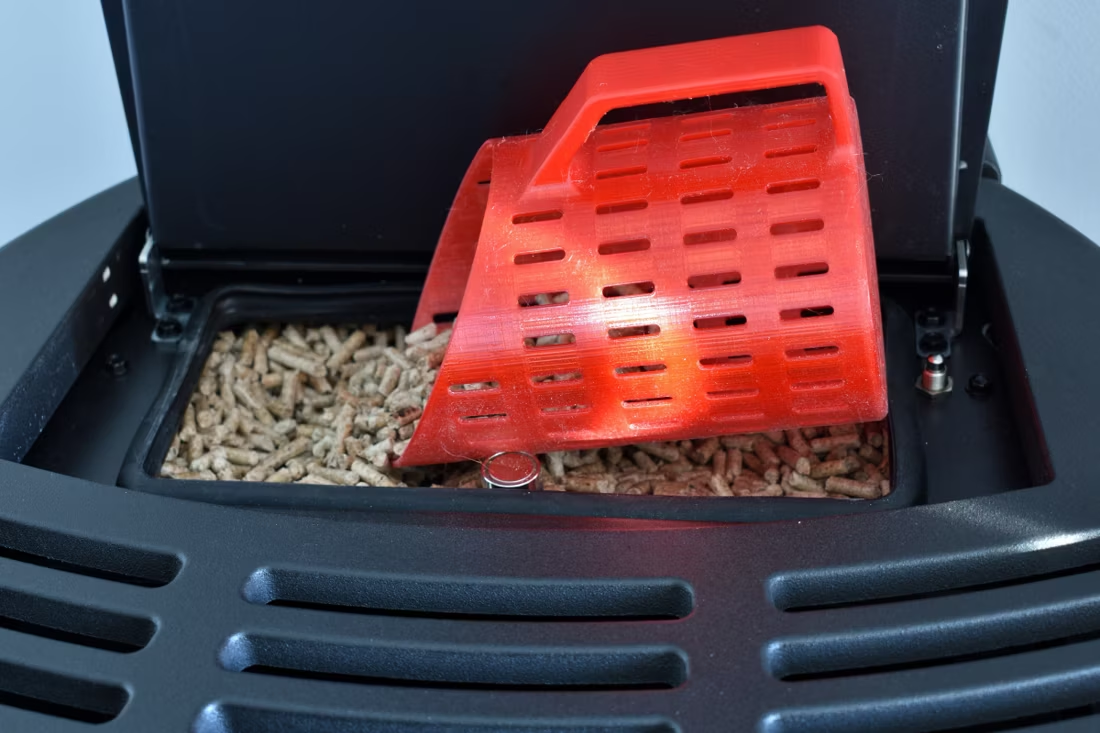
That climate shapes the whole hub. Gas fireplaces (mostly propane-fed, since natural gas mains are limited outside Ludowici) and electric fireplaces cover nearly all the demand in Long County—they handle the occasional cold front without asking a homeowner to manage a woodpile or a pellet hopper for a heating season that barely exists. Wood and pellet fireplaces aren't gone from the county—oak, pine, and hickory are abundant in this timber region, and a handful of homeowners still install wood units for atmosphere—but they're a minor slice of local installs, not the primary heat source they'd be in a colder climate. Pick your fuel below to see local dealers, install costs, and what actually makes sense for your home.
Four fuels. One honest answer for Long County.
Three steps. No salesperson until you're ready.
Tell us about your project
Your zip code, your situation, and the fuel you're leaning toward—or let the answers point you to one.
See what's actually available
The brands dealers within 100 miles genuinely carry—real options, never a catalog mirage.
Get your dealer & Project Guide
A trusted local dealer, plus the free Project Guide & Parts List that names every component of the job.
Frequently Asked Questions
Which fuel works best in Long County?
For most Long County homes, it's gas or electric. With only 1,519 heating degree days and a winter low averaging 41°F, the heating season is short and mild—closer to a handful of cold nights than a real winter. Propane-fed gas fireplaces are common since natural gas mains are limited outside Ludowici, and they give instant heat for the occasional cold front without any daily upkeep. Electric fireplaces are popular for their ambiance and zero-clearance installation, especially paired with the heat pumps that already handle most of the county's heating load. Wood fireplaces exist—oak, pine, and hickory are all abundant locally—but they're almost always installed for atmosphere rather than as a serious heat source. Pellet stoves are essentially absent; the regional pellet brands that supply Georgia (Lignetics, Hamer Pellet Fuel, Greenway Renewable Energy) are serving colder-demand markets further north, not Long County's coastal plain.
Do I need a permit to install a fireplace in Long County?
Generally, yes. Gas fireplace, insert, or stove installations require a building permit through the Long County Building Department along with a separate gas line permit, and the gas connection itself needs a licensed gas-fitter. Built-in electric fireplaces that involve new wiring or a dedicated circuit typically require an electrical permit; plug-in electric units usually don't. Wood-burning installations, though uncommon, still require a permit and inspection if you're adding a new appliance rather than replacing an existing one. Most local retailers who serve Long County—even the ones based in Hinesville or Savannah—handle the permit paperwork as part of the installation.
Are there air quality restrictions on wood burning in Long County?
No—Long County has no formal air quality restrictions or advisory program tied to wood burning, unlike inversion-prone basins out West. That said, wood fireplaces remain uncommon here for a different reason: with a heating season this short, there's simply not enough cold weather to justify wood as a primary heat source for most households. When homeowners do install a wood-burning unit, it's typically for the look of a real fire on the handful of genuinely cold nights each winter, not for daily heating.
Can one local hearth retailer handle all four fuel types?
Not usually, and that's fine given local demand. Most retailers serving Long County focus on gas and electric—those two fuels cover the vast majority of installs in a climate this mild. If you're set on a wood-burning fireplace for ambiance, some of the same dealers can special-order units even without a wood display on the showroom floor; expect a longer lead time than a stock gas or electric unit. Pellet stoves are rare enough that few, if any, local dealers stock them—if that's your goal, ask specifically, since sourcing may require going through a supplier further north in the state.
How does service work in a small, rural county like Long?
With a population of just over 2,100, Long County doesn't support a large base of hearth businesses on its own. Most technicians who service gas and electric fireplaces here are based in Hinesville, Jesup, or Savannah and travel into Ludowici and the surrounding unincorporated communities. Expect a modest travel fee for service calls outside town, and plan ahead where you can—scheduling annual gas system checks before the first cold front hits (typically late fall) is easier than trying to book an emergency repair once a cold snap arrives.
What's the typical cost range for fireplace installation across fuel types in Long County?
Gas fireplace, insert, or stove: roughly $4,000–$9,000 installed, with cost driven mostly by propane line work and venting rather than the unit itself. Electric fireplace: $200–$2,500 for the unit, plus $300–$1,000 in labor for anything beyond a simple plug-in install, such as a wall-mount or built-in with new wiring. Wood-burning units, when installed, run comparably to national averages—$4,000–$8,000—though the low local demand can mean fewer dealers to compare quotes against. Pellet stoves are rare enough in Long County that most homeowners considering one should expect to work with a supplier outside the immediate area, which can add to both cost and lead time.
How much should I budget for a fireplace?
For an average home—covering the fireplace, the vent pipe, and basic installation—a budget between $3,900 and $5,500 gives you a lot of options across wood, gas, and pellet. By the time you add finish work, gas line, and electrical, the average complete installation lands between $5,000 and $12,000 all-in. In a remodel or new build, a good rule is to put about 2.5% of the total project cost toward the fireplace.
Does a fireplace add value to my home?
On average, a fireplace adds back to the home about the same amount you spent installing it. Add the monthly savings from heating the rooms you actually use instead of the whole house—often hundreds of dollars a year—and the value case is strong before you even count what a fire does for how your family uses the room.
Can a fireplace actually lower my heating bill?
Yes—by creating a comfort zone. A furnace heats every square foot of the house just to warm the one room you're in; a gas fireplace on low burns roughly a sixth of the gas a typical furnace does. Set the furnace around 55–60 degrees as a baseline, then heat the rooms your family actually uses. Families who heat this way commonly save $20–$60 a month.
Should the dealer who sells my fireplace also install it?
Ideally, yes. A fireplace project involves vent pipe, gas line, electrical, and often tile or stone. Hire three or four separate trades and you own the liability and the game of telephone between them. One company selling and installing means one accountable party, start to finish—ask about factory training, on-time completion records, and what happens if an inspection fails.
Stove and Fireplace Dealers in Long County
Listings include WhyFire partner dealers, dealers we have verified as authorized for the brands we recommend, and established local businesses that carry hearth products. Every listing shows which one it is. The ones marked Preferred run on WhyFire's software, so they can show you real pricing and book your appointment right here. No manufacturer pays for placement. How we verify dealers →
Liberty Propane
Travertine And More
Kash Gas Co
Sikes Propane Inc
Arco Hardware
Find your fireplace in Long County.
Tell us about your project and we'll match you with a trusted local dealer serving Long County, plus a free Project Guide & Parts List—the exact parts, including the vent kit, and the dealer who can install it right.'}
Find Your Fireplace →