
Find the Right Fireplace for Dooly County's Mild Winters.
Fireplace resources for Vienna, Byromville, Lilly, Pinehurst, Unadilla, and the rest of Dooly County—matched with a local hearth retailer who knows what actually works in a short, mild heating season.
Every Project Starts From One of These Five Situations
Mild winters shape how Dooly County heats its homes.
Dooly County sits in south-central Georgia along the Flint River, with Vienna as the county seat. The climate here is Zone 3A—humid, mild, and short on real cold. The average winter low is 35°F, and the county has a mild, short winter heating season. For comparison, Fargo, North Dakota has a winter heating load nearly four times as heavy—Dooly County's entire heating season is a fraction of what a Northern Plains home deals with in a single January. Oak, pine, and hickory are common in the woodlots around Vienna, Byromville, and Pinehurst, but that timber gets burned mostly in outdoor fire pits and smokers rather than fed into wood stoves for sustained home heat.
This hub covers hearth retailers, service technicians, and fuel suppliers serving all of Dooly County—Vienna, Byromville, Lilly, Pinehurst, and Unadilla. Gas and electric are the fuels that actually make sense here: gas logs and inserts for quick, no-labor warmth on the handful of genuinely cold nights, and electric units for supplemental heat and ambiance in bedrooms or additions. Wood and pellet appliances show up occasionally, usually for homeowners who want the look and feel of a wood fire more than they need the BTUs, but they're the exception rather than the rule in a county this mild.
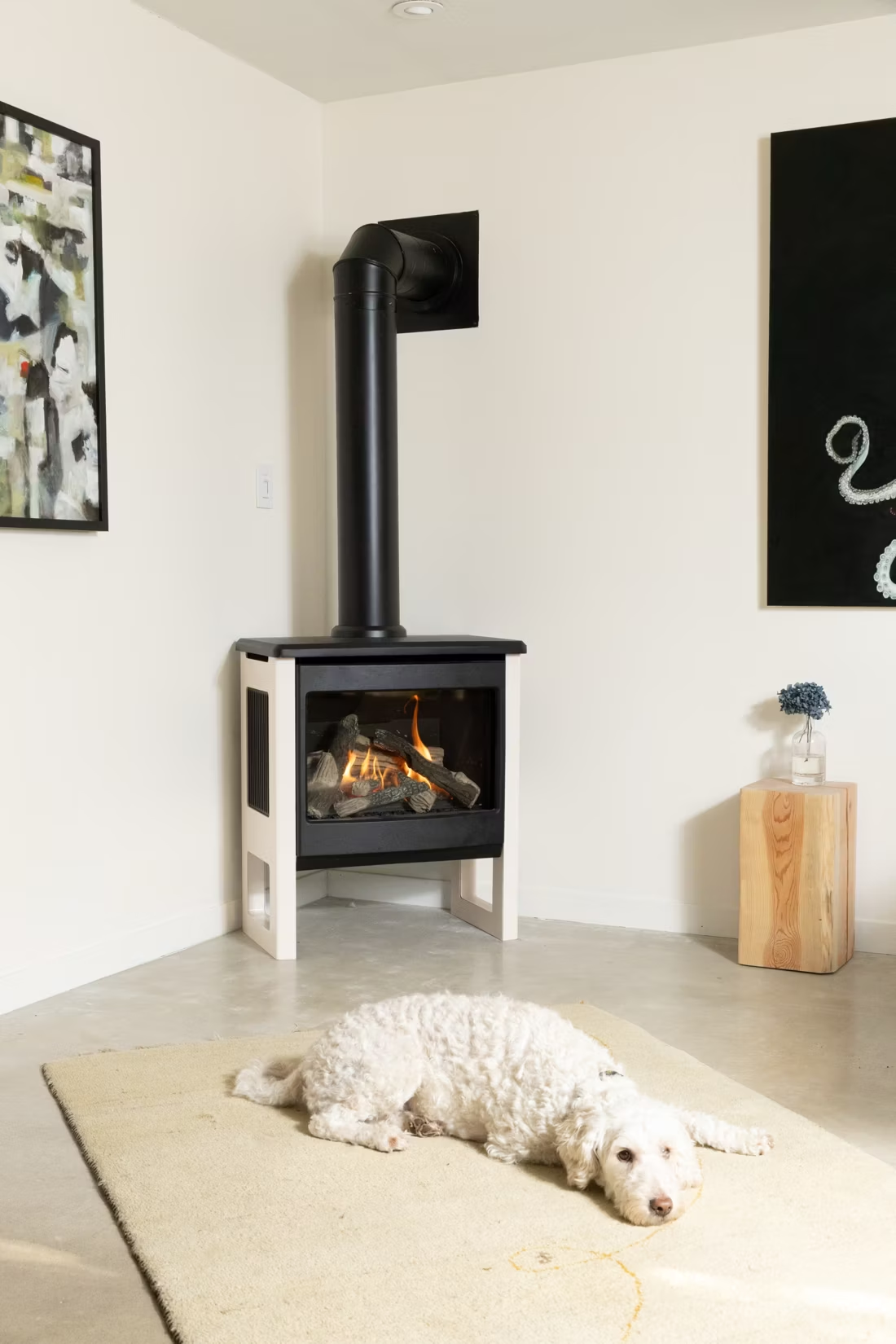
Four fuels. One honest answer for Dooly County.
Three steps. No salesperson until you're ready.
Tell us about your project
Your zip code, your situation, and the fuel you're leaning toward—or let the answers point you to one.
See what's actually available
The brands dealers within 100 miles genuinely carry—real options, never a catalog mirage.
Get your dealer & Project Guide
A trusted local dealer, plus the free Project Guide & Parts List that names every component of the job.
Frequently Asked Questions
Which fuel works best in Dooly County?
Gas and electric, by a wide margin. With an average winter low around 35°F and only a mild, short winter heating season, Dooly County simply doesn't see the sustained cold that makes wood or pellet heat worth the effort. A propane gas fireplace or insert gives instant warmth on the coldest nights without a woodpile or venting for combustion air, and electric units work well as supplemental heat in a bedroom or sunroom addition in Vienna or Pinehurst. Wood-burning fireplaces do exist in some older homes—oak and hickory are plentiful locally—but they're used more for the occasional evening fire than for carrying a house through winter.
Do I need a permit to install a fireplace in Dooly County?
For gas fireplaces, inserts, or stoves, yes—you'll need a building permit plus a separate gas line permit if new propane piping is involved, and that gas connection work should be done by a licensed gas-fitter. Electric fireplaces generally skip the permit process unless you're doing a built-in installation that requires a new hardwired circuit, in which case an electrical permit applies. Permits for unincorporated areas of the county and for Vienna, Byromville, Lilly, Pinehurst, and Unadilla go through the county building department. Most local retailers who install gas fireplaces handle the permit paperwork as part of the job.
Is wood burning restricted or uncommon in Dooly County?
Uncommon, but not restricted. Dooly County has no wood-smoke non-attainment designation, no winter inversion problems, and no burn-curtailment days like you'd find in a smoke-prone basin out West. The reason wood stoves are rare here isn't air quality—it's that the climate doesn't call for them. With mild winters and short heating seasons, most homeowners who want a wood-burning fireplace use it occasionally for ambiance rather than as a daily heat source, and they're free to do so without the seasonal restrictions common in colder, smokier regions.
Can one local hearth retailer handle both gas and electric fireplaces?
Yes—in a county this size, the retailers serving Vienna and the surrounding towns typically carry both gas and electric lines rather than specializing in one. Because wood and pellet demand is so low here, most dealers stock showroom displays weighted toward propane gas fireplaces and electric inserts, with wood-burning units available by special order for the occasional customer in Lilly or Byromville who specifically wants one.
How does fireplace service work in the smaller towns of Dooly County?
Technicians serving Dooly County generally base out of Vienna or drive in from larger nearby towns like Cordele, covering Byromville, Lilly, Pinehurst, and Unadilla on a route basis rather than same-day dispatch. Gas fireplace service calls—pilot light issues, thermocouple replacement, annual inspection—are the most common. Because the county is small and rural, scheduling a service call a week or two ahead rather than expecting emergency same-day visits is the norm, especially outside the coldest weeks of winter.
What's the typical cost range for fireplace installation across fuel types in Dooly County?
Gas fireplace, insert, or stove: roughly $3,500–$8,000 installed, with propane line work adding to the lower end of that range if new piping is needed. Electric fireplace: $200–$2,500 for the unit itself, plus $400–$1,000 in labor for anything beyond a simple plug-and-play install, such as a wall-mount or built-in unit needing a new circuit. Wood-burning fireplace installs are rare enough in Dooly County that pricing is handled case-by-case with a local retailer, though costs tend to track national averages for a standard wood insert once venting is factored in.
Can a fireplace actually lower my heating bill?
Yes—by creating a comfort zone. A furnace heats every square foot of the house just to warm the one room you're in; a gas fireplace on low burns roughly a sixth of the gas a typical furnace does. Set the furnace around 55–60 degrees as a baseline, then heat the rooms your family actually uses. Families who heat this way commonly save $20–$60 a month.
Can I install a fireplace myself?
If you're putting a fire in your house on purpose, it's best to work with an expert. Unless you're genuinely experienced in framing, gas line, vent pipe, and the national code on clearances to combustibles, have a professional do it—and ideally the same company that sells you the fireplace, so warranty, service, and liability all live under one roof.
What are the biggest mistakes people make buying a fireplace?
Five come up constantly: budgeting for the unit but not the full job (vent, gas line, electrical, finish work); drowning in options instead of starting from style and fuel; buying without an in-home preview; handing installation to a handyman instead of a pro; and giving up out of sheer indecision. Every one is avoidable with a clear plan—step one, step two, step three.
Wood, gas, pellet, or electric—how do I choose?
Match the fuel to your life, not the other way around. Wood: lowest fuel cost and total power-outage independence, but you're hauling and stacking. Gas: press a button, set a thermostat, no maintenance to speak of. Pellet: wood economics with automatic feeding, in exchange for weekly cleaning and a need for electricity. Electric: plugs in anywhere with honest supplemental heat. Nobody regrets the fuel that fits how they actually live.
Stove and Fireplace Dealers in Dooly County
Listings include WhyFire partner dealers, dealers we have verified as authorized for the brands we recommend, and established local businesses that carry hearth products. Every listing shows which one it is. The ones marked Preferred run on WhyFire's software, so they can show you real pricing and book your appointment right here. No manufacturer pays for placement. How we verify dealers →
Ard Propane
Evergreen Propane, LLC
Partners Propane Of Ga Inc.
Advance Home Specialties
Get matched with a fireplace dealer in Dooly County.
Tell us about your home and we'll match you with a local hearth retailer and send a free Project Guide & Parts List—the right gas or electric fireplace for your Vienna, Byromville, Lilly, Pinehurst, or Unadilla home, with the parts list and recommended dealer included.
Find Your Fireplace →