
Find the right hearth for a mild Georgia winter.
Wood, gas, pellet, and electric fireplace resources for Metter, Pulaski, and every community in Candler County—matched with a trusted local dealer who knows what actually works in a 1,793-HDD climate.
Every Project Starts From One of These Five Situations
Short, moderate heating seasons across Candler County, Georgia.
Candler County sits in Georgia's coastal plain, with a climate zone 3A profile that's a world apart from a place like Bismarck ND or Duluth MN. Average winter lows hover around 39°F, and the county logs roughly 1,793 heating degree days a year—meaning most homes need supplemental heat on cold nights rather than a furnace-and-woodstove combo running nonstop for five months. There's no formal air quality non-attainment designation here, so wood burning isn't subject to the curtailment programs you'd see in western or Rocky Mountain counties. Oak, pine, and hickory are the common local firewood species, and pine in particular burns fast and hot—good for quick evening fires, less ideal for an all-night catalytic burn most Candler County homeowners will never need.
What you'll find on this hub: hearth retailers, service technicians, and fuel suppliers covering both Metter and Pulaski, plus the rural stretches of the county in between. Pick your fuel below to see local dealers, typical installation costs, and recommended units for a mild-winter home. Whether you're adding ambiance to a den in Metter or want backup heat for the occasional hard freeze, this is the starting point—and every dealer we match you with is trusted for what's actually installable in this climate, not a one-size-fits-all national catalog.
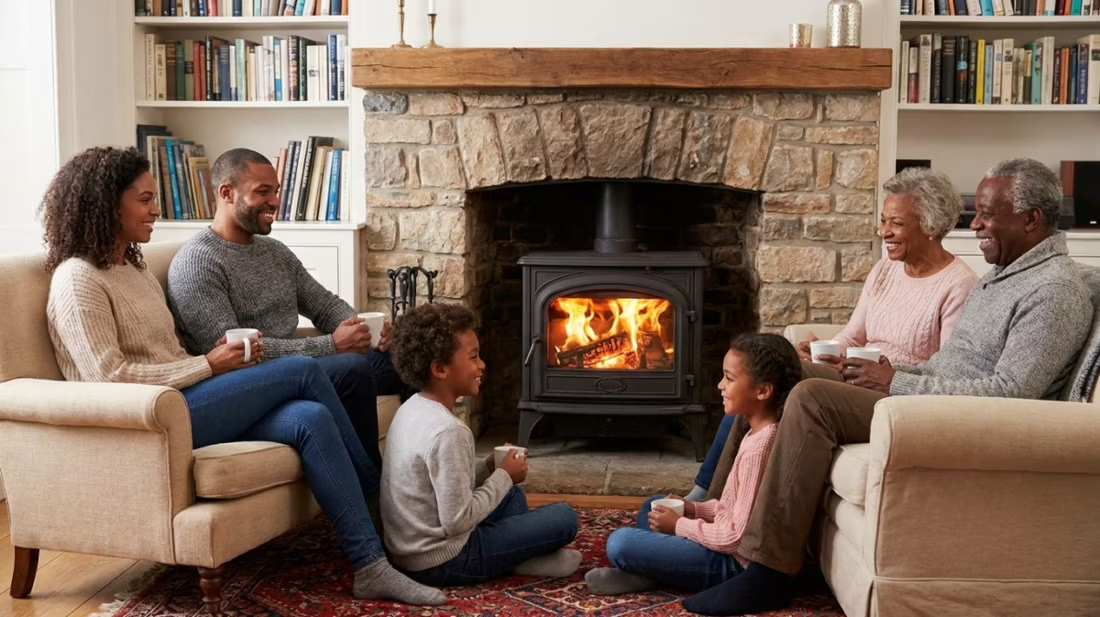
Four fuels. One honest answer for Candler County.
Three steps. No salesperson until you're ready.
Tell us about your project
Your zip code, your situation, and the fuel you're leaning toward—or let the answers point you to one.
See what's actually available
The brands dealers within 100 miles genuinely carry—real options, never a catalog mirage.
Get your dealer & Project Guide
A trusted local dealer, plus the free Project Guide & Parts List that names every component of the job.
Frequently Asked Questions
Which fuel makes the most sense in Candler County's climate?
With only about 1,793 heating degree days a year and winter lows averaging 39°F, most Candler County homes don't need a primary wood-burning setup the way a household in Duluth MN would. Gas fireplaces and inserts are popular here for exactly that reason—instant heat on the occasional cold snap, no wood to split or stack, and low maintenance between uses. Wood stoves and fireplaces still have a real place, especially with oak and hickory as reliable local firewood—dense hardwoods that burn clean and slow compared to the pine that's also common in the county. Pellet stoves work well for homeowners who want wood-style ambiance without processing their own fuel, and local supply from Lignetics, Hamer Pellet Fuel, and Greenway Renewable Energy keeps that option practical. Electric fireplaces are a strong fit for supplemental warmth in a bedroom or den, since the county's heating load rarely justifies a full-time electric heating appliance as the sole heat source.
Do I need a permit to install a fireplace in Candler County?
Most new wood stove, gas fireplace, gas insert, and pellet stove installations require a building permit, and gas installations typically need a separate gas line permit handled by a licensed gas fitter. Electric fireplaces are usually exempt unless the installation involves new wiring or a built-in with hardwired electrical work. Permitting in Candler County runs through the county building department for unincorporated areas, with the City of Metter handling permits for installations inside city limits. Most local hearth retailers we match homeowners with will pull the permit as part of the installation, so it's rarely something you have to manage yourself.
Are there any wood-burning restrictions in Candler County?
No—Candler County has no air quality non-attainment designation and no winter inversion issues like you'd find in a mountain basin such as Bozeman MT, so there are no mandatory or voluntary burn-curtailment days here. That said, new wood stove installations still need to meet current EPA emissions standards, and a certified stove burning dry, seasoned oak or hickory will run cleaner and more efficiently than an older uncertified unit burning green pine. There's no local ordinance restricting wood smoke, but neighbors close together in Metter or Pulaski are still worth being considerate of on a still, humid evening.
Can one local retailer handle wood, gas, pellet, and electric?
In a county with a population under 4,500, most hearth retailers who serve Candler County are based in a larger nearby trade hub and cover multiple fuel types rather than specializing narrowly—that's the practical reality of serving a smaller rural market. When we match you with a dealer, we confirm which fuels they actually stock and install rather than assuming a one-size-fits-all catalog; a shop that's strong on gas fireplace conversions may not carry the same depth in wood inserts, and vice versa. That's part of what the matching process is for—connecting you with someone who genuinely carries and can install the fuel type you want, not just whoever is closest.
How does hearth service and installation work for rural parts of Candler County?
Because Candler County is largely rural outside of Metter and Pulaski, most hearth retailers and service technicians are based in a regional hub and travel into the county for installs and annual service. That's standard for this part of Georgia's coastal plain. Expect service techs to bundle rural stops when possible, so scheduling a chimney sweep or gas inspection a few weeks ahead of cold weather—rather than waiting for the first freeze—usually gets you a faster appointment. Given the short heating season here, late summer or early fall is typically the easiest time to book.
What does fireplace installation typically cost across fuel types in Candler County?
Costs run lower here than in high-HDD climates, in part because venting and clearance requirements are the same nationally but homes rarely need oversized units. Wood stove or insert installation: roughly $4,000–$8,000 depending on chimney condition and whether it's new construction. Gas fireplace, insert, or stove: roughly $4,000–$9,500, with propane conversions common outside Metter's natural gas service area. Pellet stove or insert: roughly $4,000–$6,500 for a typical install. Electric fireplace: $200–$2,500 for the unit itself, plus $300–$1,000 in labor for anything beyond a plug-and-play unit. The county + fuel pages above break these down further with dealer-specific pricing.
Can I install a fireplace myself?
If you're putting a fire in your house on purpose, it's best to work with an expert. Unless you're genuinely experienced in framing, gas line, vent pipe, and the national code on clearances to combustibles, have a professional do it—and ideally the same company that sells you the fireplace, so warranty, service, and liability all live under one roof.
I know I want a fireplace—where do I actually start?
Do two things today: snap a photo of the wall or fireplace you want to transform, and take a tape measure to the space—width, height, depth. Those two artifacts answer most of a hearth professional's first questions. Then settle fuel (wood, gas, pellet, or electric) and set a realistic budget: $3,900–$5,500 covers fireplace, vent, and basic install for most homes.
What is an in-home preview and do I need one?
It's a visit where a hearth professional measures your space, confirms the model you picked actually works in your home, and walks the specs—framing, gas line, venting, finish work—before anything is ordered. Some details you just can't know until you see the house. Never make a down payment without one; it's the single most-skipped step that burns buyers.
How much should I budget for a fireplace?
For an average home—covering the fireplace, the vent pipe, and basic installation—a budget between $3,900 and $5,500 gives you a lot of options across wood, gas, and pellet. By the time you add finish work, gas line, and electrical, the average complete installation lands between $5,000 and $12,000 all-in. In a remodel or new build, a good rule is to put about 2.5% of the total project cost toward the fireplace.
Stove and Fireplace Dealers in Candler County
Listings include WhyFire partner dealers, dealers we have verified as authorized for the brands we recommend, and established local businesses that carry hearth products. Every listing shows which one it is. The ones marked Preferred run on WhyFire's software, so they can show you real pricing and book your appointment right here. No manufacturer pays for placement. How we verify dealers →
L.a. Waters Furniture
Thompson Gas - Statesboro
Thompson Gas
Travertine And More
Get matched with a local Candler County dealer.
Pick your fuel below and we'll send you a free Project Guide & Parts List—the parts, the vent kit, and a recommended local dealer who can actually install it in Metter, Pulaski, or anywhere else in the county.
Find Your Fireplace →