
Find your fireplace in Banks County.
Wood, gas, pellet, and electric fireplace resources for the whole county—from Homer out to Baldwin, Alto, and the Lake Hartwell side of the line. Pick a fuel and get matched with a local dealer who actually installs it here.
Every Project Starts From One of These Five Situations
Mild Piedmont winters, a modest heating season, and a county still built on wood heat.
Banks County sits in the northeast Georgia foothills between Gainesville and Commerce, rolling terrain in the 900–1,200 foot range with Lake Hartwell forming much of the eastern edge. Winters here are mild by national standards—average lows near 31°F and a modest heating season put the county well below the heating load of a place like Bozeman or Fargo, with a heating season that's really just December through February for most homes. What that mild climate doesn't change is how the county heats itself: with roughly 3,000 residents spread across small towns and a lot of wooded acreage, oak, pine, and hickory cut from private land remain a normal, practical fuel source, especially outside Homer and Baldwin where natural gas service doesn't reach.
Because Banks County isn't in an ozone non-attainment area, there's none of the burn-curtailment complexity that shows up closer to Atlanta—no yellow-day restrictions on wood stoves here. That simplicity, combined with limited natural gas infrastructure in the rural parts of the county, is why propane fills the gas role for most households, and why pellet stoves from brands like Lignetics and Hamer Pellet Fuel have a foothold as a lower-maintenance alternative to cutting and stacking wood. This hub rolls up hearth retailers, service techs, and fuel suppliers across the whole county, from Homer down to Alto and Maysville and out toward the Lula line. Pick your fuel below for local dealers, install costs, and recommendations specific to your town.
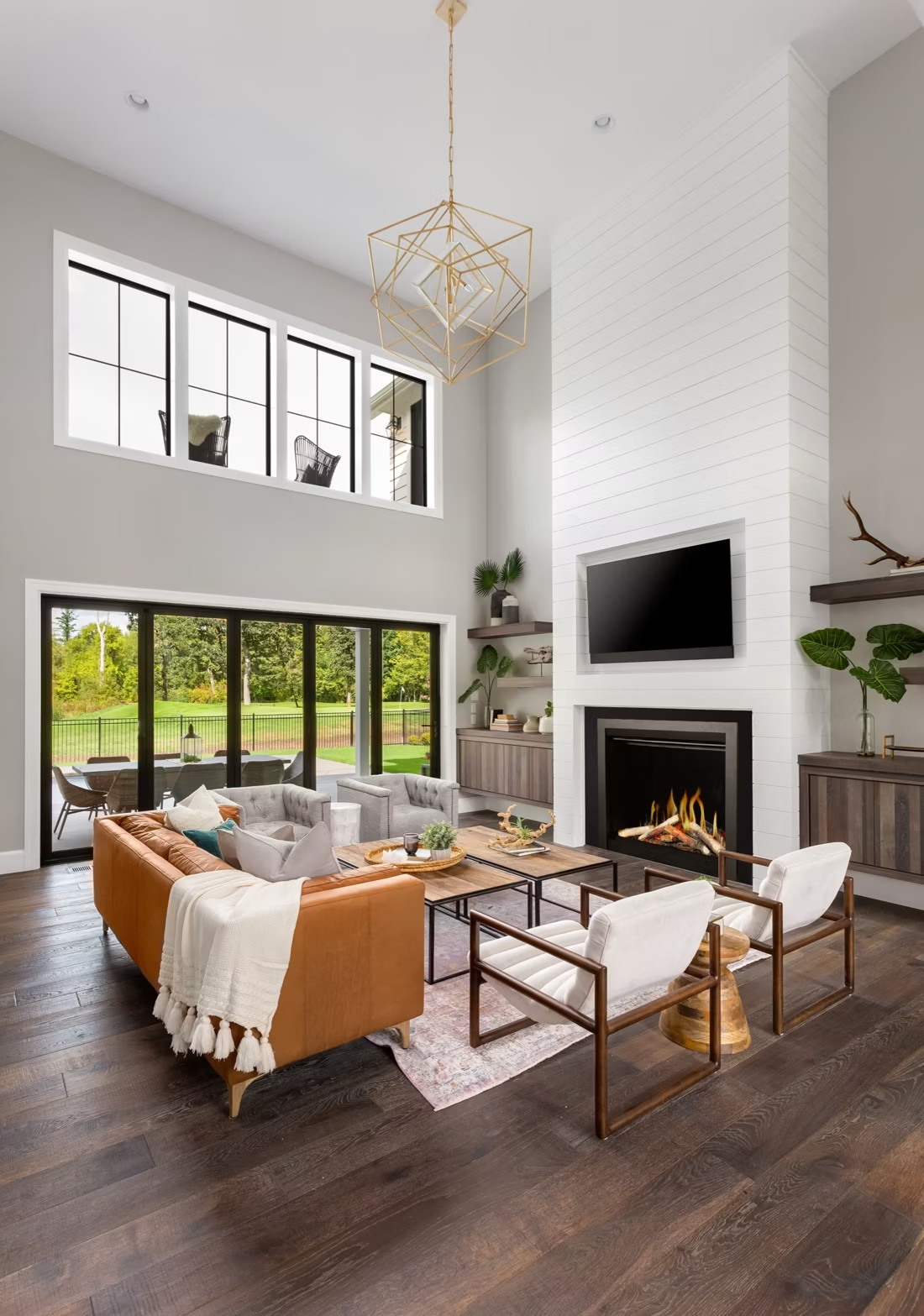
Four fuels. One honest answer for Banks County.
Three steps. No salesperson until you're ready.
Tell us about your project
Your zip code, your situation, and the fuel you're leaning toward—or let the answers point you to one.
See what's actually available
The brands dealers within 100 miles genuinely carry—real options, never a catalog mirage.
Get your dealer & Project Guide
A trusted local dealer, plus the free Project Guide & Parts List that names every component of the job.
Frequently Asked Questions
Which fireplace fuel makes the most sense in Banks County?
All four fuels work here, and the right pick has more to do with your property than the weather—a Banks County winter, with its modest heating season, is mild compared to most of the country. Wood remains common in the rural parts of the county simply because oak, pine, and hickory are already growing on a lot of properties, and a mid-size wood stove is plenty for the handful of genuinely cold weeks each year. Propane, not piped natural gas, is the practical 'gas' option outside Homer and Baldwin, since municipal gas infrastructure doesn't extend into most of the county. Pellet stoves from Lignetics or Hamer Pellet Fuel appeal to homeowners who want wood-like heat without splitting and stacking. Electric fireplaces do well as a supplemental or ambiance option almost anywhere in the county—the mild climate means they can realistically handle shoulder-season heating in a smaller room without straining.
Do I need a permit to install a wood stove or fireplace in Banks County?
In most cases, yes. New wood stove and insert installations typically require a permit through the Banks County Building Department, and any new construction or masonry chimney work follows the same process. If you're switching to propane, the gas line and tank connection need to be handled by a licensed propane technician, and that work is generally inspected separately from the stove or fireplace install itself. Pellet stove installs are permitted much like wood units. Electric fireplaces usually don't require a permit unless you're adding a dedicated circuit for a built-in unit. Most retailers we match homeowners with in Banks County handle this paperwork as part of the installation, so it's rarely something you're navigating on your own.
Are there burn restrictions or air quality rules I need to worry about?
No—Banks County has no designated air quality concerns and isn't in an ozone non-attainment area, unlike counties closer to the Atlanta metro that see summer ozone action days affecting outdoor burning. That means there's no curtailment schedule or seasonal restriction on wood stove use here. The only air quality consideration worth keeping in mind is a well-maintained stove: a properly sized, EPA-certified unit burning seasoned oak or hickory produces far less smoke than an older, unlisted stove burning green wood, which matters for your neighbors even without a regulatory requirement behind it.
Can I find a retailer that carries more than one fuel type?
Yes, and it's actually the norm here rather than the exception. Because Banks County is small enough that most hearth retailers are based in nearby Commerce or Gainesville and drive in for installs, those dealers tend to stock wood, pellet, propane-gas, and electric units side by side rather than specializing narrowly. That's useful if you're weighing wood against pellet, or trying to decide whether a propane insert makes more sense than running electric baseboard in a room addition. We match you with the retailer whose fuel lineup and service area actually cover your part of the county.
How does installation and service work for homes outside Homer?
Most installation crews and service techs are based outside the county in Commerce or Gainesville and travel into Homer, Baldwin, Alto, and Maysville on a regular route, so a rural address near Lake Hartwell or out toward the county line isn't unusual for them to service. Expect a modest trip fee for the more remote properties, and expect fall scheduling to fill up as households get their wood stoves and chimneys ready before the first cold snap in December. Booking your annual sweep or propane system check in late summer, ahead of that rush, is the easiest way to avoid a multi-week wait.
What does a fireplace installation typically cost in Banks County?
Costs run fairly close to regional averages, with some variation depending on how much venting or gas-line work is involved. Wood stove and insert installs generally run $3,800–$8,000, with full chimney construction for new builds pushing higher. Propane fireplaces, inserts, and stoves typically land around $4,000–$10,000 depending on whether a new tank or line run is needed. Pellet stove installs generally fall in the $4,000–$7,000 range. Electric fireplaces are the most affordable entry point—$200–$3,000 for the unit, plus $400–$1,200 in labor for anything beyond a simple plug-in placement. The county + fuel pages above break these numbers down further with local retailer pricing.
Can a fireplace actually lower my heating bill?
Yes—by creating a comfort zone. A furnace heats every square foot of the house just to warm the one room you're in; a gas fireplace on low burns roughly a sixth of the gas a typical furnace does. Set the furnace around 55–60 degrees as a baseline, then heat the rooms your family actually uses. Families who heat this way commonly save $20–$60 a month.
Does a fireplace add value to my home?
On average, a fireplace adds back to the home about the same amount you spent installing it. Add the monthly savings from heating the rooms you actually use instead of the whole house—often hundreds of dollars a year—and the value case is strong before you even count what a fire does for how your family uses the room.
Can I install a fireplace myself?
If you're putting a fire in your house on purpose, it's best to work with an expert. Unless you're genuinely experienced in framing, gas line, vent pipe, and the national code on clearances to combustibles, have a professional do it—and ideally the same company that sells you the fireplace, so warranty, service, and liability all live under one roof.
Wood, gas, pellet, or electric—how do I choose?
Match the fuel to your life, not the other way around. Wood: lowest fuel cost and total power-outage independence, but you're hauling and stacking. Gas: press a button, set a thermostat, no maintenance to speak of. Pellet: wood economics with automatic feeding, in exchange for weekly cleaning and a need for electricity. Electric: plugs in anywhere with honest supplemental heat. Nobody regrets the fuel that fits how they actually live.
Stove and Fireplace Dealers in Banks County
Listings include WhyFire partner dealers, dealers we have verified as authorized for the brands we recommend, and established local businesses that carry hearth products. Every listing shows which one it is. The ones marked Preferred run on WhyFire's software, so they can show you real pricing and book your appointment right here. No manufacturer pays for placement. How we verify dealers →
Toccoa Service Gas Company Inc.
The Luck Cricket
Maddox Feed & Seed
Southern Chimney Sweep
Blossman Gas And Appliance
Get matched with a local Banks County dealer.
Pick your fuel below and we'll put together a free Project Guide & Parts List—the right unit, the vent kit it needs, and the local dealer we recommend for your project.
Find Your Fireplace →