
A pellet stove in Tampa is the exception, not the rule.
With such a short, mild winter heating season and winter lows averaging 53°F, Tampa almost never needs a pellet stove for warmth. If you still want one, here's what actually applies to your home.
Every Project Starts From One of These Five Situations
Why pellet heat rarely fits Tampa's climate.
Tampa sits at 49 feet of elevation in climate zone 2A, where the average winter low is 53°F and the winter heating season is short and mild. Compare that to a place like Duluth, MN, which has a long, brutal winter heating season lasting many months—Tampa homes simply don't accumulate the sustained cold that pellet stoves are built to solve. Most Tampa winters bring a handful of nights near freezing, not the weeks of single-digit cold that justify a hopper-fed heating appliance running around the clock.
That said, pellet stoves aren't unheard of here. I occasionally match Tampa homeowners who moved from colder states and miss the specific look and feel of a pellet fire, who own a second property up north and want the same setup at both houses, or who simply like the ambiance and steady glow more than they need the BTUs. If that's you, a trusted local dealer can tell you honestly whether it's a good fit for your specific house—including the humidity and storage issues that don't come up in colder, drier climates.
Three steps. No salesperson until you're ready.
Tell us about your project
Your zip code, your situation, and the fuel you're leaning toward—or let the answers point you to one.
See what's actually available
The brands dealers within 100 miles genuinely carry—real options, never a catalog mirage.
Get your dealer & Project Guide
A trusted local dealer, plus the free Project Guide & Parts List that names every component of the job.
Frequently Asked Questions
Does a pellet stove make sense for a Tampa home?
For most Tampa homes, no—not as a primary or even meaningful supplemental heat source. With such a short, mild winter heating season and winter lows averaging 53°F, the handful of cold nights Tampa sees don't come close to justifying the fuel storage, hopper-feeding, and venting a pellet stove requires. Central HVAC handles the rare cold snap just fine. Where a pellet stove does make sense is ambiance-driven: homeowners who like the look of a live flame and steady glow, or who split time between Tampa and a colder property, sometimes install one anyway. If that's your situation, a local dealer can walk you through whether it's worth the investment for your specific use case.
Why would anyone install a pellet stove in a place like Tampa?
The Tampa homeowners who go this route usually fall into one of a few categories: retirees or transplants from colder states (Ohio, Michigan, the Northeast) who grew up with pellet or wood heat and want the same ambiance in their Florida home; owners of a second property in a colder climate who want a matching setup here; and homeowners who simply like the visual and sound of a real fire more than any Florida home actually needs supplemental heat for. None of these are wrong reasons—but they're aesthetic and lifestyle reasons, not heating-necessity reasons, and it's worth going in with that expectation.
How much does pellet stove installation cost in Tampa?
Because pellet stoves are uncommon in Hillsborough County, pricing isn't as standardized locally as it is in colder markets where installers do this work every week. Nationally, a pellet stove installation typically runs in the $3,000–$7,000 range depending on the unit and whether venting needs to be run through an exterior wall—Tampa installations tend to land on the simpler, lower end of that range since most homes don't have an existing masonry chimney to work around. Because so few local dealers stock pellet equipment routinely, getting a firm quote usually means requesting one directly; that's part of what the free Project Guide & Parts List is for.
Will a pellet stove keep my home warm during a hurricane power outage?
Not reliably, and this catches people off guard. Pellet stoves depend on electricity to run the auger that feeds fuel and the blower that circulates heat—cut the power, and the stove stops working, even with a full hopper. For Tampa homeowners thinking about pellet heat as hurricane-season backup, that's a real limitation. A pellet stove paired with a home generator can work, but if backup heat during outages is the actual goal, a wood-burning option or a battery-backed gas unit is generally the more dependable choice for this region's storm risk.
What pellet brands are available to Tampa homeowners?
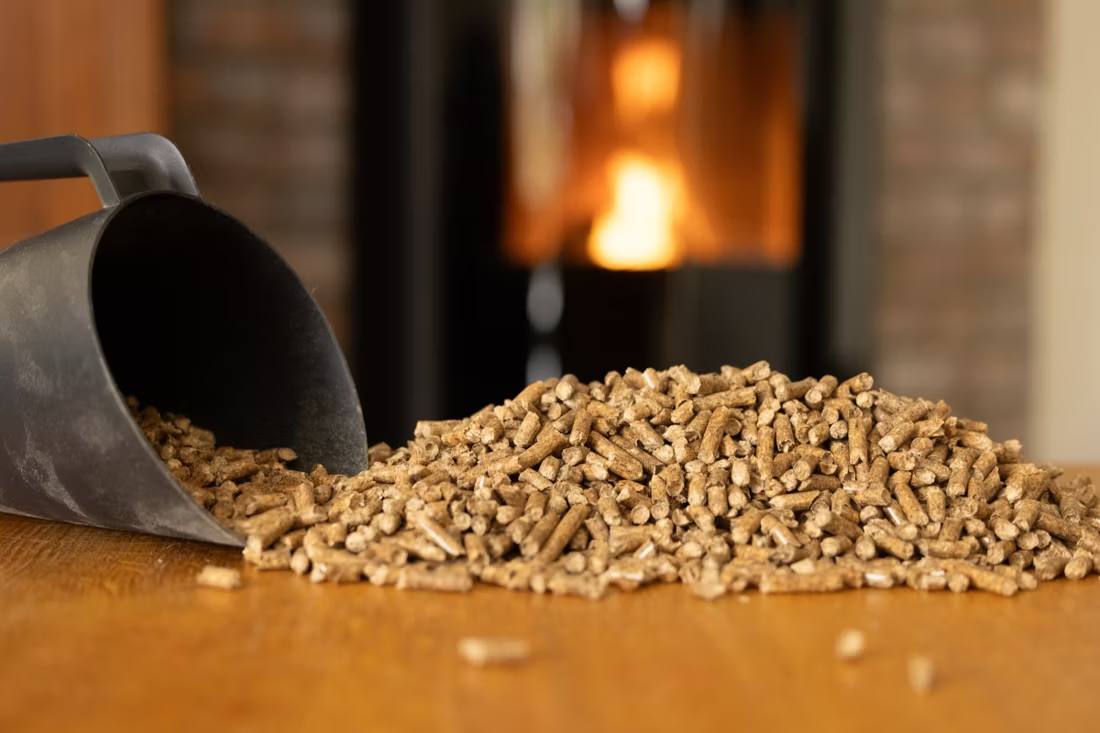
Regional suppliers like Lignetics, Hamer Pellet Fuel, and Greenway Renewable Energy distribute in the broader Southeast and can typically be sourced through farm and feed stores or ordered through a dealer, even though pellet stoves themselves are far less common on Tampa showroom floors than gas or electric units. Because demand is low, don't expect the pellet aisle at a big-box store to be reliably stocked—a local hearth dealer who can order both the stove and a steady pellet supply is a better bet than trying to source fuel piecemeal.
Does Tampa's humidity affect pellet stoves or pellet storage?
Yes, and this is one of the more overlooked issues for pellet heat in a Gulf Coast climate like Tampa's. Wood pellets are compressed sawdust with no binding agent besides natural lignin, and they absorb ambient moisture quickly—Tampa's humidity, especially in an uninsulated garage or shed, can cause bagged pellets to swell, crumble, and jam a stove's auger within weeks if they're not kept in a sealed, climate-controlled space. Anyone installing a pellet stove here should plan on indoor, dehumidified storage rather than the garage stacking that works fine in a drier climate.
What's the difference between a pellet stove and a gas fireplace for a Tampa home?
Gas is the far more common and practical choice here, and it shows in how the two options compare for a Tampa house. A gas fireplace or insert lights instantly, requires no fuel storage or hopper refilling, and works whether you're using it for genuine warmth on a rare cold night or purely for ambiance during a normal Florida evening. A pellet stove requires you to manage a fuel supply, contend with humidity-related storage issues, and depend on electricity to run. For a home that wants a live flame with minimal upkeep, gas is the more natural fit in this climate; pellet remains the choice mainly for people specifically attached to that particular look and feel.
Do I need a permit to install a pellet stove in Tampa or Hillsborough County?
Yes—a mechanical or building permit is generally required for a new solid-fuel appliance installation, whether it's going through the City of Tampa's Construction Services Center or Hillsborough County's building department, depending on where the property sits. Because these installations are infrequent locally, it's worth confirming with your installer that they've pulled this specific type of permit before—a dealer who regularly handles gas fireplace permits in Tampa may need to double-check requirements that are more standard in colder states where pellet stoves are installed every season.
Should I get a wood-burning fireplace instead of a pellet stove in Tampa?
Both are unusual choices for Tampa's climate for the same underlying reason—the winter heating season here is so short and mild that it just doesn't create real heating demand. If you go the wood route, local species like oak and pine are readily available and burn well, and a wood fireplace has the advantage of working without electricity during storm outages, which a pellet stove can't do. If you're drawn to pellet heat specifically for its cleaner burn, automated feed, and lower ash output, that convenience comes at the cost of an electrical dependency that matters more here than in colder states. A local dealer can walk through both options against your specific reasons for wanting one.
What's the difference between an insert and a zero-clearance fireplace?
An insert is a fireplace that slides into a pre-existing wood-burning fireplace—if you don't have one, there's nothing to insert it into. A zero-clearance fireplace is built into a framed wall, which makes it the answer for remodels and new construction. Simple test: existing masonry fireplace means insert; blank or framed wall means zero-clearance.
Why is my open fireplace making my house colder?
Open fireplaces suck—literally. As the fire burns, it consumes air your furnace already paid to heat and pulls it out through the chimney, so the house is actually colder after the fire goes out than before you lit it. An insert fixes this: it seals the chimney, puts fixed glass across the front, and turns that hole in your house into a real heat source.
Can I install a fireplace myself?
If you're putting a fire in your house on purpose, it's best to work with an expert. Unless you're genuinely experienced in framing, gas line, vent pipe, and the national code on clearances to combustibles, have a professional do it—and ideally the same company that sells you the fireplace, so warranty, service, and liability all live under one roof.
How much should I budget for a fireplace?
For an average home—covering the fireplace, the vent pipe, and basic installation—a budget between $3,900 and $5,500 gives you a lot of options across wood, gas, and pellet. By the time you add finish work, gas line, and electrical, the average complete installation lands between $5,000 and $12,000 all-in. In a remodel or new build, a good rule is to put about 2.5% of the total project cost toward the fireplace.
Nearby Dealers
Hearth shops serving Tampa and the surrounding area. Every listing shows whether it is a WhyFire partner, a dealer we have verified as authorized for the brands we recommend, or a local business carrying hearth products. No manufacturer pays for placement. How we verify dealers →
The Appliance Plug
Soleic Outdoor Kitchens
Sharper Image Pools
Kugel & Sons Fireplaces
Stone Outdoor Kitchens LLC
Outdoor Kitchen Company
Associated Construction Products
Urban Concepts Modern Patio And Fireplace
McCabinet
Creative Outdoor Kitchens
A Plus Fireplace
Pellet Brands Stocked Around Tampa
Manufacturers will point you to the nearest stocking dealer.
Find your pellet stove option in Tampa.
Tell us about your home and why you're considering pellet heat, and we'll connect you with a trusted local dealer plus a free Project Guide & Parts List—an honest plan for what's actually realistic to install near you.
Find Your Fireplace →