
A Cozy Ambiance for Central Florida's Cool Nights.
Pellet heat isn't the norm in Orlando, but for the right home—a great room, a lanai retreat, a vacation property—it can still make sense. Here's an honest look, plus a way to connect with a real local dealer.
Every Project Starts From One of These Five Situations
Pellet stoves are the exception, not the rule, here.
Orlando sits in climate zone 2A at just 97 feet of elevation, with an average winter low around 50°F and only about 525 heating degree days a year. Compare that to a place like Duluth, Minnesota, which racks up over 9,000 heating degree days annually—homes there genuinely need a stove running most of the winter. In Orange County, most houses go entire winters without ever needing supplemental heat at all, which is exactly why pellet stoves show up here far less often than they do in colder parts of the country.
That said, a small number of Orlando homeowners do install pellet stoves or inserts—usually for the ambiance of a real flame during the occasional cold snap, in a great room or lanai that gets chilly on the rare January night, or in vacation and rental properties near the theme park corridor (including areas within the Reedy Creek Improvement District) where guests appreciate the look even if the heat is rarely needed. Pellet brands like Lignetics, Hamer Pellet Fuel, and Greenway Renewable Energy are distributed regionally, so fuel is findable, but local demand is thin enough that most hearth retailers stock only a handful of pellet models rather than a full lineup.
Three steps. No salesperson until you're ready.
Tell us about your project
Your zip code, your situation, and the fuel you're leaning toward—or let the answers point you to one.
See what's actually available
The brands dealers within 100 miles genuinely carry—real options, never a catalog mirage.
Get your dealer & Project Guide
A trusted local dealer, plus the free Project Guide & Parts List that names every component of the job.
Frequently Asked Questions
Are pellet stoves actually used in Orlando?
Rarely, and it's worth saying plainly: with only about 525 heating degree days a year and winter lows averaging 50°F, most Orlando homes have no real heating need, let alone a need for a dedicated wood-pellet appliance. The homeowners who do install one are usually after the look and feel of a real fire rather than functional heat—in a media room, a lanai, or a second home where the owner is used to pellet heat from somewhere colder. If you're weighing pellet against other options for pure ambiance, a gas fireplace or insert is the far more common choice in this market and tends to be easier to source locally.
How much does a pellet stove installation cost in Orlando?
There isn't a deep well of local pricing data here because installations are uncommon, but nationally, a pellet stove or insert install typically runs $3,000 to $6,500 depending on the unit, whether venting needs to be run through an exterior wall, and whether an existing masonry fireplace needs conversion work. Because so few Orlando hearth retailers stock pellet units regularly, expect the unit itself to sometimes be special-ordered, which can add a few weeks to the timeline compared to a gas fireplace install.
Do pellet stoves need electricity to run, and does that matter in Orlando?
Yes—pellet stoves rely on an electric auger to feed fuel and a blower to circulate heat, so they go dead the moment the power does. That's an important consideration in a market served by Duke Energy Florida and Reedy Creek Improvement District, where hurricane season brings the real risk of multi-day outages. Unlike a wood stove, a pellet unit won't function as backup heat during a storm-related blackout—which is one more reason they're a niche choice here rather than a practical one. If backup heat during outages is the goal, that's a conversation worth having with a local dealer before you commit to pellet.
Can I actually buy pellet fuel in Orlando?
Yes, though selection is thinner than in colder markets. Regional brands including Lignetics, Hamer Pellet Fuel, and Greenway Renewable Energy distribute through the Southeast, and a handful of hardware stores and hearth retailers in the Orlando area carry bagged pellets, particularly leading into the cooler months of December and January. Because turnover is slower here than in a high-demand market, it's worth asking your dealer about storage—bags that sit too long in Florida's humidity are more prone to the moisture problems described below.
Where do pellet stoves make the most sense in the Orlando area?
The installs I see most often are in vacation homes and short-term rentals near the theme park corridor, where owners want a cozy visual feature for guests photos and the rare cold evening, and in newer great rooms or converted lanais where a homeowner relocating from a colder climate wants a familiar heat source even if it's used only a handful of nights a year. Full-time primary residences installing pellet purely for heat are uncommon in Orange County—the heating load simply doesn't justify it for most homes.
Do I need a permit to install a pellet stove in Orlando?
Generally yes—a building permit is required for a new solid-fuel appliance installation, whether that's through the City of Orlando Permitting Services division or the Orange County Building Safety division depending on your address. The permit process is standard hearth-industry procedure and most local installers will handle the paperwork as part of the job. Given how few pellet installs happen in this area, it's worth confirming with your specific jurisdiction that the reviewer is familiar with pellet-specific venting requirements, since gas fireplace permits are far more routine here.
Should I get a pellet stove or a gas fireplace instead?
For most Orlando homes, gas is the more practical and more commonly installed option—natural gas and propane fireplaces are rated standard for this market, with established local dealers, technicians, and parts availability. Pellet stoves require sourcing fuel, cleaning ash, and running on electricity that can fail exactly when a storm knocks out power. If what you want is the visual and ambiance of a real flame without the upkeep, gas will almost always be the simpler path in Central Florida. Pellet only makes sense if you specifically want the wood-pellet flame pattern and burn character, or you're replicating a stove you already loved in a colder climate.
Is there anything unique about maintaining a pellet stove in a humid climate like Orlando's?
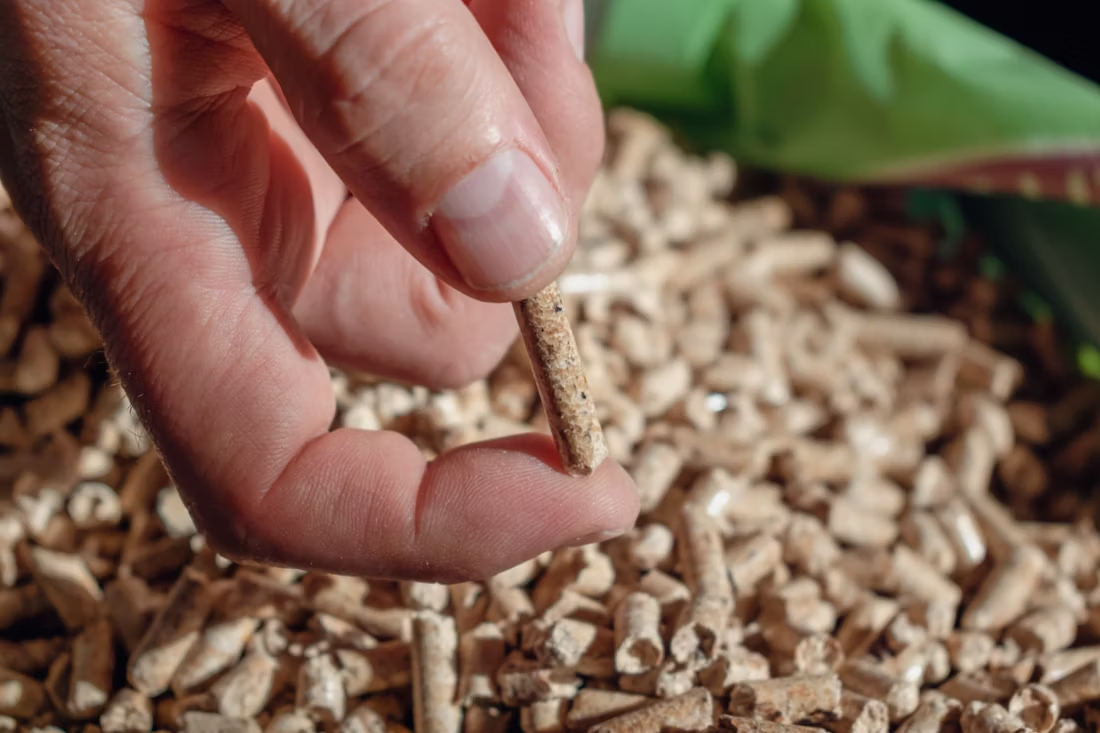
Yes—Florida's humidity is genuinely a factor. Wood pellets are compressed sawdust with no binder, and they absorb moisture readily; bags stored in a garage or shed through a humid Orlando summer can swell, soften, and clog the auger feed system if they're not kept sealed and dry. If you go the pellet route, plan to store fuel indoors in a climate-controlled space and buy in smaller quantities more often, rather than stockpiling a season's worth the way you might in a drier, colder climate.
Pellet vs. wood—does either make sense for an Orlando home?
Both are considered rare fuel choices for this market given the minimal heating need, but they serve different homeowners. Wood, using species like oak, mahogany, or pine that are locally familiar, appeals to people who want the full ritual of a real fire and don't mind ash and smoke. Pellet offers a cleaner, more automated version of that flame with thermostatic control, but depends on electricity and sourced fuel that's less readily available here than in colder states. If ambiance is the primary goal and you want the lowest-maintenance option, most Orlando homeowners end up choosing gas over either—but if you specifically want a wood-pellet flame, a local dealer can tell you which models are realistically serviceable in this area.
Why is my open fireplace making my house colder?
Open fireplaces suck—literally. As the fire burns, it consumes air your furnace already paid to heat and pulls it out through the chimney, so the house is actually colder after the fire goes out than before you lit it. An insert fixes this: it seals the chimney, puts fixed glass across the front, and turns that hole in your house into a real heat source.
What's the difference between an insert and a zero-clearance fireplace?
An insert is a fireplace that slides into a pre-existing wood-burning fireplace—if you don't have one, there's nothing to insert it into. A zero-clearance fireplace is built into a framed wall, which makes it the answer for remodels and new construction. Simple test: existing masonry fireplace means insert; blank or framed wall means zero-clearance.
Can I install a fireplace myself?
If you're putting a fire in your house on purpose, it's best to work with an expert. Unless you're genuinely experienced in framing, gas line, vent pipe, and the national code on clearances to combustibles, have a professional do it—and ideally the same company that sells you the fireplace, so warranty, service, and liability all live under one roof.
Can a fireplace actually lower my heating bill?
Yes—by creating a comfort zone. A furnace heats every square foot of the house just to warm the one room you're in; a gas fireplace on low burns roughly a sixth of the gas a typical furnace does. Set the furnace around 55–60 degrees as a baseline, then heat the rooms your family actually uses. Families who heat this way commonly save $20–$60 a month.
Nearby Dealers
Hearth shops serving Orlando and the surrounding area. Every listing shows whether it is a WhyFire partner, a dealer we have verified as authorized for the brands we recommend, or a local business carrying hearth products. No manufacturer pays for placement. How we verify dealers →
Sams Gas Of Orlando
Central Florida Fireplaces & Gas Services, Inc.
Rutherford Equipment, Inc.
Orlando Outdoor Living LLC
Premium Outdoor Products
Thermotane Gas
Pellet Brands Stocked Around Orlando
Manufacturers will point you to the nearest stocking dealer.
Find your pellet stove in Orlando.
Tell us about your space and how you plan to use it, and we'll match you with a trusted local dealer who can tell you honestly whether pellet is the right call—plus a free Project Guide & Parts List with the exact components, vent kit, and installer recommendation for your home.
Find Your Fireplace →