
Real fireplace ambiance for Jacksonville homes, no chimney needed.
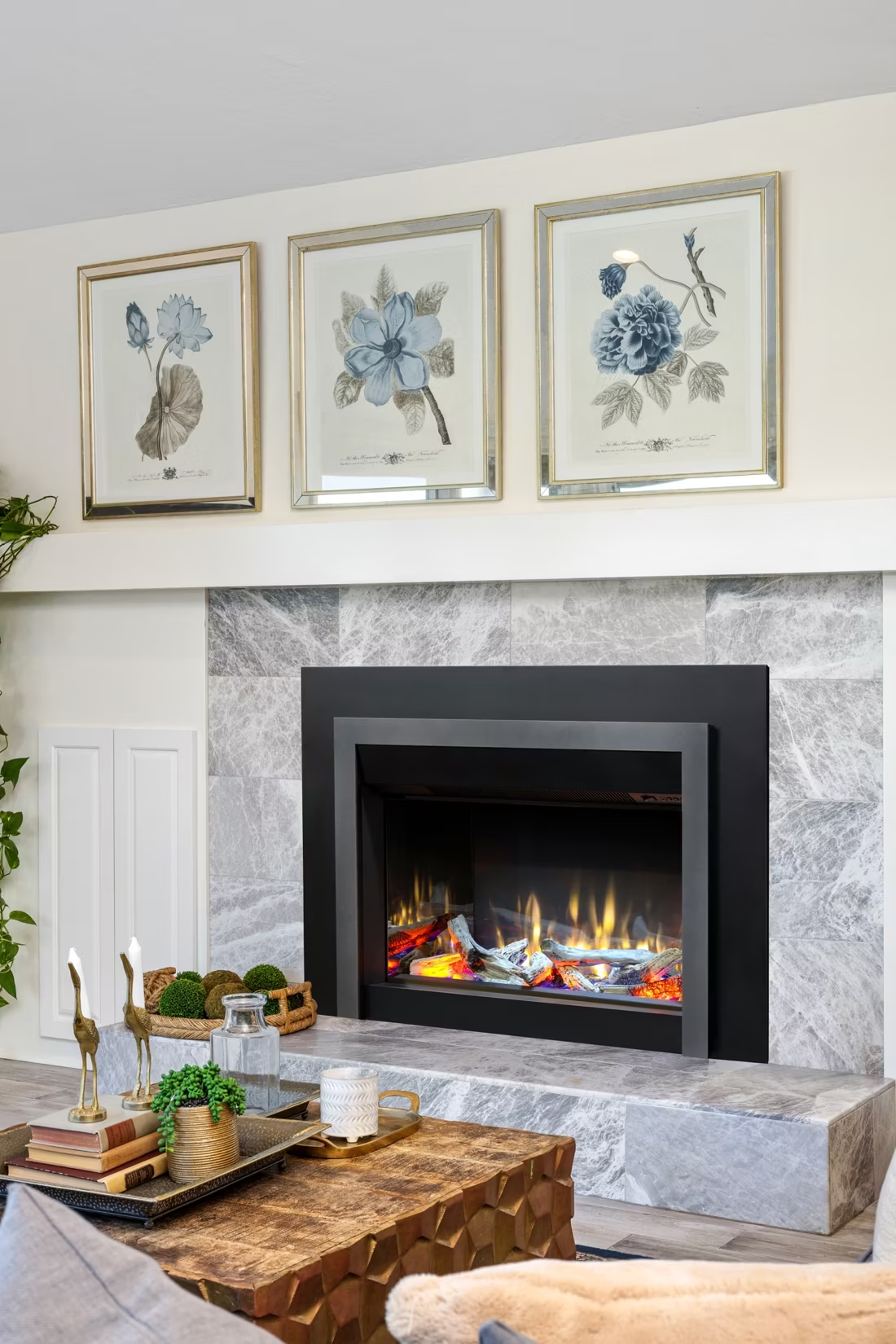
With winter lows averaging 47°F, Jacksonville rarely needs a wood-burning heat source. Electric inserts and mantels deliver the look and the glow—plug-in or hardwired, no venting, no masonry work.
Every Project Starts From One of These Five Situations
Jacksonville's mild winters make electric the practical choice.
Jacksonville sits in climate zone 2A at just 24 feet of elevation, with only a light winter heating load a year—compare that to a place like Duluth, Minnesota, which racks up nearly ten times the heating need. Winters here rarely demand serious heat; the average low is 47°F, and most homes lean on central HVAC for the handful of genuinely cold nights each year. That's exactly the kind of climate where an electric fireplace makes sense: it adds real ambiance and useful zone warmth for a cold snap or a chilly evening on the porch, without asking a household to manage a chimney, flue, or wood supply it will barely use.
Duval County is served by two electric utilities—JEA, the municipal utility covering most of the city, and Beaches Energy Services, which serves Jacksonville Beach, Atlantic Beach, and Neptune Beach. Residential rates run about 12.4 cents per kWh either way, which keeps an electric fireplace's running cost modest even used regularly for supplemental heat or evening ambiance in a Riverside bungalow, a San Marco condo, or a newer build out toward Mandarin.
Three steps. No salesperson until you're ready.
Tell us about your project
Your zip code, your situation, and the fuel you're leaning toward—or let the answers point you to one.
See what's actually available
The brands dealers within 100 miles genuinely carry—real options, never a catalog mirage.
Get your dealer & Project Guide
A trusted local dealer, plus the free Project Guide & Parts List that names every component of the job.
Frequently Asked Questions
How much does it cost to install an electric fireplace in Jacksonville?
Electric fireplaces are the least expensive hearth project to install because there's no chimney, no gas line, and no combustion venting to run. A basic plug-in wall-mounted unit or freestanding stove can go in for a few hundred dollars—often just the unit and a bracket. A built-in electric insert set into an existing masonry fireplace or a new mantel surround, including a dedicated 120V or 240V circuit run by a licensed electrician, typically lands in the $1,000–$3,000 range depending on the unit and any surround carpentry. Local dealers can quote a firm number once they know whether you're going plug-in or hardwired.
Do I need a permit to install an electric fireplace in Jacksonville?
A plug-in freestanding or wall-mounted unit that uses a standard outlet doesn't require a permit. If you're hardwiring a unit—common with built-in inserts and larger wall units that need a dedicated circuit—the electrical work needs to be pulled through the City of Jacksonville's Building Inspection Division and performed by a licensed electrician. Most hearth dealers either handle this directly or coordinate with an electrician as part of the install, so it's rarely something homeowners have to manage themselves.
Will an electric fireplace actually heat a room in Jacksonville, or is it just for looks?
Most electric fireplaces put out around 4,600–5,000 BTUs, enough to comfortably warm a single room—which is genuinely useful in Jacksonville given how few days a year call for real heat. With only a light winter heating load annually, an electric insert or stove is realistically a supplemental heat source: it takes the edge off a cool January morning or a rare 30s-and-windy night without you running central heat for the whole house. It's not designed to be a primary heat source the way a wood stove is in a place like Bozeman, Montana, and no local dealer would sell it to you that way.
What's the difference between an electric insert, a wall-mounted unit, and a mantel package?
An electric insert is built to slide into an existing masonry firebox—a common upgrade for older Jacksonville homes in neighborhoods like Riverside or Avondale that have a wood-burning fireplace nobody actually uses anymore. A wall-mounted unit hangs flat against drywall like a large TV and works in any room, condo included. A mantel package pairs an electric firebox with a surround and shelf, giving you a furniture-style fireplace with zero structural work. All three plug in or hardwire depending on the model's wattage, and none require venting.
Electric vs. gas fireplace—which makes more sense for a Jacksonville home?
Gas fireplaces are readily available in Jacksonville and give you a real flame with more heat output, but they need a gas line and either direct venting or careful vent-free sizing—meaningful cost and installation complexity. Electric skips all of that: no gas line, no venting, and a fraction of the install cost, which is part of why it's such a common choice in condos, beach cottages, and rental properties throughout Duval County where structural changes aren't practical. If you want a serious secondary heat source, gas has the edge; if you want ambiance and modest supplemental warmth with the least hassle, electric is usually the better fit here given how mild the climate is.
How much does it cost to run an electric fireplace in Jacksonville?
At JEA's or Beaches Energy Services' residential rate of roughly 12.4 cents per kWh, a typical 1,500-watt electric fireplace costs about 19 cents an hour to run on full heat, or a few cents an hour on flame-only ambiance mode with the heater switched off. Running one for a few hours most evenings through Jacksonville's short cool season adds up to a modest monthly cost—nowhere near what central heat or a whole-home electric furnace would run, since you're only warming the room you're in.
Does it matter whether JEA or Beaches Energy Services serves my house?
Not for the installation itself—both utilities' standard 120V/240V residential service works fine with any electric fireplace or insert. JEA serves the bulk of Jacksonville and Duval County, while Beaches Energy Services covers Jacksonville Beach, Atlantic Beach, and Neptune Beach. Rates between the two run close to identical (around 12.4 cents per kWh), so the practical difference for a fireplace project is essentially none—your electrician or dealer will handle either utility's service the same way.
I have an old wood-burning fireplace I never use—can I convert it to electric?
Yes, and it's one of the more common projects local dealers handle in Jacksonville's older housing stock, where many homes built with masonry fireplaces for oak or pine cordwood now sit unused given how rarely the climate calls for wood heat. An electric insert slides into the existing firebox, often with a simple surround kit to fill any gap, and gets wired to a nearby outlet or dedicated circuit. You keep the mantel and the look of the original fireplace, lose the smoke, ash, and chimney maintenance, and gain a unit you can run at the flip of a switch.
Are electric fireplaces a good option for condos and rental properties in Jacksonville?
Yes—this is where electric fireplaces are most common along the beaches and in downtown and Southbank condo buildings. Because there's no venting, chimney, or gas line involved, most HOAs and landlords have no objection to a plug-in freestanding unit, and even wall-mounted or insert models typically only require standard electrical work rather than any structural or exterior modification. It's often the only fireplace option that's realistically approved in a multi-unit building.
Do electric fireplaces actually produce heat?
Yes—most put out around 4,800–5,000 BTUs from a standard outlet, which comfortably warms a bedroom, office, or den as a comfort-zone heater. What they won't do is carry a whole house the way wood, gas, or pellet can. Think of electric as ambiance-first with honest supplemental heat: flames on with no heat in July, flames plus warmth in January.
What fireplace styles should I know before shopping?
Four cover most of the market: screen-front traditional (mesh front, open feel, fits craftsman homes), traditional door set (the classic look you grew up with), modern linear (wide, low, the statement piece for entertaining), and clean face contemporary (no trim—your tile or stone runs right to the fire's edge). Walk in knowing those four terms and you're ahead of most buyers.
How much should I budget for a fireplace?
For an average home—covering the fireplace, the vent pipe, and basic installation—a budget between $3,900 and $5,500 gives you a lot of options across wood, gas, and pellet. By the time you add finish work, gas line, and electrical, the average complete installation lands between $5,000 and $12,000 all-in. In a remodel or new build, a good rule is to put about 2.5% of the total project cost toward the fireplace.
What is an in-home preview and do I need one?
It's a visit where a hearth professional measures your space, confirms the model you picked actually works in your home, and walks the specs—framing, gas line, venting, finish work—before anything is ordered. Some details you just can't know until you see the house. Never make a down payment without one; it's the single most-skipped step that burns buyers.
Nearby Dealers
Hearth shops serving Jacksonville and the surrounding area. Every listing shows whether it is a WhyFire partner, a dealer we have verified as authorized for the brands we recommend, or a local business carrying hearth products. No manufacturer pays for placement. How we verify dealers →
Jacksonville Chimney Pros
Blossman Gas
Griffis Gas
Jax Outdoor Kitchens
EarthCore Industries
First Source Gas Appliances
Premier Gas & Grills
First Source Gas Appliances
Electric Service in Jacksonville
An electric fireplace's heater draws about 1,500 watts—pennies per hour at local rates.
Beaches Energy Services
Jea
Find your electric fireplace in Jacksonville.
Tell us about your home and we'll put together a free Project Guide & Parts List—the right electric unit for your space, the exact parts you'll need, and a trusted local dealer to install it.
Find Your Fireplace →