
Dependable heat for the high plains of Washington County.
Wood, gas, pellet, and electric fireplace resources for Akron, Otis, Woodrow, Cope, and the ranches and farms scattered across Washington County's open plains. Find the right unit and connect with a trusted local dealer, even in a county this sparsely populated.
Every Project Starts From One of These Five Situations
Wind, wide-open plains, and winters that mean business.
Washington County sits on Colorado's high plains east of the Front Range, with the county seat of Akron at roughly 4,660 feet—flat, wind-exposed, and largely treeless outside the cottonwood bottoms along the Republican River and Beaver Creek. With winters comparable to Bismarck, North Dakota's and average winter lows near 17°F, the heating season here runs about as long and cold as Bismarck, North Dakota's—and the near-constant plains wind makes it feel colder still, driving heat loss through older farmhouses and slab-built homes alike. Ponderosa pine, aspen, pinyon, and juniper are the wood species most commonly burned locally, but with only about 2,300 people spread across roughly 2,500 square miles of mostly agricultural land, very little of that wood grows in-county—most of it is trucked in from the foothills and western Colorado rather than cut nearby.
This hub covers hearth retailers, service technicians, and fuel suppliers serving every community in Washington County—Akron, Otis, Woodrow, Cope, Anton, and Lindon, plus the ranches and farmsteads in between. Because the county's population is small, some categories of business are thin on the ground here; expect a mix of Akron-based operators and dealers or technicians who travel in from Fort Morgan, Sterling, or Yuma County to cover this stretch of the plains. Pick your fuel below for local dealers, installation costs, and unit recommendations suited to a wind-driven, high-plains climate.
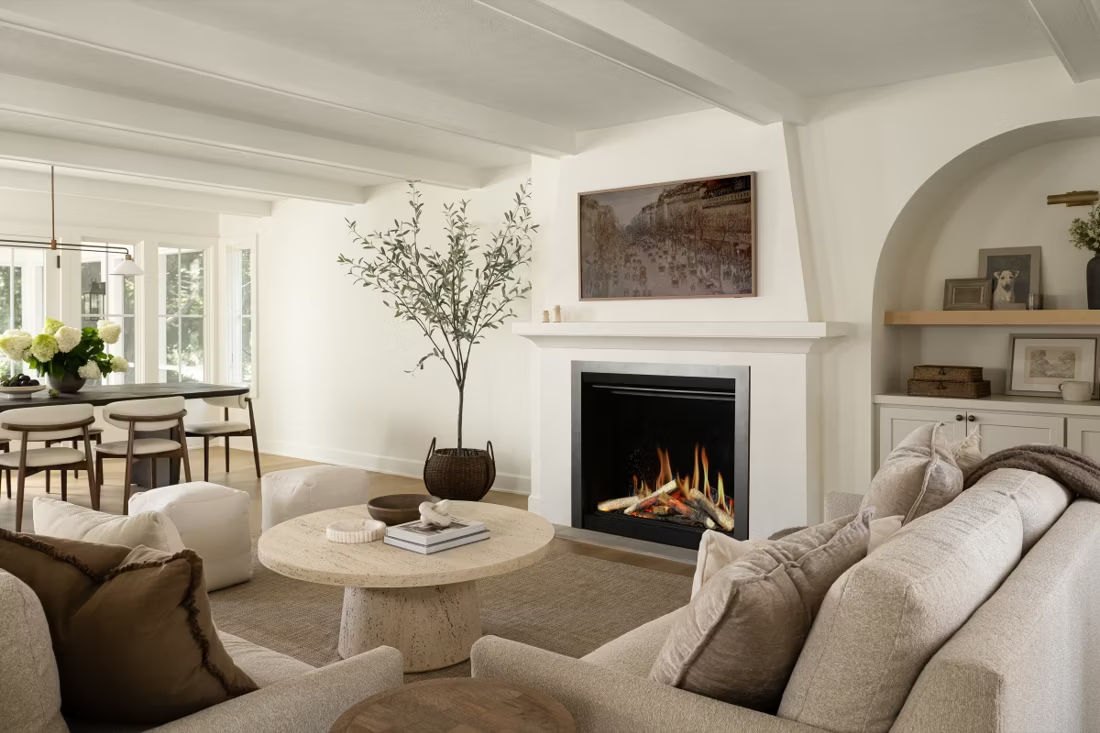
Four fuels. One honest answer for Washington County.
Three steps. No salesperson until you're ready.
Tell us about your project
Your zip code, your situation, and the fuel you're leaning toward—or let the answers point you to one.
See what's actually available
The brands dealers within 100 miles genuinely carry—real options, never a catalog mirage.
Get your dealer & Project Guide
A trusted local dealer, plus the free Project Guide & Parts List that names every component of the job.
Frequently Asked Questions
Which fuel works best in Washington County?
All four fuels see regular use here, but the mix looks different than in a mountain or metro county. Propane is the workhorse for most homes outside Akron, since piped natural gas doesn't reach far into the county's rural stretches—propane fireplaces and inserts give instant heat without relying on the grid, which matters when plains windstorms take down power lines. Wood stoves remain common on ranches and farmsteads, especially catalytic models that hold a long, steady burn through cold, windy nights—though nearly all the ponderosa pine, aspen, pinyon, and juniper burned locally is hauled in rather than cut in-county. Pellet stoves are a solid middle option where Bear Mountain, Lignetics, or Forest Energy bags are stocked locally, offering wood-style ambiance without the woodpile. Electric units work well as supplemental heat in bedrooms or additions but aren't relied on as a primary heat source given how long and cold the season runs.
Do I need a permit to install a fireplace in Washington County?
In most cases, yes. New wood stoves, wood inserts, gas or propane fireplaces, gas inserts, gas stoves, and pellet stoves generally require a building permit through the Washington County Building Department. Propane installations also involve a licensed gas-fitter for the tank and line connection, which is typically handled separately from the appliance permit. Wood-burning appliances need to meet current EPA emissions standards to be installed new. Electric fireplaces are usually exempt from permitting unless the installation involves new wiring or a dedicated circuit. Most retailers who serve the county—whether based in Akron or traveling from Fort Morgan or Sterling—will handle the permit paperwork as part of the installation.
Are there air quality restrictions on wood burning in Washington County?
Washington County doesn't have the winter temperature-inversion problems that affect basin communities in the mountains, but wildfire smoke is a real seasonal concern—smoke from fires in the Rockies or further west can drift across the plains and settle over the county during late summer and fall, sometimes prompting air quality advisories. During those periods, it's worth limiting outdoor burning and being mindful of additional smoke sources. Day-to-day, there's no routine burn-curtailment program like you'd see in a non-attainment area, but new wood stoves still need to meet EPA emissions standards, and keeping your stove properly maintained and burning seasoned wood cuts down on smoke output regardless of the season.
Can one local retailer handle all four fuel types in a county this small?
It's less common here than in a larger county, simply because Washington County's population doesn't support a large number of storefronts. Some Akron-area dealers carry two or three fuel types—often propane and wood, with pellet stoves as a secondary line—while a full four-fuel selection (wood, gas, pellet, and electric) is more likely to come from a dealer based in Fort Morgan, Sterling, or the northern Denver metro area willing to travel out for installation. If you want to compare fuel types side by side on a working display, it's worth checking which nearby town has the broadest selection before committing to the closest option.
How does installation and service work in such a rural, spread-out county?
Expect more coordination than you'd need in a denser county. Technicians and installers typically travel from Fort Morgan, Sterling, or Yuma, so a travel fee—often $50–$100 depending on distance from Akron—is common for service calls. Winter wind and occasional ice on county roads can also affect scheduling, so booking annual chimney sweeps or gas inspections in late summer or early fall, before the first hard freeze, is more reliable than trying to get someone out during a January storm. For propane-heated homes, it's also worth confirming tank delivery schedules with your supplier ahead of the coldest stretches, since rural delivery routes can be affected by the same weather that makes service calls harder.
What's the typical cost range for fireplace installation across all fuel types in Washington County?
Costs run in line with other rural Colorado counties, sometimes with an added travel charge factored into labor since most installers are based outside the county. Wood stove or insert installation: roughly $4,500–$9,000, more for new construction requiring full chimney work. Propane or gas fireplace, insert, or stove: roughly $4,000–$10,500, depending on tank setup or line work and venting. Pellet stove or insert: roughly $4,500–$7,500 for a typical install. Electric fireplace: $200–$3,000 for the unit itself, plus $400–$1,200 in labor for anything beyond a plug-and-play unit. See the county + fuel pages above for cost breakdowns tied to specific local dealers.
Does a fireplace add value to my home?
On average, a fireplace adds back to the home about the same amount you spent installing it. Add the monthly savings from heating the rooms you actually use instead of the whole house—often hundreds of dollars a year—and the value case is strong before you even count what a fire does for how your family uses the room.
Can I install a fireplace myself?
If you're putting a fire in your house on purpose, it's best to work with an expert. Unless you're genuinely experienced in framing, gas line, vent pipe, and the national code on clearances to combustibles, have a professional do it—and ideally the same company that sells you the fireplace, so warranty, service, and liability all live under one roof.
What is an in-home preview and do I need one?
It's a visit where a hearth professional measures your space, confirms the model you picked actually works in your home, and walks the specs—framing, gas line, venting, finish work—before anything is ordered. Some details you just can't know until you see the house. Never make a down payment without one; it's the single most-skipped step that burns buyers.
Can a fireplace actually lower my heating bill?
Yes—by creating a comfort zone. A furnace heats every square foot of the house just to warm the one room you're in; a gas fireplace on low burns roughly a sixth of the gas a typical furnace does. Set the furnace around 55–60 degrees as a baseline, then heat the rooms your family actually uses. Families who heat this way commonly save $20–$60 a month.
Stove and Fireplace Dealers in Washington County
Listings include WhyFire partner dealers, dealers we have verified as authorized for the brands we recommend, and established local businesses that carry hearth products. Every listing shows which one it is. The ones marked Preferred run on WhyFire's software, so they can show you real pricing and book your appointment right here. No manufacturer pays for placement. How we verify dealers →
Millers Landscaping Materials & Feed
Air Concepts
Plains Heating And Air Conditioning
Poulsen Ace Hardware
Advanced Comfort
Spa Brokers (Corporate)
Fireplace And Grill Experts - Service Only
Find your fireplace fit for Washington County.
Tell us about your home and we'll match you with a trusted local dealer and send a free Project Guide & Parts List—a plan for your fireplace project with the exact parts, including the vent kit, and the dealer we recommend for your part of the county.
Find Your Fireplace →