
Fireplace heat that works above 9,000 feet.
Wood, gas, pellet, and electric fireplace resources for Breckenridge, Frisco, Silverthorne, Dillon, Keystone, Copper Mountain, and every community in Summit County—matched with a trusted local dealer who installs for real mountain conditions.
Every Project Starts From One of These Five Situations
High-elevation heating across Summit County, Colorado.
Summit County sits almost entirely above 9,000 feet—Breckenridge at 9,600 feet, Frisco and Dillon near 9,100 feet, Copper Mountain above 9,700 feet—and Climate Zone 7 puts it among the coldest counties anywhere I've mapped, with a long, brutal heating season and an average winter low of 2°F. That's colder, on paper, than Bozeman, Montana. Wood heat still runs deep here: aspen, ponderosa pine, pinyon, and juniper come off White River National Forest land under Forest Service cutting permits, and a well-run catalytic stove can carry a cabin through a week of single-digit nights without much trouble. Summer wildfire smoke, not winter wood smoke, is the county's real air-quality concern—regional fires can blanket the valley for days at a time.
This hub rolls up hearth retailers, service technicians, and fuel suppliers across every town in the county—from Breckenridge and Blue River in the south to Silverthorne and Keystone up the valley, plus Copper Mountain, Montezuma, and the unincorporated pockets around Lake Dillon. Pick a fuel below for local dealers, real installed cost ranges, and units that are actually rated to perform at altitude—thinner air changes how a fireplace drafts and burns, and that matters more here than almost anywhere else in Colorado.
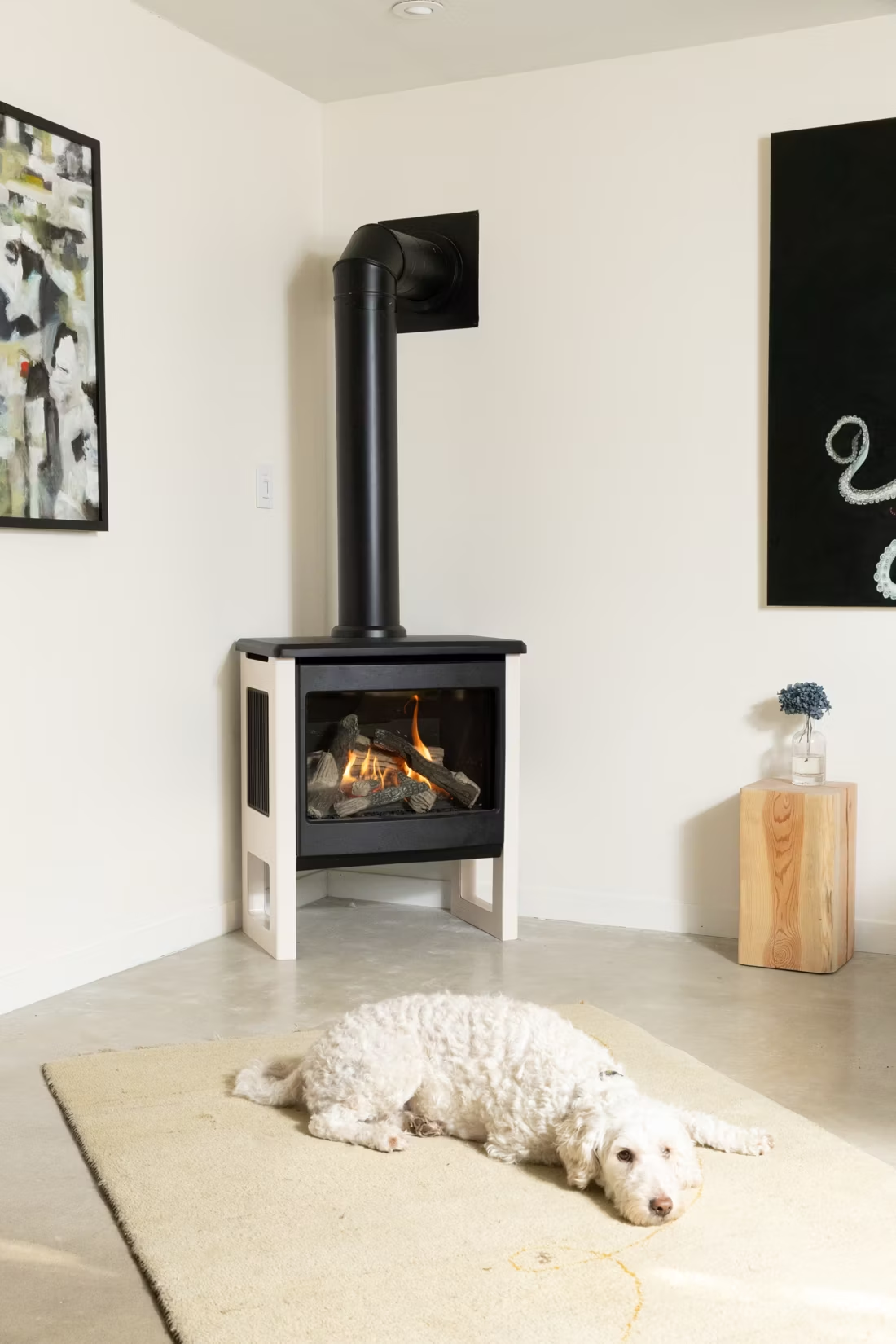
Four fuels. One honest answer for Summit County.
Three steps. No salesperson until you're ready.
Tell us about your project
Your zip code, your situation, and the fuel you're leaning toward—or let the answers point you to one.
See what's actually available
The brands dealers within 100 miles genuinely carry—real options, never a catalog mirage.
Get your dealer & Project Guide
A trusted local dealer, plus the free Project Guide & Parts List that names every component of the job.
Frequently Asked Questions
Which fuel works best in Summit County?
It depends on where you are in the county and how you use the property. Wood is still the backbone fuel for full-time residents and cabin owners—aspen, ponderosa pine, pinyon, and juniper are all locally available, and a catalytic stove like a Blaze King can hold a burn through a string of single-digit nights without constant reloading, which matters when a winter storm closes Vail Pass or Loveland Pass and a service call has to wait. Gas is the convenience choice, but piped natural gas only reaches parts of Breckenridge, Frisco, and Silverthorne—outside those pockets, most gas fireplaces run on propane, which means a tank and a delivery contract rather than a utility bill. Pellet stoves are a solid middle ground; Bear Mountain, Lignetics, and Forest Energy pellets are all sold locally, and pellet heat doesn't require splitting or seasoning wood at 9,000 feet, where firewood doesn't dry out as fast as it does at lower elevation. Electric fireplaces are supplemental at best here—with such a long, demanding winter heating season, no electric-only unit is carrying a Summit County winter as primary heat. Most full-time homes run wood or pellet as primary heat with gas or electric in secondary rooms.
Do I need a permit to install a fireplace in Summit County?
Yes, almost always. Breckenridge, Frisco, Silverthorne, and Dillon each run their own building department and issue their own permits for wood stoves, wood inserts, gas fireplaces, gas inserts, gas stoves, and pellet stoves; unincorporated parts of the county—Keystone, Copper Mountain, Montezuma—go through Summit County Community Development. Wood stoves need to meet current EPA emissions standards, and any gas work requires a separate gas-line permit pulled by a licensed gas fitter, whether you're on piped gas or converting a propane line. Built-in electric fireplaces that involve new wiring typically need an electrical permit; plug-in units generally don't. Most local hearth retailers handle the permit process as part of the installation quote, which is worth confirming up front—mountain-town permit offices can have longer review windows in the shoulder seasons when staff is thin.
Are there air quality or wildfire-smoke restrictions on burning in Summit County?
Not in the way you might expect. Summit County's wildfire-smoke concern is mostly a summer problem—regional fires in Colorado, Utah, and beyond can settle smoke into the Blue River and Ten Mile valleys for days, but that's a separate issue from winter wood-stove burning, and there's no routine winter burn-curtailment program here the way there is in some Western basins. What does matter locally is altitude: at 9,000 to 9,700 feet, thinner air changes draft and combustion efficiency, so a stove or fireplace rated for sea-level performance can underperform or smoke back into the room if it isn't sized and vented for elevation. Ask any local retailer whether the specific model and venting kit are rated for your town's elevation before you buy—that's the question that actually matters here, more than any regulatory burn day.
Can one local hearth retailer handle all four fuel types?
Several do, and it's worth asking directly rather than assuming. Retailers based in Frisco and Silverthorne tend to carry the broadest range—wood, gas, and pellet—because they're serving both full-time mountain households and second-home owners who want push-button convenience. Smaller Breckenridge-area shops sometimes specialize in wood and gas inserts for historic cabins and skip electric almost entirely, since built-in electric units are a small share of demand at this altitude and price point. If you're not sure which fuel fits your home—a Breckenridge Victorian versus a Keystone ski condo versus a Blue River off-grid cabin—a multi-fuel dealer who can walk you through wood, gas, and pellet side by side is the more useful starting point.
How does service work in remote parts of Summit County?
Service crews covering Summit County are based mainly along the Highway 9 / I-70 corridor and drive out to Keystone, Copper Mountain, Montezuma, and the more remote pockets around Lake Dillon and the Blue River. Winter storms complicate scheduling more than distance does—a closure on Vail Pass or Loveland Pass, or a heavy dump that shuts down side roads, can push a service appointment by a day or two even for a technician who's only 15 miles away. Pre-season chimney sweeps and gas inspections (August–October, before the passes get bad) are much easier to book than mid-winter emergency calls. If you're in a harder-to-reach spot, it's worth scheduling early, keeping a spare battery pack on hand for IPI gas units during outages, and having a backup fuel source—wood as a fallback for a pellet stove, for instance—in case a storm delays a repair.
What's the typical cost range for fireplace installation across all fuel types in Summit County?
Costs run higher here than in most Colorado counties, largely because of altitude-rated equipment and mountain-town labor rates. Wood stove or insert installation: roughly $5,500–$10,500 for a typical retrofit, more for new chimney construction in a Breckenridge or Frisco cabin. Gas fireplace, insert, or stove: about $5,000–$12,000, with propane conversions and longer gas-line runs pushing toward the top of that range in outlying areas like Montezuma. Pellet stove or insert: roughly $5,000–$8,000 installed. Electric fireplace: $200–$3,000 for the unit itself, plus $400–$1,200 in labor for anything beyond a plug-and-play wall unit. These are ballpark figures—the county + fuel pages above break down local retailer pricing in more detail.
What is an in-home preview and do I need one?
It's a visit where a hearth professional measures your space, confirms the model you picked actually works in your home, and walks the specs—framing, gas line, venting, finish work—before anything is ordered. Some details you just can't know until you see the house. Never make a down payment without one; it's the single most-skipped step that burns buyers.
How much should I budget for a fireplace?
For an average home—covering the fireplace, the vent pipe, and basic installation—a budget between $3,900 and $5,500 gives you a lot of options across wood, gas, and pellet. By the time you add finish work, gas line, and electrical, the average complete installation lands between $5,000 and $12,000 all-in. In a remodel or new build, a good rule is to put about 2.5% of the total project cost toward the fireplace.
Can I install a fireplace myself?
If you're putting a fire in your house on purpose, it's best to work with an expert. Unless you're genuinely experienced in framing, gas line, vent pipe, and the national code on clearances to combustibles, have a professional do it—and ideally the same company that sells you the fireplace, so warranty, service, and liability all live under one roof.
Can a fireplace actually lower my heating bill?
Yes—by creating a comfort zone. A furnace heats every square foot of the house just to warm the one room you're in; a gas fireplace on low burns roughly a sixth of the gas a typical furnace does. Set the furnace around 55–60 degrees as a baseline, then heat the rooms your family actually uses. Families who heat this way commonly save $20–$60 a month.
Stove and Fireplace Dealers in Summit County
Listings include WhyFire partner dealers, dealers we have verified as authorized for the brands we recommend, and established local businesses that carry hearth products. Every listing shows which one it is. The ones marked Preferred run on WhyFire's software, so they can show you real pricing and book your appointment right here. No manufacturer pays for placement. How we verify dealers →
Service Monkey Fireplace
Western Fireplace Supply
Black Diamond Fireplace
The Warm Store
Home & Hearth Outfitters
Rio Grande Building Materials
Chimney Doctors
Legacy Building Specialties
Find your fireplace in Summit County.
Tell us your fuel and your town, and we'll match you with a trusted local dealer and send over a free Project Guide & Parts List—the exact parts, including the vent kit rated for your elevation, plus the dealer we'd recommend for your project.
Find Your Fireplace →