
Find the right fireplace for a Rio Blanco County winter.
Wood, gas, pellet, and electric fireplace resources for Meeker, Rangely, and the ranches and rural communities that make up the rest of Rio Blanco County. Find the right unit and connect with a trusted local hearth retailer.
Every Project Starts From One of These Five Situations
Long winters at elevation across Rio Blanco County, Colorado.
Rio Blanco County sits in the high desert of northwest Colorado, bordered by the White River National Forest and drained by the White River itself. Elevations run from around 5,300 feet in Rangely up past 9,000 feet in the Danforth Hills and Flat Tops, and winters are long and genuinely cold—an average low of 8°F and a heating season on par with Bozeman, Montana. Wood heat has deep roots here: ponderosa pine, aspen, pinyon, and juniper are the common local species, much of it cut under permit from the White River National Forest. Wildfire smoke is the county's main air-quality concern, more a summer and fall issue than a winter one, but it still shapes how residents store and manage wood.
This hub rolls up every hearth resource in the county—retailers, service technicians, and fuel suppliers—across Meeker (the county seat), Rangely, and the smaller unincorporated communities strung along the White River and Highway 64. With a population under 5,000 spread across more than 3,000 square miles, dealers and technicians here often cover long driving radii. Pick your fuel below for specifics on local dealers, install costs, and recommended units for your project.
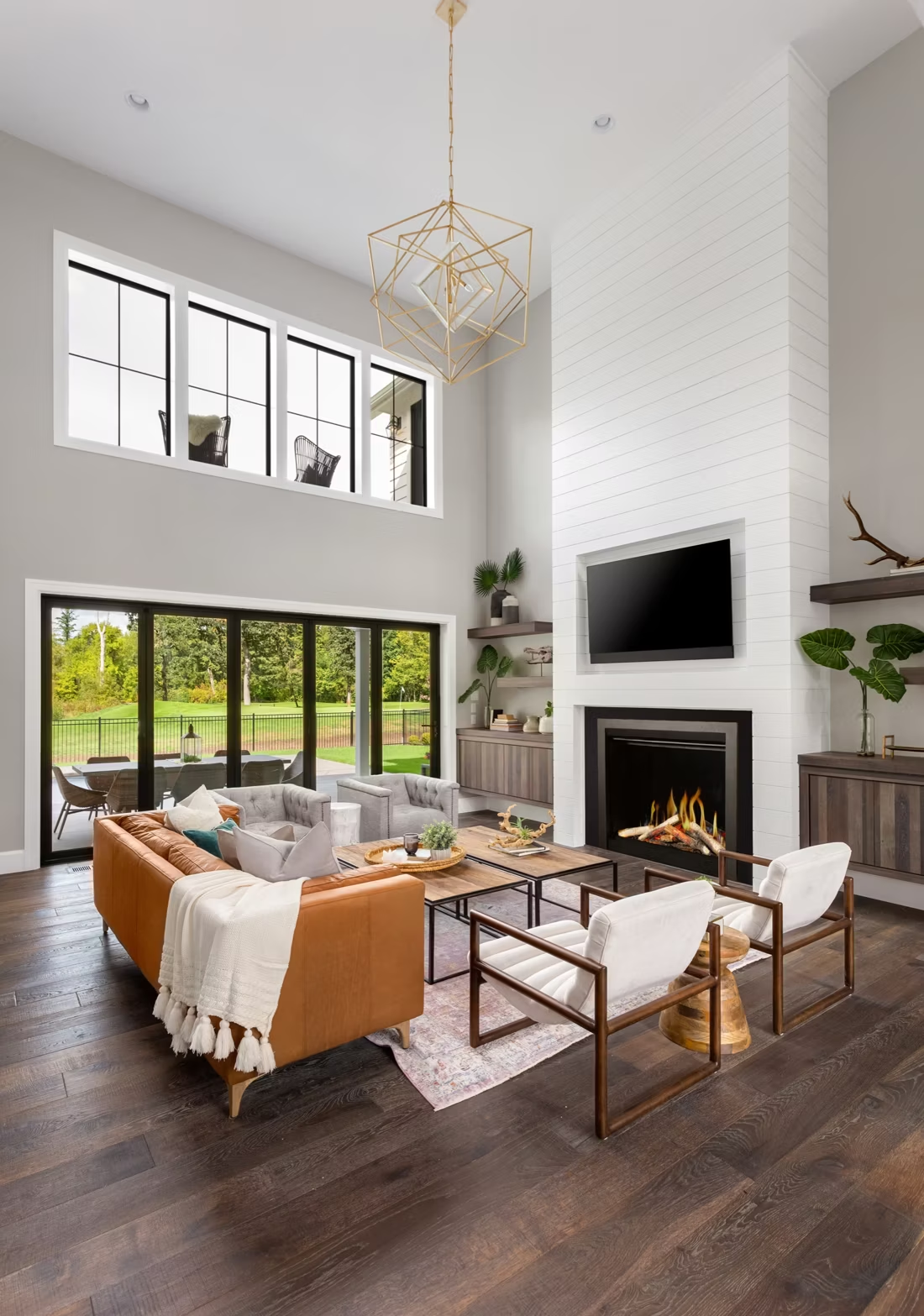
Four fuels. One honest answer for Rio Blanco County.
Wood
54 models available near Rio Blanco County.
Find your wood stove →Gas
111 models available near Rio Blanco County.
Find your gas fireplace →Pellet
See what's available near Rio Blanco County.
Find your pellet stove →Electric
See what's available near Rio Blanco County.
Find your electric fireplace →Three steps. No salesperson until you're ready.
Tell us about your project
Your zip code, your situation, and the fuel you're leaning toward—or let the answers point you to one.
See what's actually available
The brands dealers within 100 miles genuinely carry—real options, never a catalog mirage.
Get your dealer & Project Guide
A trusted local dealer, plus the free Project Guide & Parts List that names every component of the job.
Frequently Asked Questions
Which fuel works best in Rio Blanco County?
It depends on the home and how remote it is. Wood remains the backbone fuel for a lot of Rio Blanco County—cutting permits through the White River National Forest keep fuel costs down, and a catalytic or high-mass stove burning ponderosa pine, aspen, pinyon, or juniper can carry a house through an 8°F night without much trouble. Gas out here is mostly propane rather than piped natural gas, given how spread out the county is—it's the low-labor choice for homes in Meeker or Rangely that don't want to manage a woodpile. Pellet stoves are a solid middle option; Bear Mountain, Lignetics, and Forest Energy pellets are all sold regionally, so fuel supply isn't the obstacle wood-cutting can be for people without a permit or a truck. Electric fireplaces show up mostly as supplemental heat—a bedroom or a den—since electric resistance heat alone isn't practical against a heating season as long and cold as Bozeman, Montana's. Most full-time residents end up running wood or pellet as primary heat with gas or electric as backup.
Do I need a permit to install a fireplace in Rio Blanco County?
Generally yes. New wood stoves, wood inserts, gas fireplaces, gas inserts, and pellet stoves installed in Rio Blanco County go through the county building department, and wood-burning appliances need to meet current EPA emissions standards to pass inspection. Gas installs also require licensed gas-fitter work for the line connection, whether you're on propane—the more common setup out here—or a local gas hookup in town. Simple plug-in electric units usually don't need a permit; built-in electric fireplaces that involve new wiring typically do. If you're cutting your own firewood on national forest land, that's a separate matter—a cutting permit through White River National Forest, not a building permit. Most hearth retailers who install for a living handle the county paperwork as part of the job.
Does wildfire smoke affect wood burning in Rio Blanco County?
Indirectly, yes. Rio Blanco County's main air-quality issue is wildfire smoke, which tends to show up in summer and early fall rather than during the heating season itself—but it still shapes how people manage wood here. Many residents keep firewood stacked and seasoned well away from structures as part of defensible-space practice, and dry, smoky summers can affect the timing and availability of cutting permits on White River National Forest land. Winter wood-smoke complaints are less of an issue in a county this sparsely populated—under 5,000 residents across more than 3,000 square miles—than in tighter valley towns, but a well-seasoned load of ponderosa pine or aspen in an EPA-certified stove still burns cleaner than green or wet wood in an older unit.
Can one local dealer handle all four fuel types in a county this small?
Often, yes—and it has to be that way. With fewer than 5,000 people spread across the county, Rio Blanco doesn't support a lot of specialty single-fuel shops. Retailers based in Meeker or Rangely tend to carry wood, gas, and pellet units side by side, and stock or special-order electric fireplaces as a smaller line. For less common configurations, some residents work with dealers based in Craig or Grand Junction who travel into the county for installs. If you're comparing fuels, ask a local retailer what they actually keep in stock versus what they special-order—in a market this size, showroom floor space is limited and lead times matter.
How does service and installation work in such a rural county?
Plan ahead. Technicians covering Rio Blanco County are often based in Meeker, Rangely, Craig, or as far as Grand Junction, and a service call to an outlying ranch or a place along Highway 64 can mean an hour or more of drive time each way—expect a trip fee on top of the service cost for the more remote addresses. Pre-season appointments in late summer and early fall book up faster than emergency mid-winter calls, and given how cold it gets—average lows around 8°F—a chimney or gas unit that fails in January is a real problem, not an inconvenience. Keeping a backup heat source, a wood stove as backup for a gas system or vice versa, is common practice for exactly that reason.
What's the typical cost range for fireplace installation across fuel types in Rio Blanco County?
Wood stove or insert: roughly $4,000–$8,500 for a typical install, more for new chimney construction on an off-grid or new-build property. Gas fireplace, insert, or stove: about $4,000–$10,000, with propane tank and line setup often adding to the cost since piped natural gas isn't universal out here. Pellet stove or insert: around $4,000–$7,000 for most installs. Electric fireplace: $200–$3,000 for the unit itself, plus $400–$1,200 in labor for anything beyond a plug-and-play install. Because the county is so spread out, factor in a travel or trip charge from whichever town—Meeker, Rangely, or a dealer coming in from Craig—your installer is based in.
How much should I budget for a fireplace?
For an average home—covering the fireplace, the vent pipe, and basic installation—a budget between $3,900 and $5,500 gives you a lot of options across wood, gas, and pellet. By the time you add finish work, gas line, and electrical, the average complete installation lands between $5,000 and $12,000 all-in. In a remodel or new build, a good rule is to put about 2.5% of the total project cost toward the fireplace.
Does a fireplace add value to my home?
On average, a fireplace adds back to the home about the same amount you spent installing it. Add the monthly savings from heating the rooms you actually use instead of the whole house—often hundreds of dollars a year—and the value case is strong before you even count what a fire does for how your family uses the room.
Can I install a fireplace myself?
If you're putting a fire in your house on purpose, it's best to work with an expert. Unless you're genuinely experienced in framing, gas line, vent pipe, and the national code on clearances to combustibles, have a professional do it—and ideally the same company that sells you the fireplace, so warranty, service, and liability all live under one roof.
What are the biggest mistakes people make buying a fireplace?
Five come up constantly: budgeting for the unit but not the full job (vent, gas line, electrical, finish work); drowning in options instead of starting from style and fuel; buying without an in-home preview; handing installation to a handyman instead of a pro; and giving up out of sheer indecision. Every one is avoidable with a clear plan—step one, step two, step three.
Stove and Fireplace Dealers in Rio Blanco County
Listings include WhyFire partner dealers, dealers we have verified as authorized for the brands we recommend, and established local businesses that carry hearth products. Every listing shows which one it is. The ones marked Preferred run on WhyFire's software, so they can show you real pricing and book your appointment right here. No manufacturer pays for placement. How we verify dealers →
Mjk Sales & Feed, Inc.
True North Fireplaces
Colorado Fireside - Glenwood
Fireplace West
Gas Products Corp
Woodstove Warehouse
Alpine Heating & Sheet Metal
Find your fireplace project in Rio Blanco County.
Tell us your fuel and your town—Meeker, Rangely, or somewhere in between—and we'll match you with a trusted local dealer and send a free Project Guide & Parts List for your install.
Find Your Fireplace →