
Reliable heat for Phillips County's high plains winters.
Fireplace resources for Holyoke, Haxtun, Paoli, and the farms in between. Stoves are uncommon out here—there's no local timber supply—but we'll tell you honestly where they still make sense.
Every Project Starts From One of These Five Situations
Farm country heat on Colorado's eastern plains.
Phillips County sits on Colorado's dryland-farming plains near the Nebraska border, population just under 3,500, spread across Holyoke, Haxtun, and the unincorporated community of Paoli. At around 3,750 feet, winters here run cold and windy—an average low of 13°F and a heating load in the same range as Buffalo, NY. There's little tree cover to break the wind, so ground blizzards (blowing snow with no new snowfall) are a real winter hazard, and homes are built to shrug off sustained cold rather than short cold snaps.
Because Phillips County is flat farmland with no national forest nearby, firewood has to be trucked in—from foothill timber stands or Nebraska river bottoms—and that makes wood stoves a niche choice rather than a primary heat source. Pellet stoves see the same limited uptake, even though ag and feed stores in the region stock brands like Bear Mountain and Lignetics. Most homes here heat with propane (little of the county has natural gas mains) or electric resistance and heat pumps. This hub focuses on what's actually installed and serviced locally—gas and electric—while pointing you to nearby dealers if wood or pellet is still what you want.
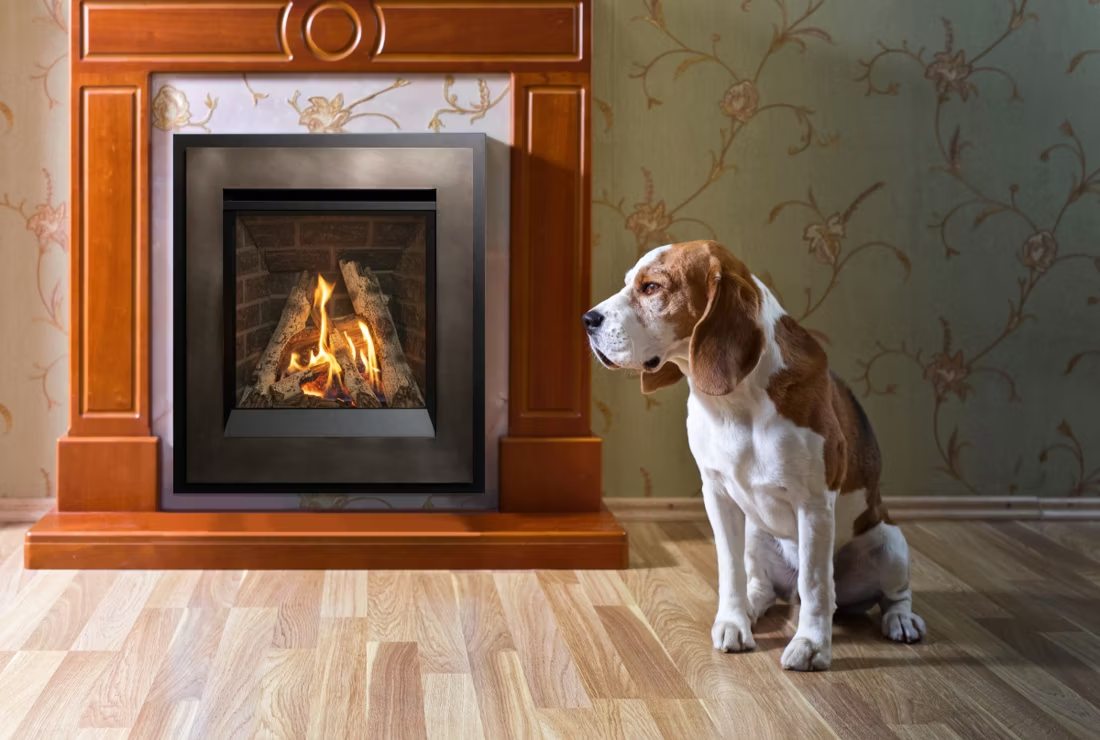
Four fuels. One honest answer for Phillips County.
Three steps. No salesperson until you're ready.
Tell us about your project
Your zip code, your situation, and the fuel you're leaning toward—or let the answers point you to one.
See what's actually available
The brands dealers within 100 miles genuinely carry—real options, never a catalog mirage.
Get your dealer & Project Guide
A trusted local dealer, plus the free Project Guide & Parts List that names every component of the job.
Frequently Asked Questions
Which fuel works best in Phillips County?
For most homes here, it's propane or electric. Phillips County has little to no natural gas main service, so propane fireplaces and inserts are the standard gas option—reliable instant heat with no woodpile labor, which matters on a working farm. Electric fireplaces and heat pump backup units cover secondary rooms and homes that want zero combustion. Wood stoves are genuinely rare—there's no local timber industry on this stretch of the eastern plains, and firewood has to be trucked in from foothill stands or Nebraska river bottoms, which pushes fuel costs well above what wood costs in mountain counties. A handful of homeowners still run a wood or pellet stove for ambiance or as an outage backup, but it's the exception, not the rule.
Do I need a permit to install a fireplace in Phillips County?
Yes, in most cases. Propane fireplace, insert, and stove installations require a building permit through the Phillips County building department, plus sign-off from a licensed propane installer on the gas line and tank connection. Electric fireplace installs typically don't need a permit unless they're hardwired built-ins requiring a new circuit, in which case an electrical permit applies. If you're one of the few homeowners installing a wood or pellet appliance, you'll still need a building permit and the unit has to meet current EPA emissions standards—most installers handling that work are based outside the county and can walk you through it.
Are there air quality restrictions on wood burning in Phillips County?
Not in the way Front Range counties see them. Phillips County doesn't run a formal wood-burning curtailment program, largely because so few homes burn wood as a primary heat source. The air quality concern out here is wildfire smoke drifting in from Western Slope and Rocky Mountain fires during summer and early fall, which affects outdoor air quality generally rather than triggering burn bans on the handful of wood stoves in the county. If you do install one, EPA 2020 NSPS-certified units are still the standard for any new installation.
Can one local retailer handle all four fuel types?
Not typically, and that's a function of the county's size. Dealers based in or near Holyoke and Haxtun mostly carry propane and electric fireplaces, since that's what the market here supports. If you want a wood or pellet stove, you're usually working with a dealer 30-60 miles out—in Sterling or across the Nebraska line near Sidney or Ogallala—who can special-order the unit and handle the install. Some ag and feed stores in the region stock pellet bags from Bear Mountain, Lignetics, and Forest Energy, but that's fuel supply, not stove sales—worth knowing if you already own a pellet stove but are shopping for a dealer.
How does fireplace service work in a county this small and spread out?
Most technicians serving Phillips County are based elsewhere and drive in—propane service techs and electricians from Sterling (about 30 miles) or from Nebraska Panhandle towns, and gas fitters who cover multiple rural counties on a route basis. Expect a trip charge for service calls, and expect to book ahead: pre-season appointments in September and October are far easier to land than an emergency call during a January ground blizzard, when roads may not be passable anyway. If you rely on a propane fireplace as backup heat, scheduling annual service before the first hard freeze is worth the planning.
What's the typical cost range for gas and electric fireplace installation in Phillips County?
Propane fireplace, insert, or stove installation typically runs $4,000-$9,000, depending on venting length and whether new gas line or tank work is needed—rural properties without existing propane infrastructure land at the higher end. Electric fireplaces run $200-$3,000 for the unit itself, plus $400-$1,200 in labor for anything beyond a simple plug-in, such as a wall-mount or built-in requiring a new circuit. Wood or pellet installations, on the rare occasion someone pursues one, tend to run higher than in timber-country counties—often $6,000-$12,000—once you factor in a traveling installer and the cost of trucked-in firewood or bagged pellets.
How much should I budget for a fireplace?
For an average home—covering the fireplace, the vent pipe, and basic installation—a budget between $3,900 and $5,500 gives you a lot of options across wood, gas, and pellet. By the time you add finish work, gas line, and electrical, the average complete installation lands between $5,000 and $12,000 all-in. In a remodel or new build, a good rule is to put about 2.5% of the total project cost toward the fireplace.
What is an in-home preview and do I need one?
It's a visit where a hearth professional measures your space, confirms the model you picked actually works in your home, and walks the specs—framing, gas line, venting, finish work—before anything is ordered. Some details you just can't know until you see the house. Never make a down payment without one; it's the single most-skipped step that burns buyers.
Does a fireplace add value to my home?
On average, a fireplace adds back to the home about the same amount you spent installing it. Add the monthly savings from heating the rooms you actually use instead of the whole house—often hundreds of dollars a year—and the value case is strong before you even count what a fire does for how your family uses the room.
Can I install a fireplace myself?
If you're putting a fire in your house on purpose, it's best to work with an expert. Unless you're genuinely experienced in framing, gas line, vent pipe, and the national code on clearances to combustibles, have a professional do it—and ideally the same company that sells you the fireplace, so warranty, service, and liability all live under one roof.
Stove and Fireplace Dealers in Phillips County
Listings include WhyFire partner dealers, dealers we have verified as authorized for the brands we recommend, and established local businesses that carry hearth products. Every listing shows which one it is. The ones marked Preferred run on WhyFire's software, so they can show you real pricing and book your appointment right here. No manufacturer pays for placement. How we verify dealers →
Air Concepts
Millers Landscaping Materials & Feed
Hearth & Tile Creations - Platte Construction, Inc
Lusk Heating & Ac
Find your fireplace in Phillips County.
Tell us about your home and we'll match you with a trusted local dealer and send a free Project Guide & Parts List—the exact parts, including the vent kit, and the recommended dealer for your gas or electric fireplace project in Phillips County.
Find Your Fireplace →