
Find a Fireplace Built for Kit Carson County Winters.
Wood, gas, pellet, and electric fireplace resources for every town and ranch community in Kit Carson County—from Burlington to Vona. Find the right unit for high-plains cold and connect with a trusted local hearth retailer.
Every Project Starts From One of These Five Situations
High plains winters and reliable heat in Kit Carson County, Colorado.
Kit Carson County sits on Colorado's eastern high plains along the Kansas border, crossed by I-70 and defined by dryland wheat and cattle country. With under 5,000 residents spread thin across Burlington, Flagler, Bethune, Seibert, Stratton, and Vona, homes here are often miles apart. Winters run cold and windy—average lows near 17°F and a winter heating load in the same range as Bismarck, North Dakota. Ponderosa pine, aspen, pinyon, and juniper firewood, much of it hauled in from the foothills or bought split from local suppliers, keeps wood stoves in service as genuine backup heat on properties where a plains blizzard can delay a propane delivery for days.
This hub covers the whole county: hearth retailers, chimney sweeps and service technicians, and fuel suppliers serving every incorporated town plus the ranch land between them. Because Kit Carson County's population is small and spread out, many of the businesses listed here travel a wide radius to reach you rather than operating out of a storefront in your own town. Pick your fuel below for local dealers, installation costs, and the specifics that apply to your project—whether you're heating a farmhouse outside Bethune or a home in downtown Burlington.
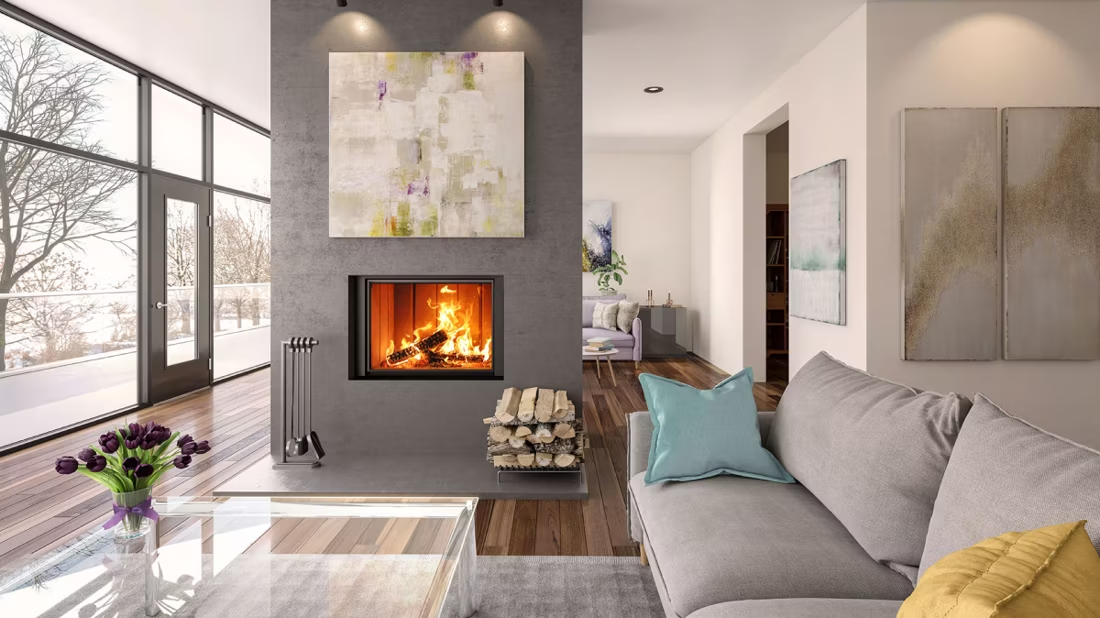
Four fuels. One honest answer for Kit Carson County.
Wood
See what's available near Kit Carson County.
Find your wood stove →Gas
See what's available near Kit Carson County.
Find your gas fireplace →Pellet
See what's available near Kit Carson County.
Find your pellet stove →Electric
See what's available near Kit Carson County.
Find your electric fireplace →Three steps. No salesperson until you're ready.
Tell us about your project
Your zip code, your situation, and the fuel you're leaning toward—or let the answers point you to one.
See what's actually available
The brands dealers within 100 miles genuinely carry—real options, never a catalog mirage.
Get your dealer & Project Guide
A trusted local dealer, plus the free Project Guide & Parts List that names every component of the job.
Frequently Asked Questions
Which fuel works best for a home in Kit Carson County?
It depends on how remote your property is and what you're heating for. Wood remains a serious primary or backup fuel here—ponderosa pine, aspen, pinyon, and juniper are all locally available, and a wood stove keeps working when a plains blizzard delays a propane truck for days. Propane is the practical convenience fuel for most rural Kit Carson County homes, since piped natural gas service is limited outside town cores; propane fireplaces and inserts give instant heat without woodpile labor. Pellet is a strong middle option—Bear Mountain, Lignetics, and Forest Energy pellets are all sold regionally, and a pellet stove burns cleaner and more consistently than open wood without needing a chainsaw. Electric is supplemental—good for a bedroom or a manufactured home, but not enough on its own at 17°F average lows. Many households here run two fuels: wood or pellet as the workhorse, propane or electric for the rooms that need instant, low-maintenance heat.
Do I need a permit to install a fireplace in Kit Carson County?
In most cases, yes. New wood stoves, wood inserts, gas or propane fireplaces and inserts, and pellet stoves generally require a building permit through the county planning and building office, and propane hookups typically require sign-off from your propane supplier or a licensed installer for the tank and line work. Because Kit Carson County is small and rural, there isn't a large city building department handling this volume—permitting usually moves through the county directly, and it's worth calling ahead since turnaround can take longer than in a metro county. Most local hearth retailers and installers handle the permit paperwork as part of the installation, so you generally don't have to file it yourself. Electric fireplaces are the exception—plug-in units typically don't need a permit, though a hardwired built-in with a new circuit usually does.
Does wildfire smoke affect wood burning in Kit Carson County?
It's a seasonal concern rather than a year-round restriction. Kit Carson County isn't in a formal non-attainment zone, but smoke from wildfires elsewhere in Colorado and the broader West can drift across the eastern plains during late summer and fall, pushing air quality down for days at a time. That's a different issue than home heating smoke—there's no local ordinance limiting wood stove use here—but it does mean some residents choose to hold off on burning purely for ambiance during a heavy smoke advisory day and rely on their stove for actual heat once temperatures drop and the smoke clears. If you're installing a new wood stove, an EPA-certified unit burns markedly cleaner than an older uncertified stove, which matters more here given how often regional smoke is already a factor in local air quality.
Will I find a hearth retailer that carries all four fuel types nearby?
It's less likely here than in a larger county, simply because of population. Kit Carson County has roughly 5,000 residents spread across six small towns, so retailers carrying wood, gas, pellet, and electric under one roof are more often based in a larger town along I-70 and drive in to serve the county rather than operating a storefront in Burlington itself. Some local suppliers focus narrowly on firewood or propane rather than stocking hearth appliances at all. If you want to compare fuel types side by side, expect to either travel a bit further or work with a retailer over the phone and by photos before they come out for an in-home visit—both are normal here and don't mean you're getting a lesser level of service.
How does installation and service work for homes out on ranch land, away from Burlington?
Most technicians serving Kit Carson County are based in or near Burlington and drive out to Flagler, Bethune, Seibert, Stratton, Vona, and the ranch properties between them. Expect a trip or travel fee for calls well outside town—often $40 to $75 depending on distance—and expect to schedule further ahead than you would in a denser area, since a single technician may be covering the whole county. Fall (September–October) is the easiest window to book routine chimney sweeps or gas inspections before winter demand picks up. For remote properties, it's worth keeping a backup heat source on hand—a wood stove as backup to a propane furnace, or vice versa—given how weather can delay both service calls and fuel deliveries on the plains.
What's the typical installation cost across fuel types in Kit Carson County?
Costs run in a similar range to other rural Colorado counties, sometimes with added travel fees folded in. Wood stove or insert installation: roughly $4,000 to $8,500 for a typical install, more if a new chimney chase is needed on a home without existing masonry. Propane fireplace, insert, or stove: roughly $4,000 to $10,000, with the wide range driven by whether a new propane line and regulator work is required versus tapping into an existing tank setup. Pellet stove or insert: roughly $4,000 to $7,000 for a standard install. Electric fireplace: $200 to $3,000 for the unit itself, plus $300 to $1,000 in labor for anything beyond a simple plug-in—which covers most wall-mount and insert installs. Rural travel fees can add a few hundred dollars to any of these depending on how far the crew has to drive.
Wood, gas, pellet, or electric—how do I choose?
Match the fuel to your life, not the other way around. Wood: lowest fuel cost and total power-outage independence, but you're hauling and stacking. Gas: press a button, set a thermostat, no maintenance to speak of. Pellet: wood economics with automatic feeding, in exchange for weekly cleaning and a need for electricity. Electric: plugs in anywhere with honest supplemental heat. Nobody regrets the fuel that fits how they actually live.
How much should I budget for a fireplace?
For an average home—covering the fireplace, the vent pipe, and basic installation—a budget between $3,900 and $5,500 gives you a lot of options across wood, gas, and pellet. By the time you add finish work, gas line, and electrical, the average complete installation lands between $5,000 and $12,000 all-in. In a remodel or new build, a good rule is to put about 2.5% of the total project cost toward the fireplace.
Can I install a fireplace myself?
If you're putting a fire in your house on purpose, it's best to work with an expert. Unless you're genuinely experienced in framing, gas line, vent pipe, and the national code on clearances to combustibles, have a professional do it—and ideally the same company that sells you the fireplace, so warranty, service, and liability all live under one roof.
Can a fireplace actually lower my heating bill?
Yes—by creating a comfort zone. A furnace heats every square foot of the house just to warm the one room you're in; a gas fireplace on low burns roughly a sixth of the gas a typical furnace does. Set the furnace around 55–60 degrees as a baseline, then heat the rooms your family actually uses. Families who heat this way commonly save $20–$60 a month.
Stove and Fireplace Dealers in Kit Carson County
Listings include WhyFire partner dealers, dealers we have verified as authorized for the brands we recommend, and established local businesses that carry hearth products. Every listing shows which one it is. The ones marked Preferred run on WhyFire's software, so they can show you real pricing and book your appointment right here. No manufacturer pays for placement. How we verify dealers →
Plains Heating & Air Conditioning
Cheyenne Wells Lumber Co
Air Concepts
Find your fireplace in Kit Carson County.
Tell us your fuel and your town, and we'll match you with a trusted local dealer and send a free Project Guide & Parts List—the exact parts, including the vent kit, and the dealer recommended for your project.
Find Your Fireplace →