
Find the right fireplace for your home in Kiowa County.
Wood, gas, pellet, and electric fireplace resources for Eads, Sheridan Lake, Haswell, Towner, Chivington, and every other community across Kiowa County. Find what's actually available near you and connect with a real local dealer.
Every Project Starts From One of These Five Situations
Wide-open plains heating in one of Colorado's smallest counties.
Kiowa County sits out on Colorado's eastern high plains, with a year-round population under 800 spread across Eads and a handful of unincorporated crossroads towns. It falls in climate zone 5B—winters here are genuinely cold, with the kind of wind-driven chill that a place like Fargo, North Dakota knows well, even without the deep snowpack you'd see in the mountains. Wildfire smoke from regional grassland fires is the county's main air-quality concern rather than urban inversion, which shapes when open burning and even some wood-stove use gets flagged during high fire-risk stretches. Firewood in this county often means ponderosa pine, aspen, pinyon, or juniper—species that, on the open plains, are frequently hauled in from the nearby foothills rather than cut at the back door.
Here's what this hub covers: hearth retailers, service technicians, and fuel suppliers who serve Kiowa County. Given how sparsely populated the county is, most of that service comes from dealers and techs based in nearby regional hubs who travel in for installs and service calls. Pick your fuel below to see what's realistically available for your home, what it costs, and who can install it correctly.
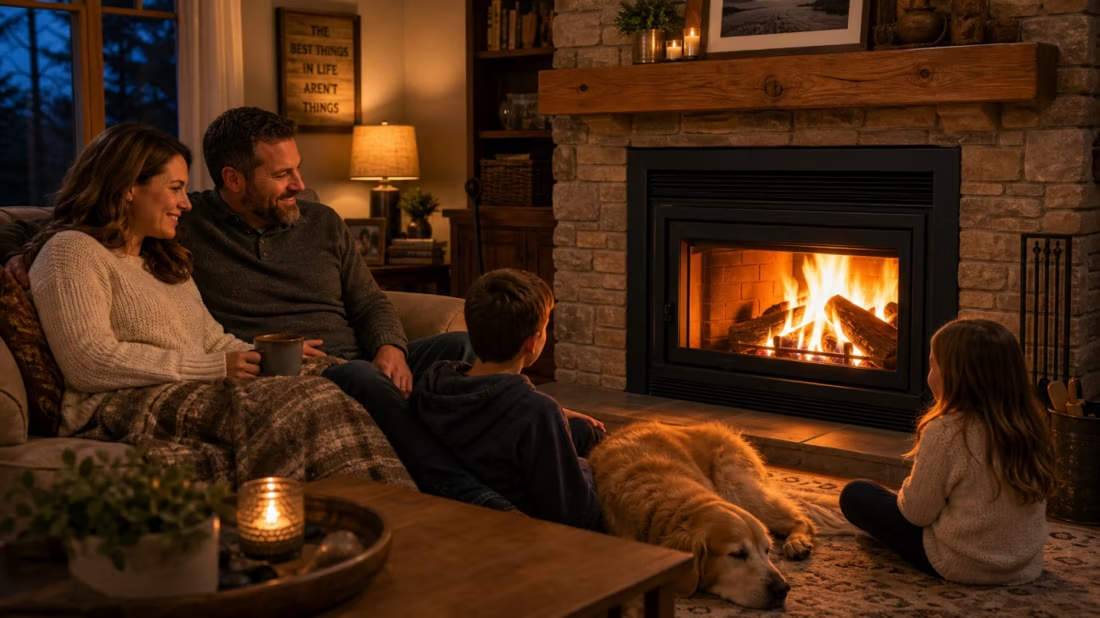
Four fuels. One honest answer for Kiowa County.
Three steps. No salesperson until you're ready.
Tell us about your project
Your zip code, your situation, and the fuel you're leaning toward—or let the answers point you to one.
See what's actually available
The brands dealers within 100 miles genuinely carry—real options, never a catalog mirage.
Get your dealer & Project Guide
A trusted local dealer, plus the free Project Guide & Parts List that names every component of the job.
Frequently Asked Questions
Which fuel makes the most sense for a home in Kiowa County?
It depends on what's already running to your house. Kiowa County has very little piped natural gas infrastructure given its size, so propane—not natural gas—is the standard 'gas' fuel here, typically fed from a co-op-supplied tank. Wood remains a practical heritage choice, especially with ponderosa pine, aspen, pinyon, and juniper available from the foothills; a catalytic stove can carry a long, cold plains night on a single load. Pellet stoves are a solid middle ground if you'd rather not deal with a woodpile—Bear Mountain and Lignetics bags are both findable through regional suppliers. Electric fireplaces work well as supplemental heat in a bedroom or den but shouldn't be your only heat source through a Kiowa County winter. Many homes here end up running a primary wood or propane appliance with an electric unit in a secondary room.
Do I need a permit to install a fireplace in Kiowa County?
In unincorporated Kiowa County, permitting for new wood stoves, inserts, propane fireplaces, and pellet stoves generally runs through the county building office, and any new wood-burning appliance should meet current EPA emissions standards to pass inspection. Propane installations also require a licensed technician for the tank hookup and line work—your propane co-op can usually point you to someone qualified. Electric fireplaces are typically permit-free unless you're doing a built-in installation with new wiring. Given how few installers work this county regularly, it's worth confirming current requirements with the building office before you buy, since a dealer traveling in from Lamar or La Junta may not be the one pulling your permit.
Does wildfire smoke affect wood burning in Kiowa County?
Indirectly, yes. Kiowa County's main air-quality concern is regional wildfire and grassland-fire smoke rather than the winter inversions you'd see in a mountain basin, but during active fire seasons or red-flag conditions, open burning and sometimes wood-stove use get flagged along with everything else. It's less about routine winter wood-stove smoke and more about not adding to particulate load during an already smoky stretch. A newer EPA-certified stove burns cleaner and produces a fraction of the particulate output of an older uncertified unit, which matters both for your own air and for keeping good standing with neighbors on the open plains where smoke travels.
Is there a local dealer in Kiowa County that carries all four fuel types?
Realistically, no—the county's population is too small to support a standalone multi-fuel hearth showroom. Homeowners in Eads, Sheridan Lake, and Haswell typically work with dealers based in Lamar or La Junta, roughly an hour's drive away, who carry wood, propane, pellet, and electric units and travel in for installs. Your local propane co-op can usually handle a propane appliance hookup directly, but for wood or pellet stoves you'll generally be working with one of those regional dealers. If you're cross-shopping fuels, it's worth calling ahead to confirm which units they can bring out and install rather than assuming showroom stock matches what's practical for a rural delivery.
How does installation and service work when you live outside the towns?
Most technicians serving Kiowa County are based well outside it and run a circuit through the eastern plains rather than keeping a local office. Expect a travel fee for service calls to outlying ranches and crossroads communities—often more than you'd pay in a denser county, simply because of the distances involved. Scheduling early, ideally before the first cold snap in September or October, gets you ahead of the rush and avoids paying a premium for an emergency mid-winter call. If you're heating with propane, keeping your tank topped up before winter matters too, since delivery routes out here can be affected by weather and road conditions.
What does fireplace installation typically cost across fuel types in Kiowa County?
Costs run similar to other rural mountain-adjacent counties, sometimes with a bit more added for travel given how far installers are coming from. Wood stove or insert: roughly $4,500–$9,000 for a typical install, more for new chimney construction. Propane fireplace, insert, or stove: roughly $4,500–$10,000 depending on tank setup and line work, generally on the lower end if you already have propane service to the house. Pellet stove or insert: roughly $4,500–$7,500. Electric fireplace: $200–$3,000 for the unit itself, plus $400–$1,200 in labor for anything beyond a simple plug-in install. Because so few dealers cover this county, ask upfront whether a quoted price includes the drive out—it's a real cost factor here that it isn't in denser areas.
Does a fireplace add value to my home?
On average, a fireplace adds back to the home about the same amount you spent installing it. Add the monthly savings from heating the rooms you actually use instead of the whole house—often hundreds of dollars a year—and the value case is strong before you even count what a fire does for how your family uses the room.
Can a fireplace actually lower my heating bill?
Yes—by creating a comfort zone. A furnace heats every square foot of the house just to warm the one room you're in; a gas fireplace on low burns roughly a sixth of the gas a typical furnace does. Set the furnace around 55–60 degrees as a baseline, then heat the rooms your family actually uses. Families who heat this way commonly save $20–$60 a month.
Can I install a fireplace myself?
If you're putting a fire in your house on purpose, it's best to work with an expert. Unless you're genuinely experienced in framing, gas line, vent pipe, and the national code on clearances to combustibles, have a professional do it—and ideally the same company that sells you the fireplace, so warranty, service, and liability all live under one roof.
I know I want a fireplace—where do I actually start?
Do two things today: snap a photo of the wall or fireplace you want to transform, and take a tape measure to the space—width, height, depth. Those two artifacts answer most of a hearth professional's first questions. Then settle fuel (wood, gas, pellet, or electric) and set a realistic budget: $3,900–$5,500 covers fireplace, vent, and basic install for most homes.
Stove and Fireplace Dealers in Kiowa County
Listings include WhyFire partner dealers, dealers we have verified as authorized for the brands we recommend, and established local businesses that carry hearth products. Every listing shows which one it is. The ones marked Preferred run on WhyFire's software, so they can show you real pricing and book your appointment right here. No manufacturer pays for placement. How we verify dealers →
Cheyenne Wells Lumber Co
Plains Heating And Air Conditioning
Plains Heating & Air Conditioning
Get matched with a local dealer in Kiowa County.
Tell us about your project and we'll match you with a trusted dealer who actually services this part of eastern Colorado, plus send you a free Project Guide & Parts List—the exact parts, vent kit, and recommended installer for your home.
Find Your Fireplace →