
Find the right fireplace for the San Luis Valley's hardest winters.
Wood, gas, pellet, and electric fireplace resources for every town in Alamosa County—from the city of Alamosa to Hooper and Mosca. Find the right unit for a heating load on par with Fargo, North Dakota and connect with a trusted local hearth dealer.
Every Project Starts From One of These Five Situations
Heating a high desert valley known as the nation's icebox.
Alamosa County sits in the San Luis Valley at roughly 7,543 feet, ringed by the Sangre de Cristo and San Juan mountains. The valley floor traps cold air on clear nights, and Alamosa has long been nicknamed the 'Icebox of the Nation'—winter lows here average right around 0°F, and the county's annual heating load is on par with Fargo, North Dakota. Wood heat has deep roots in the valley: pinyon and juniper from the foothills, aspen and ponderosa pine from higher elevations, much of it cut under permits through the Rio Grande National Forest.
What you'll find on this hub: hearth retailers, service technicians, and fuel suppliers serving every community in Alamosa County—the city of Alamosa, the farming community of Hooper, and Mosca near the Great Sand Dunes. Pick your fuel below to see local dealers, real installation costs, and the units that actually hold up through a San Luis Valley winter.
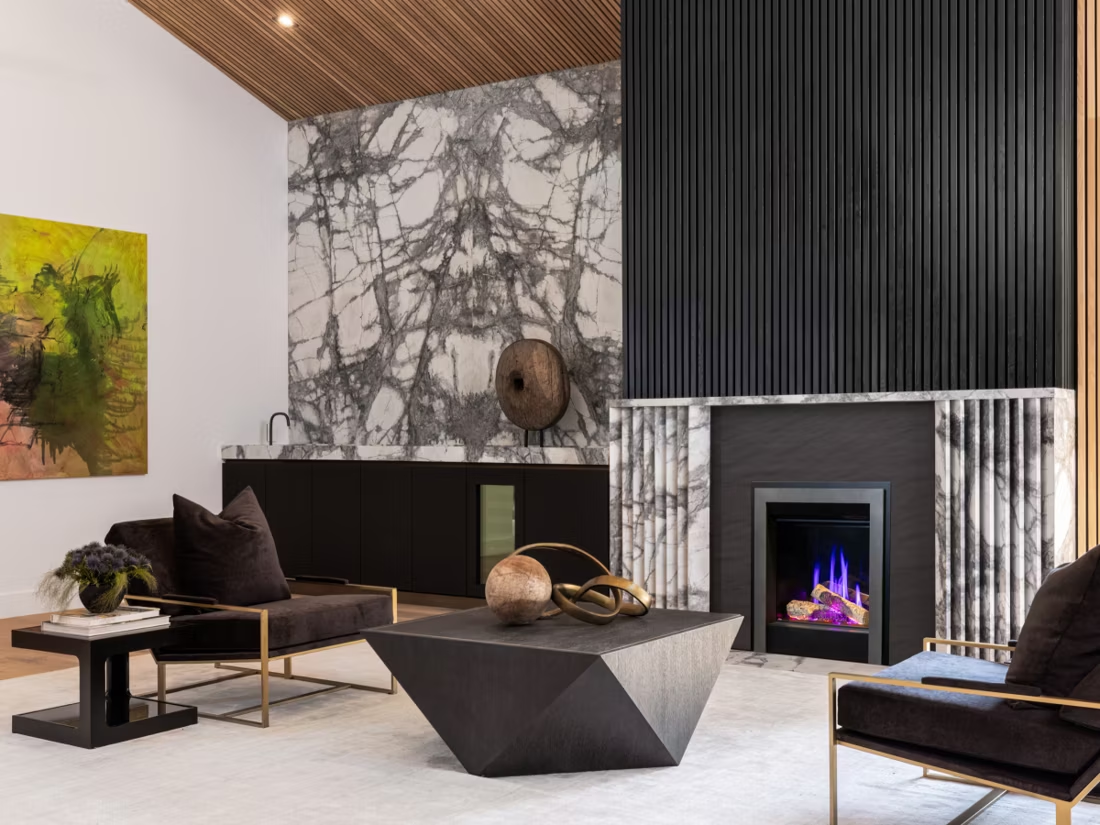
Four fuels. One honest answer for Alamosa County.
Three steps. No salesperson until you're ready.
Tell us about your project
Your zip code, your situation, and the fuel you're leaning toward—or let the answers point you to one.
See what's actually available
The brands dealers within 100 miles genuinely carry—real options, never a catalog mirage.
Get your dealer & Project Guide
A trusted local dealer, plus the free Project Guide & Parts List that names every component of the job.
Frequently Asked Questions
Which fuel works best in Alamosa County?
It depends on the home and how you use it. Wood remains a mainstay in Alamosa County—pinyon and juniper from the foothills and aspen or ponderosa pine cut under Rio Grande National Forest permits keep fuel costs down, and a catalytic or non-cat stove sized for the cold can hold a fire through a night when it's 0°F or colder outside. Gas is the low-maintenance choice in the city of Alamosa, where Black Hills Energy provides natural gas service; outside city limits, propane is more common. Pellet stoves are a solid middle ground—less labor than splitting wood, with Bear Mountain, Lignetics, and Forest Energy bags generally available in the valley. Electric fireplaces work well for ambiance or a spare bedroom but shouldn't be relied on as a primary heat source given how far the outdoor temperature can drop overnight. Many valley homes run wood or pellet as the main heater with gas or electric backing it up.
Do I need a permit to install a fireplace in Alamosa County?
Yes, in almost every case. New wood stoves, wood inserts, gas fireplaces, gas inserts, gas stoves, and pellet stoves all require a building permit—through the City of Alamosa if you're inside city limits, or the Alamosa County Building Department for the rest of the valley. Wood-burning appliances need to meet current EPA emissions standards, and gas installations require a licensed gas fitter along with a separate gas line permit. Because Alamosa sits at roughly 7,500 feet, gas fireplaces and stoves also need a high-altitude conversion kit or factory setting adjusted for elevation—something a local dealer will already know to check, but worth confirming if you're buying from out of the area. Electric fireplaces usually skip the permit unless you're hardwiring a built-in unit.
Are there air quality restrictions on wood burning in Alamosa County?
Not in the way you'd see in a winter-inversion basin. Alamosa County's main air quality concern is wildfire smoke, which tends to build up in late summer and early fall rather than during the coldest months, so there isn't a routine winter wood-burning curtailment program here the way there is in some Western Colorado valleys. That said, during active wildfire smoke events, it's worth checking regional air quality advisories before adding more smoke to the mix, and any new wood stove installation still has to meet current EPA emissions standards regardless of season.
Can one local hearth retailer handle all four fuel types?
With Alamosa County's population under 12,000, you'll find fewer big multi-fuel showrooms than in a metro area, but the dealers based in the city of Alamosa generally carry at least two or three fuel types—commonly wood and gas, with pellet stoves as a strong secondary line given local demand for Bear Mountain and Lignetics pellets. If a specific fuel or brand isn't in stock locally, some valley residents also cross-shop dealers in Monte Vista or Del Norte in neighboring Rio Grande County. Ask any retailer directly which fuels they install and service—that's more reliable than assuming from the storefront.
How does service work in rural parts of Alamosa County?
Most technicians are based out of the city of Alamosa and drive out across the flat valley floor to Hooper, Mosca, and the scattered ranches along the Rio Grande. Distances are long but the terrain is flat and roads are generally good outside of storm days, so a rural service call is more about scheduling than accessibility. Expect a modest trip fee for anything well outside city limits. Booking your annual chimney sweep or gas inspection in late summer or early fall—before the valley's cold settles in for good—beats trying to get an emergency appointment in January.
What's the typical cost range for fireplace installation across all fuel types in Alamosa County?
Costs run close to statewide Colorado averages, with a bit of a premium on gas work due to the high-altitude adjustments needed at 7,500 feet. Wood stove or insert: roughly $4,000–$8,500 for a typical install, more if new chimney chase work is needed. Gas fireplace, insert, or stove: roughly $4,500–$10,500, factoring in gas line work, venting, and altitude-rated equipment. Pellet stove or insert: roughly $4,000–$7,000 for most installs. Electric fireplace: $200–$3,000 for the unit itself, plus $400–$1,200 in labor if it's more than a plug-and-play install. See the county + fuel pages above for retailer-specific pricing.
How much should I budget for a fireplace?
For an average home—covering the fireplace, the vent pipe, and basic installation—a budget between $3,900 and $5,500 gives you a lot of options across wood, gas, and pellet. By the time you add finish work, gas line, and electrical, the average complete installation lands between $5,000 and $12,000 all-in. In a remodel or new build, a good rule is to put about 2.5% of the total project cost toward the fireplace.
What is an in-home preview and do I need one?
It's a visit where a hearth professional measures your space, confirms the model you picked actually works in your home, and walks the specs—framing, gas line, venting, finish work—before anything is ordered. Some details you just can't know until you see the house. Never make a down payment without one; it's the single most-skipped step that burns buyers.
Does a fireplace add value to my home?
On average, a fireplace adds back to the home about the same amount you spent installing it. Add the monthly savings from heating the rooms you actually use instead of the whole house—often hundreds of dollars a year—and the value case is strong before you even count what a fire does for how your family uses the room.
Can a fireplace actually lower my heating bill?
Yes—by creating a comfort zone. A furnace heats every square foot of the house just to warm the one room you're in; a gas fireplace on low burns roughly a sixth of the gas a typical furnace does. Set the furnace around 55–60 degrees as a baseline, then heat the rooms your family actually uses. Families who heat this way commonly save $20–$60 a month.
Stove and Fireplace Dealers in Alamosa County
Listings include WhyFire partner dealers, dealers we have verified as authorized for the brands we recommend, and established local businesses that carry hearth products. Every listing shows which one it is. The ones marked Preferred run on WhyFire's software, so they can show you real pricing and book your appointment right here. No manufacturer pays for placement. How we verify dealers →
White Shop
Shangrilah Stove & Spa LLC
Find your fireplace in Alamosa County.
Tell us your fuel and your home, and we'll match you with a trusted local dealer and send a free Project Guide & Parts List—the exact parts, including the vent kit, and the dealer we recommend for your Alamosa County project.
Find Your Fireplace →